2027 HVAC Prices in Dayton, OH: Install, Running Cost, Payback
Adjust your home size & electric cost in Dayton, OH
$7,780 to $9,370: that is the installed range for a 14 SEER system in Dayton, the rating that wins on ten-year cost here. The load behind it is a 1,800 sq. ft. home needing roughly 36,000 BTU, or 3 tons. Expect Dayton bids to land roughly 2% above the Ohio average; the city has about 136,000 residents and the costs that come with that.
Read the range as a standard swap. If the job needs new duct runs, a larger breaker or a condenser on a roof or wall bracket, the bid climbs from there.
Buying Central Air in Dayton: The Price Ladder
Here is the Dayton spread for one 3-ton system: 14 SEER $7,780 to $9,370, 16 SEER $9,870 to $11,900, 18 SEER $15,040 to $18,120, 20 SEER $20,850 to $25,130.
Price by Rating: Dayton and Statewide
| System (3 ton) | Dayton | Ohio average | Materials |
|---|---|---|---|
| 14 SEER | $7,780 - $9,370 | $7,650 - $9,220 | $4,890 |
| 16 SEER | $9,870 - $11,900 | $9,710 - $11,710 | $6,140 |
| 18 SEER | $15,040 - $18,120 | $14,800 - $17,830 | $9,220 |
| 20 SEER | $20,850 - $25,130 | $20,520 - $24,730 | $12,690 |
Most of what you pay is not the box: equipment runs about $6,140 on a 16 SEER install, and labor plus overhead carry the balance.
Local Labor and the Dayton Price
Wages, insurance, fuel and shop rent all differ from one market to the next, and installers build those costs into every bid. Applied to 16 SEER, the adjustment lifts $9,710 to $11,710 (statewide) to $9,870 to $11,900 (Dayton).
29 ZIP codes in our database carry a Dayton address, all in Montgomery and Greene counties; each one gets this estimate. Rebates from utilities and manufacturers come and go; ask which ones apply in Dayton this year and who files the paperwork.
The Running-Cost Side of the Dayton Decision
We price Dayton running costs at the Ohio average of $0.233/kWh (about 7% above the national average of $0.217); if your bill shows a different rate, enter it in the form above. Over the ten years in our data, Ohio rates rose about 2.58% a year; at that pace the average would reach roughly $0.30/kWh by 2036.
Hover or tap any year to see what each rating costs to run that season. Rates rise 2.58% a year, the OH ten-year trend.
2026 = this season at OH's current rate. Each later year compounds the historic 2.58%/yr rise; costs rounded up to $10.
Our model runs the AC about 12.3 hours a day in season. On that basis a 1,800 sq. ft. home in Dayton pays about $900 a year at 16 SEER and $1,590 at 9 SEER.
Upgrade Payback Finder: Your Old AC vs a New One
Pick the unit you have and the one you are considering. Figures are for a 3-ton system at Ohio electric rates ($0.233/kWh, rising 2.58% a year).
| Installed price of the new system | $8,450 |
| Electricity saved, first year | $580 |
| Saved over 10 summers (rates rising) | $6,490 |
| Payback | 12.6 years |
| Net after 10 summers | -$1,960 |
Savings alone fall short: 9 to 14 SEER is still $1,960 behind after 10 summers in OH.
If the old unit still works, the full install price is the cost of the upgrade. If it has to be replaced anyway, compare the extra price over a 14 SEER bid with the extra savings.
Leaving a 9 SEER Unit Behind in Dayton
| 9 SEER | 14 SEER | 16 SEER | 18 SEER | 20 SEER | |
|---|---|---|---|---|---|
| Installation Cost | - | $8,450 | $10,730 | $16,340 | $22,660 |
| Electric Usage / Yr | 6,823 kWh | 4,344 kWh | 3,858 kWh | 3,480 kWh | 3,177 kWh |
| Electric Cost / Yr | $1,590 | $1,020 | $900 | $810 | $740 |
| Energy Savings / Yr | - | $580 | $690 | $780 | $850 |
| Payback (Rates Rising) | - | 12.6 years | 13.2 years | 17.0 years | 20.6 years |
| 10-Year Net (Rates Rising) | - | -$1,960 | -$2,970 | -$7,600 | -$13,120 |
Swapping a working 9 SEER unit for a 14 SEER system pays back in about 12.6 years in Dayton, counting the rate trend.
Total Cost to Own Each SEER in Dayton
Buy Price vs 10-Year Running Cost: Total Cost of Ownership in OH
For each SEER rating: the installed price, 10 years of cooling electricity at Ohio rates (rising 2.58% a year), and the two added together. The shortest total bar is the cheapest system to own. Hover or tap a bar for the math.
After 10 years, 14 SEER is the cheapest system to own in Ohio: $19,820 all-in ($8,450 installed + $11,370 of electricity).
How the electricity bar is built: this season at today's OH rate, then nine more seasons, each raised by the 2.58% yearly increase OH has averaged. Install is the typical price shown on this page. Every figure is rounded up to the next $10 separately, which can leave the parts $10 over the total.
Check the AC Price Where You Live
 See costs in your area
Start Here - Enter Your Zip Code
The Dayton Climate in AC Terms
Climate region 3 is where our map puts Ohio. Across the state, summer days average near 86°F and winter nights near 20°F; Dayton sits at about 39.7° N. Neither cooling nor heating dominates in Dayton, so ask installers to size for both loads instead of matching the old unit.
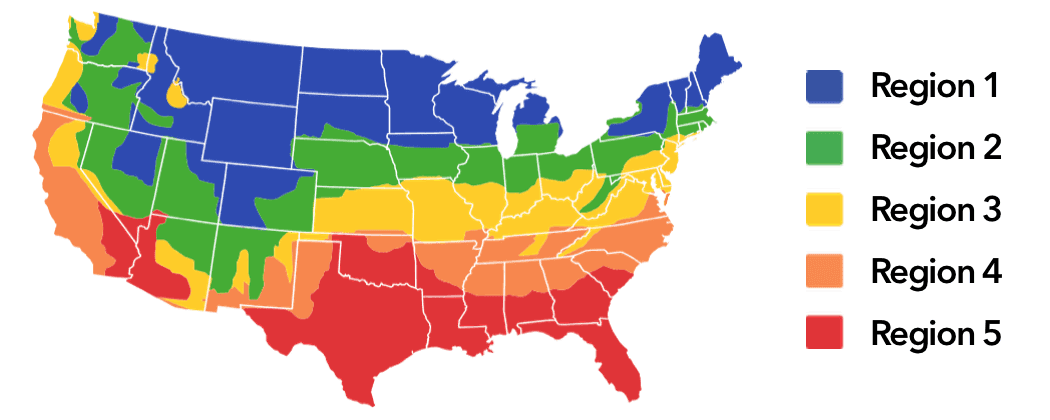
Climate zones run from 1 (cool) to 5 (hot); Ohio is in Zone 3.
Near 39.7° N, Dayton is among the southern cities in this Ohio guide, where winters are usually shorter and summers longer.
Sticky indoor air in Dayton? A variable-speed blower runs long and slow, which pulls more moisture out; pair it with a thermostat that can dehumidify.
The closest city in this guide is Cincinnati, about 45 miles to the southwest; it has its own price page.
A heat pump covers most Dayton heating days efficiently, with backup heat for the coldest stretches. Bigger is not better. An oversized system costs more to buy, cycles too often and controls humidity poorly.
Ductwork and Space in a Dayton Install
Natural gas furnaces on ductwork are the common setup in Ohio, which keeps a Dayton AC swap fairly simple; older ducts may still need sealing. In Dayton, equipment choice and duct condition drive most of the difference between quotes.
Ton for ton, a mini-split is pricier than central air. It needs no ducts, though, and each head conditions only its own room, so get a ductless quote for any Dayton home without ductwork.
Picking the Right Month in Dayton
The same crew that hurries through a July job can take its time in May or October. Book Dayton work in those shoulder months if you can. Ask whether the bid includes the permit fee and the inspection visit; installers commonly arrange both.
Compare Another Ohio City
Compare Dayton with these Ohio markets (16 SEER, installed):
- Columbus, OH: $10,130 to $12,210, 65 mi east
- Cleveland, OH: $10,000 to $12,060, 180 mi northeast
- Cincinnati, OH: $9,980 to $12,030, 45 mi southwest
- Toledo, OH: $9,960 to $12,010, 140 mi north
- Akron, OH: $9,920 to $11,950, 170 mi northeast
- Parma, OH: $9,900 to $11,930, 170 mi northeast
Homeowners in Kettering, Beavercreek, Trotwood, Clayton and Springfield can plan with the Dayton prices.
See the Ohio HVAC cost guide for how Dayton compares with the rest of the state and how the payback math works. For an estimate built on your home, try the AC size calculator, then the heat pump calculator.
Estimates are adjusted for Dayton; real quotes vary with your home, the equipment and the installer.
Quick Answers
Figures below use Ohio averages; energy prices as of October 2026.
Does a heat pump heat for less than natural gas in Ohio?
No, natural gas still wins in Ohio: 63,517 BTUs per dollar against 43,990 for a heat pump at COP 3. The break-even power price is about 16.1¢ per kWh, and the Ohio average is 23.3¢. A more efficient heat pump narrows the gap.
Is electricity in Ohio expensive compared with other states?
Ohio pays 23.3¢ per kWh on average: 7% over the national figure of 21.7¢ and the 16th most expensive of 51. Cooling bills rise and fall with it.
Is a cold-climate heat pump needed in Ohio?
It helps. With winter lows around 20°F, a standard heat pump covers most Ohio nights, but its output drops in cold snaps; a cold-climate model or backup heat fills that gap.
What does a heat pump save over electric baseboard in Ohio?
About two-thirds. At 23.3¢ per kWh (the Ohio average), a million BTU of heat costs about $68.20 from baseboards and about $22.73 from a heat pump running at COP 3.
What is the best season to replace an AC or furnace in Ohio?
The shoulder seasons, spring and fall, ahead of need. Crews are busiest in the first hot week and the first freeze, and a forced emergency swap leaves no time to compare bids.
Is it smart to replace the furnace and AC together?
Often. Two old units replaced in one visit share the labor, and the indoor coil gets matched to the outdoor unit as the rating requires. A young furnace or AC can stay; quote the other separately.
Check it for your own home: Central AC cost estimator or Heat pump cost calculator.
More HVAC Cost Guides
Ohio HVAC costs (statewide) · HVAC costs in every state