Boiler Cost Calculator 2027: Size & Price Your New Boiler
Most gas boiler replacements cost $6,600 to $13,200 installed, and the usual way people overpay is by copying the size off the old boiler’s nameplate, since older units are often oversized. This calculator sizes a new boiler in BTUs from your heated area, climate and house details, then prices the install for your region: gas, oil or propane, in condensing, hot water or steam designs.
Gas/Oil/Propane Boiler Cost & Size in Columbus, OH
- Estimated Heat Load
- 0 BTU
- Recommended Equipment
- 0K BTU Boiler
See costs in your area Start Here - Enter Your Zip Code
How to Use the Boiler Cost Calculator
The first eight fields are enough for a solid price. The last four sharpen the heat load if you know your house well.
- Heated square footage. Count only the rooms the boiler heats. Leave out the garage and an unfinished basement.
- Boiler style. On steam now? Keep steam unless you plan to repipe for hot water. Otherwise pick conventional hot water or condensing.
- Efficiency (AFUE). The share of fuel energy that ends up as heat in the house: 95% for condensing, about 82-87% for conventional, steam and oil boilers. The tool also adds a few percent to the size for heat lost in the piping, and closer to 10% on steam.
- Fuel. “Gas” covers natural gas and propane. Choosing condensing locks the fuel to gas, because residential oil condensing boilers are basically nonexistent.
- Project type. “Replace” prices a swap for an existing boiler. The boiler-plus-radiators option opens the emitter menu and adds the piping and zone work that ties a new system together.
- Radiators (optional). Baseboard is the cheapest and most common. Wall-hung panel radiators, cast iron for steam, and radiant floor tubing all cost more.
- Hot water. Pick an on-demand coil or a 45, 60 or 80 gallon indirect tank, or leave it off if you’re keeping a separate water heater. Any hot water boiler, condensing or conventional, can feed an indirect tank. Combi condensing units and many oil boilers can also run an on-demand coil. Steam boilers mostly can’t do either.
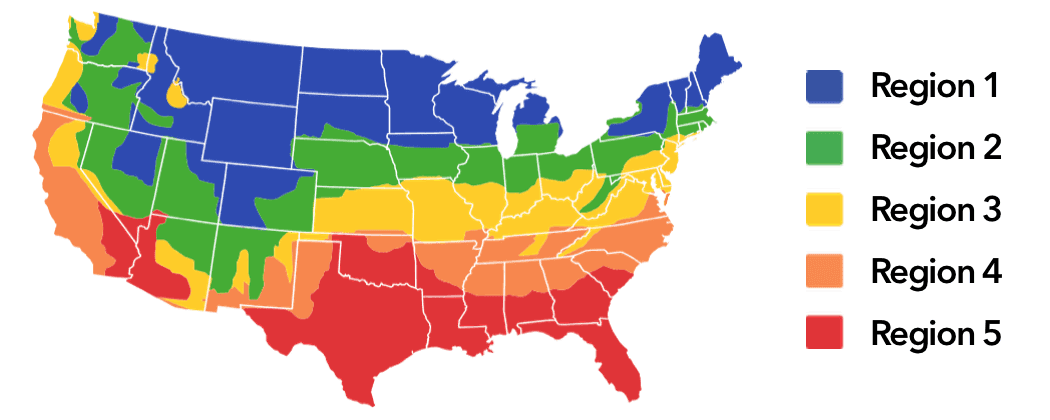
- Climate zone. The tool guesses it from your location, so check the map. California, Colorado, Texas and Washington each span several zones, and the wrong one can throw the load off by 10-15%.
- Ceiling height, insulation, window quality and window count. All four change how fast the house loses heat. If the walls are thin, price better insulation before you pay for a bigger boiler.
The calculator won’t let you price a setup that can’t be built. Pair cast iron steam radiators with a condensing boiler and it switches the boiler to steam, since a condensing unit can’t make steam. Pick radiant floors and it switches to condensing. Homes and light commercial jobs up to 400,000 BTU are covered.
Want a room-by-room heat loss figure before you shop? Run the HVAC load calculator first, then come back with that number in mind.
Quick Answers
Answers use Ohio averages; energy prices updated October 2026.
Is natural gas always cheapest?
Not always, but in Ohio it is right now: natural gas buys 63,517 BTUs per dollar, ahead of a heat pump (COP 3) at 43,990. Across the 50 states and DC, natural gas comes out on top in 33.
What does a million BTUs of heat cost in Ohio?
At Ohio prices, cheapest first: natural gas $15.74, heat pump (COP 3) $22.73, propane $28.11, heating oil $42.65, electric baseboard $68.20. Wood pellets come to $21.83, not ranked: the ton price leaves out delivery. Those are heat-content prices before equipment losses, the same basis the BTU cost calculator uses.
Is a heat pump cheaper to run than natural gas in Ohio?
Not in Ohio right now. Natural gas buys 63,517 BTUs per dollar; a heat pump at a COP of 3 buys 43,990. Power would have to drop below about 16.1¢ per kWh to flip that (the Ohio average is 23.3¢), or the heat pump would need a higher COP.
Are wood pellets cheaper than natural gas or oil in Ohio?
Cheaper than oil, not natural gas, in Ohio. Pellets at $358 a ton buy 45,810 BTUs per dollar, against 63,517 for natural gas and 23,447 for heating oil. That ton price leaves out delivery, and bags to haul and ash to empty come with it, so the calculator lists pellets apart instead of ranking them; many owners run a pellet stove alongside a central system.
Is heating oil ever the cheapest option?
Not in Ohio: heating oil ranks fourth of five at 23,447 BTUs per dollar. At current prices it doesn’t come out on top in any state or DC.
Does a cheap fuel guarantee low bills?
No. At Ohio prices, natural gas burned in a worn-out 60% furnace costs about $26.24 per million BTU of heat delivered; a 95% furnace gets that down to $16.57. Sizing and leaky ducts matter too.
Run your own numbers: Heating fuel BTU cost calculator or Home heating cost calculator.
Heating Costs in Ohio
Typical installed prices for heating systems in Ohio.
How Much Does a New Boiler Cost?
Where you land in that $6,600-$13,200 range depends on the boiler style, the fuel, the size of the house, and whether the boiler also makes your hot water. The ranges below are for a straight swap in a 1,200-2,500 sq. ft. home (about 50,000-110,000 BTU), reusing the existing piping and radiators.
| Boiler style | Typical AFUE | Gas or propane | Oil |
|---|---|---|---|
| Conventional hot water | 82-86% | $5,780 – $11,060 | $8,090 – $12,710 |
| Condensing | 95% | $7,590 – $13,370 | Not offered |
| Steam | 82-86% | $6,930 – $13,370 | $9,570 – $15,680 |
New radiators, radiant floors, rerouted venting and zone valves all come on top of these figures. The calculator adds them when you select them.
Price Notes by Boiler Type
Conventional hot water
A like-for-like gas swap runs $5,780 to $11,060, and most jobs land in the $7,430 to $8,750 range. It’s the cheapest way to get reliable heat back. Most gas models won’t take an on-demand hot water coil, so plan on an indirect tank if you want the boiler to make your domestic water.
Condensing
A drop-in install usually runs $7,590 to $13,370. Some brands require high-temp PVC venting, which adds a few hundred dollars. Many condensing units are combi boilers with on-demand hot water built in, and piping that side up adds roughly $1,410-2,150. That’s often less than a stand-alone tankless water heater. Read the spec sheet, though: some units sold as condensing are heat-only, and a few that look like combis are really tankless heaters.
Steam
Replacing a gas steam boiler typically costs $6,930 to $13,370. Hire a contractor who does steam work regularly. Near-boiler piping on steam is a specialty, and a sloppy job is a safety problem, not only a comfort one.
Oil and propane
Oil usually adds $1,320-2,810 over gas for the same job, mostly for the burner and a pricier boiler. That puts a hot water oil boiler at about $8,090-12,710 installed and a steam oil boiler at about $9,570-15,680. Premium European brands quote well above those ranges. Before you commit to oil for another 20 years, check what heating oil costs per gallon where you live.
Propane boilers are the same machines as natural gas units. The burner sees a different supply pressure, sometimes through a different gas valve, so expect about the same price as gas, give or take a conversion kit.
Condensing vs. Conventional: The Ownership Math
A condensing boiler sends only about 5% of its fuel up the vent, while a conventional unit loses closer to 15%. That looks like an easy win until you count the upkeep.
Condensing boilers need a service visit every year or two, usually with a new gasket kit each time, and with labor the bill tends to run into the hundreds. Expect about 15 years out of one, and only if it gets that maintenance. A conventional boiler can go several seasons between service calls, rarely needs expensive parts, and often lasts 25 years.
Set the fuel savings against the maintenance and the earlier replacement, and lifetime cost comes out close to even. Condensing makes the most sense with radiant floors, when you want a combi to handle hot water, or when you plan to stay in the house a long time. To see what each would cost to run, compare fuel bills in the home heating cost calculator.
Not set on hot water heat at all? Run the same house through the furnace cost calculator or the heat pump calculator and put the numbers side by side.
Checking Installer Quotes
When you collect quotes from local boiler installers, ask each one what BTU size they’re quoting and how they got it. If the size is well above the calculator’s and they can’t show you heat loss math, they probably copied the old nameplate.
 See costs in your area
Start Here - Enter Your Zip Code