Heat Pump Cost Calculator 2027: Central & Ductless Prices
Price a new heat pump for your house, central (ducted) or ductless mini-split, 14 to 20 SEER, with backup heat included. You get a low, mid and high price plus a suggested size in tons. Most 3-ton central replacements land around $12,830 to $17,510, so a padded bid stands out fast.
Heat Pump Prices in Columbus, OH
- Estimated Load
- Cooling: 0 BTU (0 tons)
- Estimated Load
- Heating: 0 BTU (0 tons)
- Recommended Equipment
- Cooling: 0 Ton Central Heat Pump
- Recommended Equipment
- Heating: 0K BTU Furnace
See costs in your area Start Here - Enter Your Zip Code
How to Use the Heat Pump Calculator
Rough inputs give you rough prices. Five careful minutes here pays off.
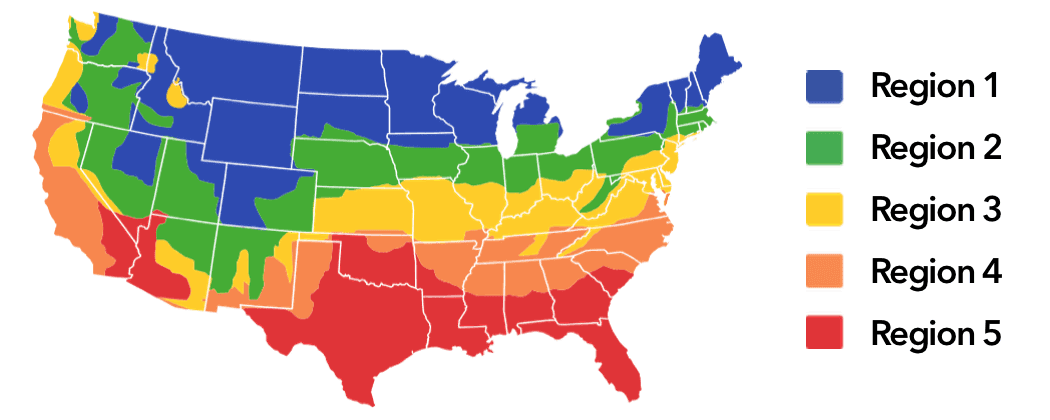
- Climate zone. Find your state on the built-in map and pick its zone.
- Square footage. Conditioned living space only. Skip the garage and any unheated basement.
- System type. Central runs through ducts; ductless puts a head in each zone. Both heat and cool.
- SEER rating. Cooling efficiency. Each step up costs more to buy and less to run.
- Backup heat. Electric heat strips or a natural gas furnace. The furnace needs a natural gas line. Propane can sometimes work in a dual-fuel setup, but only if the equipment maker supports it.
- Project type. Replacing an old heat pump or installing during new construction is the cheap route. Retrofitting a finished home that never had one costs the most in labor.
- Ductwork. New ducts add roughly $2,480 to $5,780 depending on size, and more in a finished home where ceilings and walls have to be opened.
- Ceiling height, insulation, windows and air leaks. These tell the calculator how fast your house loses heat, which changes the BTUs you need per square foot.
How to grade your insulation:
- Poor: older house, empty or thin wall cavities, little attic insulation, old windows, drafts you can feel.
- Average: roughly R-13 in 2×4 walls (batts or blown-in), some attic insulation, decent double-pane windows, few drafts.
- Good/Excellent: 2×6 walls with fiberglass or any spray foam, R-30-plus up top, quality windows and doors, an airtight shell.
Want a second opinion on size? The HVAC load calculator does a fuller check. Oversized units short-cycle, and plenty of contractors size up “just to be safe.”
Quick Answers
Answers use Ohio averages; energy prices updated October 2026.
Is a heat pump cheaper to run than natural gas in Ohio?
Not in Ohio right now. Natural gas buys 63,517 BTUs per dollar; a heat pump at a COP of 3 buys 43,990. Power would have to drop below about 16.1¢ per kWh to flip that (the Ohio average is 23.3¢), or the heat pump would need a higher COP.
How does electricity in Ohio compare with the national average?
Ohio averages 23.3¢ per kWh, 7% above the U.S. average of 21.7¢ and the 16th highest of the 50 states and DC. AC and heat pump running costs rise and fall with that rate.
Do I need a cold-climate heat pump in Ohio?
It’s a smart upgrade. With a statewide average winter low around 20°F, a standard heat pump handles most nights in Ohio, but cold snaps cut its output. A cold-climate model or a backup heat source covers those.
How much does a heat pump save over baseboard heat in Ohio?
At a COP of 3, about two-thirds. At the Ohio average of 23.3¢ per kWh, baseboard heat costs about $68.20 per million BTU; a heat pump delivers the same heat for about $22.73.
When is the best time to replace HVAC in Ohio?
Spring or fall, before you need it. Installers are busiest in the first heat wave and the first cold snap, and an emergency swap leaves no time to compare quotes.
Should I replace the furnace and AC at the same time?
If both are well into their life, usually yes: one crew visit, one labor bill, and a matched indoor coil and outdoor unit, which is what the efficiency rating assumes. If one of them is fairly new, price the jobs separately.
Run your own numbers: Central AC cost estimator or Furnace price calculator.
 See Costs in Your Area!
Start Here - Enter your zip
HVAC and Heating Costs in Ohio
HVAC
Typical installed prices in Ohio, equipment and labor.
Heating
Typical installed prices for heating systems in Ohio.
How Much Does a Heat Pump Cost?
Expect to pay more than you would for a basic AC and furnace swap, sometimes a lot more. Installed prices for most homes right now:
- Standard 16 SEER central heat pump, about 3 tons: most jobs run $12,830 to $17,510, with the full spread from roughly $12,000 to $26,110. It should carry the house on its own down to around 35°F.
- Larger homes, about 5 tons: most jobs run $14,770 to $22,940, topping out near $29,510.
- Adding a gas furnace for dual fuel: budget roughly $6,600 to $10,730 more for the furnace side.
Stepping up to 18 or 20 SEER pushes you toward the top of those ranges, and a flagship variable-speed heat pump matched with a 98% AFUE furnace can land well above them. Beyond size, climate and SEER, the big swing items are new ductwork, the type of backup heat, and replacement vs. first-time install.
Watch for quotes built around a premium-tier system when a mid-tier unit would do the same job in your climate. If your winters are mild, paying top dollar for extreme cold-weather capacity rarely makes sense.
Ductless Mini-Split Prices
No ducts? A multi-zone ductless system is usually the better answer, and often the better cold-weather heater too. Figure roughly $5,370 to $8,160 for a single zone and about $19,620 to $31,210 for four zones. Price scales with the number of indoor heads, the zone count the outdoor unit can handle, and how far the line sets have to run. For a room-by-room breakdown, try the mini split cost calculator.
Which Heat Pump Heats Best in Cold Weather?
This covers air-source systems. Geothermal works, but the cost and site requirements rule it out for most homeowners.
Central (dual-fuel) heat pumps. Their heating is honestly mediocre. Most standard models can’t carry the house alone much below 35°F, give or take 5 degrees depending on the model, and hand off to a furnace or heat strip. They’re a great fit from about North Carolina south. One exception worth knowing: Mr. COOL sells a hyper-heat central unit rated down to -22°F, and the maker claims it holds about 72% of its heating capacity at -5°F.
Ductless multi-zone heat pumps. These are the cold-climate workhorses. Hyper-heat models keep heating somewhere between -15°F and -22°F (-26°C to -30°C), depending on the brand. That covers most of the northern US and southern Canada, where typical winter lows sit around 5 to 10°F. Montreal and Minneapolis both average January lows in the single digits, and a properly sized hyper-heat system handles either. You usually don’t need a second heat source, though I’d keep one around for power outages.
When you compare models for winter, ignore the SEER number. What matters is heating capacity in BTU/h at low outdoor temperatures, and it falls as the air gets colder. Ask for the capacity rating at 5°F and compare it against your heat loss, not the nameplate tonnage.
How a Heat Pump Pulls Heat Out of Freezing Air
Even 15°F air holds plenty of heat. The trick is making the refrigerant colder than the air.
Most heat pumps already in US homes run on R-410A (newer units have moved to R-454B or R-32), which boils at roughly -55.3°F. In heating mode it evaporates in the outdoor coil far below the outdoor temperature. Even at -5°F or -15°F outside there’s a 40 to 50 degree gap, so heat flows into the refrigerant. The compressor then squeezes that vapor, its temperature climbs, and the hot gas gives up its heat to your rooms in the indoor coil.
How hot? I clamped a precise probe (±2%) on the discharge line of a Fujitsu unit on a 25°F day and read 167°F. Air coming off the indoor coil measured about 120 to 130°F.
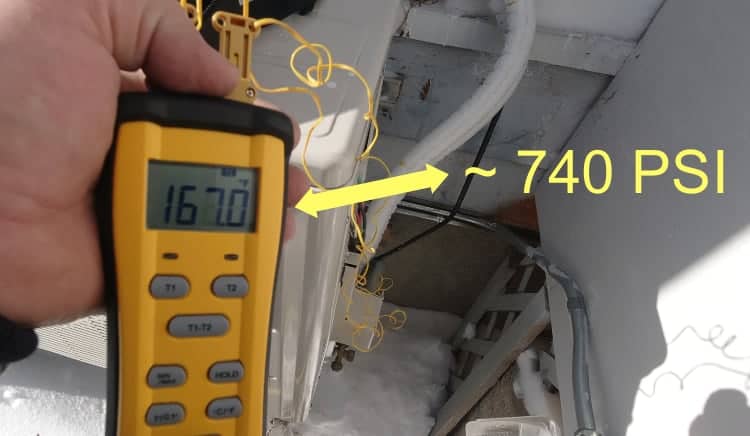
The colder it gets, the harder the compressor works and the less heat you get.
Backup Heat: Gas Furnace or Electric Heat Strip?
Electric heat strip. Cheaper up front, often by roughly $6,600 to $9,900 compared with adding a gas furnace. It’s a smart pick where it rarely gets below 32°F and you only need a boost a few nights a year. The catch is running cost: resistance heat uses two to three times the electricity a heat pump does at 47°F. In a real winter climate, the extra power bills can outrun the cost of a furnace in two or three years.
Gas furnace. The right call in cold regions. Many heat pumps require a “communicating” furnace from the same manufacturer, and you can price that side of the job with the furnace cost calculator.
Don’t forget the thermostat. A dual-fuel system needs one that knows when to switch from the heat pump to the backup. On communicating systems that’s usually the manufacturer’s own control, and it won’t talk to other brands, so your Nest, Ecobee or Honeywell may not run it properly. If the installer doesn’t set up the heating side correctly, you’ve paid heat pump money for fancy central air.
How Long Does a Heat Pump Take to Pay for Itself?
In summer a heat pump is simply a high-efficiency AC. The average unit sits around 18 SEER versus 13 or 14 for a lot of standard central air, so you use roughly 20 to 35% less cooling energy. What that’s worth depends almost entirely on your local electric rate.
In Massachusetts, where power runs over 30 cents per kWh, going from a 9 SEER air conditioner to an 18 SEER central heat pump can cut cooling costs by roughly $500 to $650 a year. Heating savings there are small, because electricity is pricey and central units hand off to backup heat around 35°F anyway. Move that same household to a 20 SEER ductless system and the cooling savings climb to roughly $600 to $850 a year.
In hot, high-rate California, annual savings can reach roughly $750 to $1,300. In states with cheap power, savings shrink and the payback stretches out. The SEER savings calculator will run your own numbers.
A typical system takes around 8 years to pay for itself, mostly because the upfront price is steep. Many states and utilities offer rebates on high-efficiency heat pumps, sometimes worth several thousand dollars, so check before you sign anything.
Pairing a Heat Pump With Solar
A heat pump runs on electricity alone, so a 15 to 20 kW solar array can cover most or all of your heating and cooling. You’ll need a net metering agreement, since panels overproduce in summer and you draw more in winter. On my own house, a 15.4 kW array is on track to pay back in about 4 years. After that, heating and cooling are essentially free.
For a closer look at winter electricity use, see how much power a heat pump really uses.
Heat Pump Cost FAQ
Is a heat pump worth it if I might move?
If you’ll be in the house for more than a few years, usually yes, especially with rebates. If you’re selling within a year or two, you probably won’t recover the cost in savings.
Why are heat pump quotes so far apart?
Brand, efficiency tier, backup heat and ductwork all swing the price. Get three bids, line up the same tonnage and SEER side by side, then rerun the calculator above with each contractor’s specs. Still weighing other systems? Check the central AC cost estimator, the heating cost calculator or the boiler cost calculator.
Ready for real numbers? Get free quotes from local heat pump installers and hold them up against your calculator estimate.
See costs in your area
Start Here - Enter Your Zip Code