Mini Split Cost Calculator 2027: Ductless Prices by Zone
Enter your square footage, zones, indoor unit style, efficiency, brand and insulation. You’ll get the cooling and heating BTUs you need plus low, mid and high installed prices at local labor rates. Most single-zone jobs run $6,460 to $9,170, so a padded bid is easy to spot.
Mini Split Heat Pump Cost in Columbus, OH
- Total system size
- 0K BTUs / 0K BTUs (cooling/heating)
See costs in your area Start Here - Enter Your Zip Code
How to Use the Mini Split Cost Calculator
Every step below matches a field in the tool. Two minutes of honest inputs gets you a much tighter estimate.
- Square footage. Length times width of the room or open area the unit will serve. For a whole-house job, add up every room you plan to condition. The calculator sizes on the lean side on purpose, using a modest BTU-per-square-foot factor instead of the padded rules of thumb found on most quotes.
- Number of zones. A zone is one indoor head with its own control: a remote, a wall thermostat or a phone app. Residential systems go up to eight zones, so ductless can handle a whole house, and you only heat or cool the rooms people are using. A concealed slim-duct head can also cover a few small neighboring spaces, such as a bathroom, hallway and laundry room, through short duct runs. The calculator stops at four zones. Past four or five, branch boxes, extra fittings, longer line sets and more drainage leave too many unknowns to price honestly. For a 6-8 zone house, price a 3 or 4 zone system and double it.
- Heating and cooling, or cooling only. Most mini splits also run in reverse as a heat pump, which is what makes them cheap to operate and lets them heat a room with no ducts or radiators. A cooling-only model is just a ductless air conditioner, about as efficient as central AC or even a window unit. The heat pump costs roughly $250 to $300 more for one zone and around $990 to $1,220 more on a four-zone system, and the efficiency gain usually pays that back in a year or two. Take the heat pump even where winter never shows up. If you pick “Cooling Only”, the efficiency menu disappears, because every AC-only unit sits in the low-efficiency bucket.
- Indoor unit type. Wall-mounted is the price baseline. Floor, ceiling cassette and concealed-duct heads cost more; the differences are explained further down.
- Efficiency level. More than 30 manufacturers sell hundreds of models, so the tool uses two groups. Average is roughly 18-24 SEER for single-zone and 15-20 SEER for multi-zone. High is roughly 26-33 SEER single-zone and 20-24 SEER multi-zone, and includes the cold-climate “hyper heat” lines from Fujitsu, LG and Mitsubishi. Moving up a tier adds about $470 to $590 per zone in equipment. Cooling-only units top out around 16-18 SEER, which is why they only come in the average setting.
- Brand. It moves the price more than most people expect. Read the brand notes below before you choose.
- Insulation level. Poor: an older house with empty walls or attic, single-pane or tired double-pane windows and noticeable drafts. Average: 2×4 walls with R-13 batts or blown-in insulation, some attic insulation, newer double-pane windows and few drafts. Excellent: 2×6 walls or spray foam, R-30 or better overhead, good windows and doors, a tight envelope. This is a rough adjustment. For a precise number you need a Manual J load calculation: start with our HVAC load calculator and ask every contractor who bids to show you theirs.
- Region. Nothing to fill in. The calculator reads your location and scales labor to local rates, falling back to the US average if it can’t tell where you are.
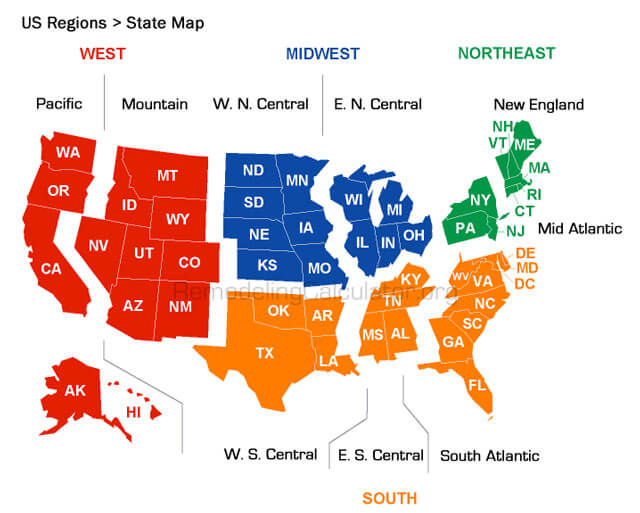
Location matters more than you’d guess. Homeowners in New England or the Pacific states typically pay 10-20% more for the same install than those in South Central states like Texas, Louisiana and Mississippi. Up north, a system that has to carry real winter heating may also need to be bigger.
Quick Answers
Answers use Ohio averages; energy prices updated October 2026.
Is a heat pump cheaper to run than natural gas in Ohio?
Not in Ohio right now. Natural gas buys 63,517 BTUs per dollar; a heat pump at a COP of 3 buys 43,990. Power would have to drop below about 16.1¢ per kWh to flip that (the Ohio average is 23.3¢), or the heat pump would need a higher COP.
How does electricity in Ohio compare with the national average?
Ohio averages 23.3¢ per kWh, 7% above the U.S. average of 21.7¢ and the 16th highest of the 50 states and DC. AC and heat pump running costs rise and fall with that rate.
Do I need a cold-climate heat pump in Ohio?
It’s a smart upgrade. With a statewide average winter low around 20°F, a standard heat pump handles most nights in Ohio, but cold snaps cut its output. A cold-climate model or a backup heat source covers those.
How much does a heat pump save over baseboard heat in Ohio?
At a COP of 3, about two-thirds. At the Ohio average of 23.3¢ per kWh, baseboard heat costs about $68.20 per million BTU; a heat pump delivers the same heat for about $22.73.
When is the best time to replace HVAC in Ohio?
Spring or fall, before you need it. Installers are busiest in the first heat wave and the first cold snap, and an emergency swap leaves no time to compare quotes.
Should I replace the furnace and AC at the same time?
If both are well into their life, usually yes: one crew visit, one labor bill, and a matched indoor coil and outdoor unit, which is what the efficiency rating assumes. If one of them is fairly new, price the jobs separately.
Run your own numbers: Central AC cost estimator or Heat pump cost calculator.
HVAC Costs in Ohio
Typical installed prices in Ohio, equipment and labor.
What a Mini Split Costs Installed
A professionally installed single-zone ductless heat pump runs about $6,460 to $9,170. Two zones usually come to $11,470 to $15,470 and four zones roughly $22,080 to $27,530. Each extra room with a wall or floor head adds about $4,790 to $6,260, since every head needs its own line set, drain line and hole through the wall. Second-tier brands often run 35-40% cheaper than the top Japanese names. If your panel needs a new 240V circuit, budget $660 to $1,080 for that part.
Don’t treat the low figure as the “hack job” price. I’ve watched expensive outfits botch installs and bargain installers do flawless work. Most states license HVAC techs and require field experience and ongoing training, so the paperwork is rarely the problem. What varies is who shows up: a careful installer, or a green tech sent out alone with nobody checking his work.
I lean toward small, established, owner-run shops where the owner hangs the equipment himself. Check reviews and references, then get quotes from local HVAC installers and hold each one against your calculator range.
Indoor Unit Styles
All of them are quiet, about 21-23 decibels against up to 60 for a window AC.
- Wall-mounted: The standard choice and the calculator’s baseline. It hangs 6-8 inches below the ceiling, usually on an exterior wall, and measures about 30 inches wide by 12 tall. Motorized louvers aim air in every direction, which makes it a strong cooler. Slimmer “designer” versions in other finishes cost a bit more.
- Floor-mounted: Sits low like a radiator, so it’s a natural swap for an old cast-iron one or for a room where windows take up the upper wall. Since heat rises, it’s the best heater of the four and still blows upward well enough to cool. Roughly 30 inches wide, 24 tall and very shallow. Adds about $300 per head.
- Ceiling cassette: Recessed into the ceiling, showing only a grille about two feet square that throws air four ways. A condensate pump is built in. Easiest in a drop ceiling or under an accessible attic; between joists on 16-inch centers, expect cutting and reframing. Costs more for both parts and labor.
- Concealed duct: Completely hidden, serving one large area or several small rooms through short supply and return ducts. The most expensive option. In an existing home the drywall comes down for lines, wiring, drain and ducts, so it suits new construction or a gut remodel.
Best Mini Split Brands
More than 20 companies build mini splits, plus plenty of private labels. In the US and Canada, the names that matter are Mitsubishi, Fujitsu, Daikin, LG and GREE.
Fujitsu and Mitsubishi lead. Their small single-zone units reach about 33 SEER, both have the best reliability records, and their cold-climate lines keep heating to about -15°F (Fujitsu XLTH) and -13°F (Mitsubishi H2i). One catch with Mitsubishi: its multi-zone systems need a branch box past two indoor heads, which means more equipment and a harder setup to commission and troubleshoot, so installs usually cost more. Our Mitsubishi mini split calculator has the numbers.
LG has its own cold-climate line, LG Red, rated to -13°F with cooling around 27.5 SEER. Some installers grumble about reliability and slow parts, but happy owners rarely post reviews, so weigh that lightly.
Daikin is Japanese and reliable, but its best line tops out near 26 SEER and it has no true cold-climate model (heating to about -4°F). Its prices sit only slightly under Mitsubishi and Fujitsu, which makes it a harder sell.
GREE is tier one-and-a-half: one of the largest mini split makers in the world and solid, but a step below the top two.
Everyone else generally tops out at 22-24 SEER and stops heating somewhere above +5°F (a rare few reach -5°F). Service and parts can be a headache. The equipment also runs about a third cheaper, and plenty of it lasts ten years or more without a service call. Panasonic and Samsung sell here too, though few local installers carry them.
For my own place I chose a Fujitsu 9RLS3HY, a 9,000 BTU single-zone unit, and did most of the install myself. It cost less than the Mitsubishi equivalent, came with a strong warranty and cold-weather heating, and puts out about 30% more heating BTUs. It has no trouble keeping a 600 sq ft loft on two levels warm.
Don’t Pay for a Bigger Unit Than You Need
Oversizing is the most common way homeowners overpay. Some contractors do it to sell more equipment, some to cover the one brutal week of the year, and many to skip the two hours a proper Manual J takes.
You pay upfront, from several hundred dollars for a bigger condenser to $4,790 or more when an extra zone slips into the bid, and you keep paying. A bigger inverter unit has a lower efficiency rating and can’t throttle down as far, so it burns more power on mild days, which can add up to a few hundred dollars a year. Mitsubishi’s Hyper Heat line shows the gap:
- 18,000 BTU (MZ-FH18NAH): 21 SEER, and it can’t run below about 6,450 BTU in cooling, roughly a third of its capacity.
- 12,000 BTU (MZ-FH12NAH): 26.5 SEER, and it throttles down to about 3,700 BTU, using close to half the electricity at light loads.
The smaller one-ton unit comfortably heats 600 sq ft with so-so insulation near Boston, where winter averages around 22°F, and costs well over $1,000 less in equipment. Yet when I collected bids from five local contractors, every one pushed at least 18,000 BTU and a couple wanted 24,000. Nobody measured the room or asked about insulation, and two pitched a second zone for another $4,790 or more.
Ask each bidder how they sized the system. If nobody measured, asked about insulation or ran a load calculation, and the number is well above the calculator’s, push back or get another bid. Keep in mind that foundation type, window count, ceiling height and sun exposure also shift the load, and no quick calculator captures all of them.
One Multi-Zone System or Two Single-Zone Units?
Efficiency drops as outdoor units get bigger, and multi-zone condensers are the big ones. Two Fujitsu 9RLS3HY units at about 33 SEER cost close to the same as one Fujitsu 18RLXFZH two-zone at about 21.5 SEER, and the efficiency gap can be worth up to 8% of your yearly energy bill.
The second outdoor unit adds little labor. Mounting it on a wall bracket or ground pad takes 15 minutes to an hour. The bigger cost is its own 240V circuit on a 15-20 amp breaker, about $660 to $1,080 with materials, less if new circuits are going in anyway. And if one system quits in January, the other room still has heat.
How Much a Mini Split Saves on Energy
Moving a whole house to high-efficiency ductless can cut heating and cooling costs by a quarter or more. In my case that’s well over $1,000 a year: a 1,600 sq ft Boston-area home with a 48,000 BTU multi-zone system (17 SEER, 9.8 HSPF) replacing 8.5 SEER central air and a 78% gas furnace, on expensive New England electricity. Warm climates can do better. Put the same house in Los Angeles with a smaller 30,000 BTU system and power at about $0.28 per kWh, and savings pass half the old bill, roughly $1,500 to $2,000 a year. Run your own numbers in our ductless heat pump energy cost calculator.
On the cooling side, inverter compressors get more out of every kilowatt, but the bigger gain is having no ducts. Ductwork in a hot attic or crawl space can leak away as much as 30% of what the system produces. Ductless sends refrigerant straight to a head in the room, and you cool only the room you’re in. Weighing a ducted system? Our central AC cost estimator prices the other side.
On the heating side, a heat pump moves heat rather than making it. Even air below freezing holds heat; the refrigerant runs colder than the outdoor air, picks that heat up, and the compressor concentrates it indoors. Good cold-climate models work down to -15°F and use as little as one-fifth the electricity of resistance heat. Compare a 1,500-watt space heater running all day: 36 kWh, or about $11.50 a day at $0.32 per kWh, $345 a month, and it barely keeps a 200 sq ft room warm. My 9,000 BTU Fujitsu heats a 600 sq ft loft on only slightly more power.
Only a high-efficiency gas boiler competes on operating cost. Add a right-sized solar array, though, and it can cover all the electricity your mini splits use, with both systems typically paid off in 7-10 years. Nobody is handing out free natural gas.
Mini Split FAQ
My house already has ducts. Is ductless still the right call?
Not always. With sound ductwork in place, a central heat pump can cost less than a comparable ductless system, and top models reach about 23 SEER. Price one in our heat pump calculator and compare. Central heat pumps do best from about North Carolina south; farther north you’ll want backup heat, either electric strips or a gas furnace.
Can I install a mini split myself?
Yes, if you’re comfortable with electrical work and refrigerant lines and your local code allows it. I did mine and saved close to $2,500 over hiring it out. Check the permit rules before you buy anything.
Before you sign a contract, double-check sizing with our BTU calculator and request free mini split quotes from installers near you.
$6010 - $7910
 See costs in your area
Start Here - Enter Your Zip Code