Central Air Cost Calculator 2027: AC & Furnace Install Prices
Enter your climate region, square footage and the system you want, and this calculator prices new central air installed, with or without a furnace, at low, mid and high contractor rates. It also sizes the job in tons and BTUs, so you know what equipment a fair bid should include.
Central AC Cost in Columbus, OH
- Estimated Load
- Cooling: 0 BTU (0 tons)
- Estimated Load
- Heating: 0 BTU (0 tons)
- Recommended Equipment
- Cooling: 0 Ton Central AC
- Recommended Equipment
- Heating: 0K BTU Furnace
See costs in your area Start Here - Enter Your Zip Code
How to Use the Central Air Calculator
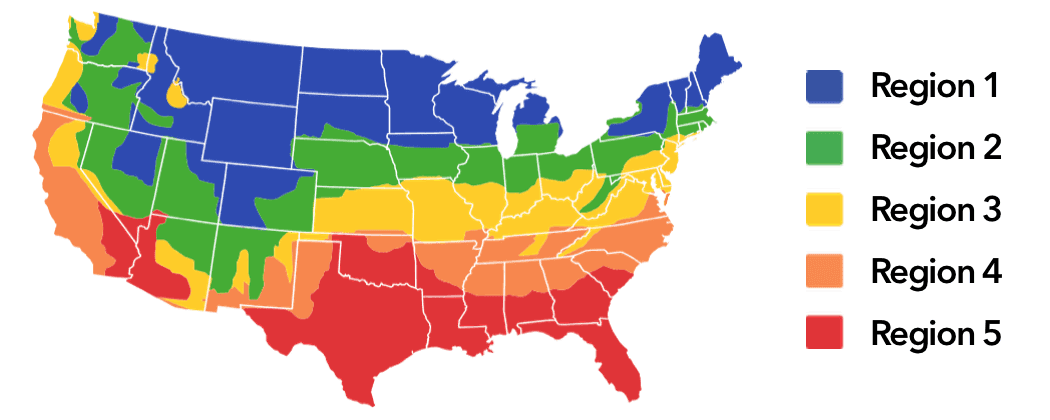
The defaults suit most homes. Set three things first: your climate region (pick it on the map), the square footage you heat and cool, and the system type.
System type
- Cooling only: a central AC with a small electric heat strip for the odd chilly day.
- AC plus furnace: adds a gas or oil hot-air furnace.
- Central heat pump: cools and heats on its own, efficiently down to about 35°F outside. In cold climates, pair it with a dual-fuel gas furnace that takes over automatically.
The tool won’t price equipment nobody sells. A heat pump only pairs with a 96%+ furnace, starts at 16-17 SEER and never runs on oil. Pick a combo that can’t exist, like a 14 SEER heat pump, and it switches to the closest real-world setup.
Efficiency and fuel
SEER: higher SEER means lower bills and a higher price tag. Entry-level central units start around 14 SEER. Newer spec sheets list SEER2, a tougher test that reads about 4-5% lower for the same unit. For serious efficiency, ductless systems beat anything central AC can do.
Furnace AFUE: most gas furnaces are 80% or 96%. An 80% model vents up the chimney; a 96% model vents through PVC pipe out a side wall, which adds parts and labor. For furnace-only prices, use our furnace cost calculator.
Fuel: oil furnaces are rare, cost more and top out near 85%. If natural gas runs to your street, go gas.
Project type and ductwork
Replacement is the usual pick: ducts, refrigerant lines and wiring are in place, and the contractor swaps the condenser, evaporator coil and, if you choose, the furnace. New construction adds copper refrigerant lines between the outdoor condenser and indoor coil. Electrical is left to your electrician, and gas covers a hookup to existing piping only.
The other choices are for houses with no ductwork. Ducts in a gutted house cost about 45% less than in one where a sheet metal crew has to open finished walls, and in a one-story home they can often run through the attic or basement with no wall work at all. Figure roughly $20.55 to $29.00 per linear foot, with about a foot of duct per 10 sq ft of floor. A one-story 2,000 sq ft house with open walls comes to about $4,110-$5,800; finished walls nearly double it. Each extra story adds 40-50+ feet of vertical runs. Our ductwork cost calculator goes deeper.
Extra options
“Show Extra Options” adjusts ceiling height, insulation, windows, air tightness and sun exposure. These mostly change the system size, since a drafty house with leaky windows needs more BTUs than a tight one. Most people can leave them alone.
- Ceiling height: usually 8-9 ft. For a vaulted room, average the short wall and the peak.
- Insulation: a house built roughly 1978-2000 typically has R-13 in 2×4 walls and should have about R-38 overhead. If that’s yours, keep the default.
- Windows: one window or fewer per 8 feet of exterior wall is average.
- Sun exposure: lots of sun through the glass raises cooling needs but barely touches heating.
Reading the results
You get a low, mid and high price. Don’t read them as cheap, decent and premium: the install can be identical at all three, and what changes is the company doing it. Big outfits with truck fleets and radio ads routinely charge 30-50% more than a good small local shop for the same work. The mid figure is where solid workmanship meets a fair price.
Each figure is built from equipment, supplies, local labor rates, overhead and profit. Labor tracks what most licensed HVAC and plumbing contractors charge, leaving out the gougers at one end and the uninsured crews working out of a pickup at the other.
Residential equipment is built for houses under about 3,500 sq ft, though inflated industry BTU-per-square-foot figures let one system cover around 4,000. Past that, the calculator prices two systems, a 5-ton unit (the largest common residential size) plus the smallest unit that covers the leftover load, and the results say how many are included.
Quick Answers
Answers use Ohio averages; energy prices updated October 2026.
Is a heat pump cheaper to run than natural gas in Ohio?
Not in Ohio right now. Natural gas buys 63,517 BTUs per dollar; a heat pump at a COP of 3 buys 43,990. Power would have to drop below about 16.1¢ per kWh to flip that (the Ohio average is 23.3¢), or the heat pump would need a higher COP.
How does electricity in Ohio compare with the national average?
Ohio averages 23.3¢ per kWh, 7% above the U.S. average of 21.7¢ and the 16th highest of the 50 states and DC. AC and heat pump running costs rise and fall with that rate.
Do I need a cold-climate heat pump in Ohio?
It’s a smart upgrade. With a statewide average winter low around 20°F, a standard heat pump handles most nights in Ohio, but cold snaps cut its output. A cold-climate model or a backup heat source covers those.
How much does a heat pump save over baseboard heat in Ohio?
At a COP of 3, about two-thirds. At the Ohio average of 23.3¢ per kWh, baseboard heat costs about $68.20 per million BTU; a heat pump delivers the same heat for about $22.73.
When is the best time to replace HVAC in Ohio?
Spring or fall, before you need it. Installers are busiest in the first heat wave and the first cold snap, and an emergency swap leaves no time to compare quotes.
Should I replace the furnace and AC at the same time?
If both are well into their life, usually yes: one crew visit, one labor bill, and a matched indoor coil and outdoor unit, which is what the efficiency rating assumes. If one of them is fairly new, price the jobs separately.
Run your own numbers: Heat pump cost calculator or Furnace price calculator.
HVAC Costs in Ohio
Typical installed prices in Ohio, equipment and labor.
What Central Air Costs to Install
A 3.5-ton, 14 SEER central AC replacement usually runs $9,380 to $13,250 installed. The ranges below are for a straight swap, where ducts, refrigerant lines and wiring are already in the house, and include equipment, labor, materials and the refrigerant charge.
- 3-ton central AC only (36,000 BTU, roughly 1,400-1,800 sq ft depending on climate): $9,190 – $13,250
- Same AC plus an 80% gas furnace: $12,430 – $17,560
- 16 SEER AC with a 96% AFUE furnace: $15,720 – $22,190
- Central heat pump instead: add $430 – $3,160, depending on brand, SEER and whether a gas furnace stays in the system
The first two lines assume entry-level gear, a 14 SEER condenser and a chimney-vented 80% furnace, which is all plenty of homes need. At 2,500-3,000 sq ft you’re usually shopping for a 4- or 5-ton system, roughly 25-35% more than the 3-ton figures. Beyond size, the price moves with efficiency, existing ductwork and, more than most people expect, who you hire.
Where Central Air Bids Get Padded
Overpaying for central air is rarely one outrageous markup. It’s small things piling up: nobody runs a load calculation, the unit ends up a size too big, and the buyer has no idea what the equipment costs.
A few years back, my plumber was in the basement swapping my water heater and offered to replace my 29-year-old furnace and AC while he was at it. His price was $5,000 per unit for the most basic gear on the market, and he never measured a room. He didn’t know I’m a contractor. Here’s what I saw:
- The quote sat about 30% above the going rate.
- Both pieces of equipment together would have cost him under $2,400.
- My ducts, copper line set and electrical were already in place. Pull the old units, set the new ones, reconnect: one day for a tech and a helper.
Builder-grade boxes at the price of a top-tier heat pump with a high-efficiency furnace, and close to $6,000 in his pocket for one day. Run your own numbers first and a bid like that stands out right away.
Right-Sizing Saves Money for 15+ Years
An oversized unit costs more to buy, short-cycles, and costs more every summer it runs. The calculator sizes systems with a simplified Manual J method and realistic multipliers, which lands leaner than a distributor’s rule of thumb.
A correctly sized 2-ton AC can use up to a third less electricity than an oversized 3-ton. Depending on climate and power rates, that can mean a few hundred dollars back every cooling season, over the 15-20 years the unit sits outside your house. Plenty of contractors still push the 3-ton, because a real load calc eats two or three hours. For a second opinion, try our HVAC load calculator or AC tonnage calculator. The SEER energy cost calculator shows what each efficiency upgrade saves per year.
Heat Pump or AC With a Gas Furnace?
A central heat pump cools at up to about 19 SEER and heats on very little electricity, but it isn’t always the better buy. Heating efficiency is great above roughly 35-40°F. Colder than that, output falls off fast and the system leans on a gas furnace or an electric resistance coil that’s expensive to run. Most units hand off to gas automatically, and with no gas line a furnace can run on propane. Neither available? A hot-water boiler with radiators or radiant floors costs less to run than a furnace and feels better.
For cooling, a heat pump barely beats a 16-17 SEER standard AC, yet the full system typically costs $430-$3,160 more. A higher-SEER AC with a gas furnace is usually the smarter spend. Or go ductless mini-split: it heats down to about -15°F and reaches up to 33 SEER single-zone (20-22 multi-zone). In regions 1 and 2 on our map, keep backup heat for the worst cold snaps. Still leaning toward a heat pump? Price it with our heat pump cost calculator.
Central Air Cost FAQ
What does central air cost for a 2,000 sq ft house?
Most need 3.5 to 4 tons, depending on climate, so AC alone on a replacement runs roughly $9,380-$13,250. A 16 SEER condenser with a 96% gas furnace puts you near $16,040-$22,650.
My house has no ducts. Should I add them?
Usually not. Retrofitting ductwork into finished walls typically runs $6,900-$15,530 before any equipment. A ductless heat pump is almost always the better buy, and for heat, a hydronic boiler setup is hard to beat for comfort.
How long does a replacement take?
When the ducts, line set and wiring stay, swapping the condenser, coil and furnace is usually one day for a tech and a helper. New ductwork adds time.
Ready for real bids? Get free quotes from local HVAC contractors and hold them up against your calculator numbers.
 See costs in your area
Start Here - Enter Your Zip Code