Roof Heat Cable Calculator 2027: Length, Clips & Total Cost
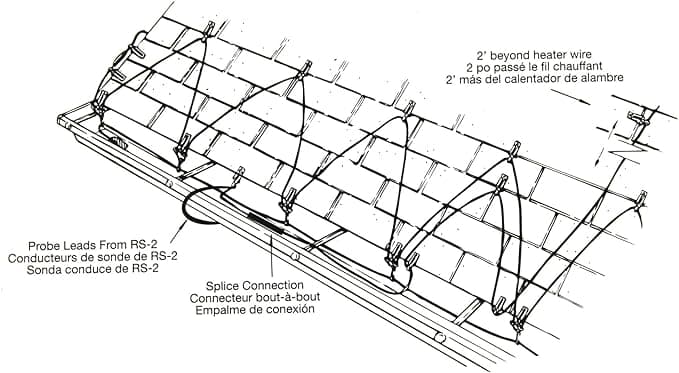
Heat cable is sold in fixed-length kits, and the zigzag along the eave eats far more footage than the roof edge measures. This calculator turns your roof length and overhang into total feet of cable, the mix of 80- and 120-foot kits to buy, and a materials cost with clips included.
Roof Heat Cable Cost in Columbus, OH
- Cable Length:
- 0 ft.
- Materials List:
- 0 ft. cable
- Total Cost:
- $0
How to Use the Roof Heat Cable Calculator
Measure the roof edges where ice builds up. A tape run along the gutter line is close enough. Then fill in four fields:
- Roof Length. Total feet of eave you want to protect. It opens at 120 feet.
- Valley Length. Feet of valley, if any. The cable runs up each valley and back down, so the calculator counts it twice.
- Overhang Depth. How far the roof sticks out past the wall, from 6″-12″ up to 42″-48″. The loops have to reach back over the wall line, where the roof is warm, so a deeper overhang means taller loops and more cable per foot of roof.
- De-Ice Gutters. Pick Yes if your gutters fill with ice. It adds a straight run inside the gutter for the full length of the roof. Downspouts aren’t counted, so add those yourself.
Hit Calculate and you get the total cable length with the loop height for your overhang, the kits to buy, and the total cost. The zigzag adds up fast: a 120-foot eave takes about 290 feet of cable with a shallow overhang, closer to 400 with a deep one.
Sagging gutters hold ice no matter how much cable is in them. If yours pull away from the fascia, price new ones with our gutter calculator or get free quotes from local pros.
Quick Answers
Answers use Ohio averages; energy prices updated October 2026.
When is the best time to replace a roof in Ohio?
Late spring through early fall. Ohio’s average winter high is about 36°F, and shingle sealant strips need warmth to bond, so a winter roof may not seal down until spring unless the crew hand-seals it.
Do I need ice and water shield in Ohio?
In the colder parts of Ohio, yes. A statewide average winter low around 20°F means freeze-thaw cycles in many areas, and higher, colder ground can get ice dams. Everywhere else, run it in valleys and around chimneys.
Is a metal roof worth it in Ohio?
If you plan to stay, it can be. Metal costs more up front than asphalt and lasts much longer, and Ohio’s climate (winter lows near 20°F, summer highs near 86°F) doesn’t rule it in or out. Compare the price per year of life, not the upfront price.
Does a light-colored roof cut AC bills in Ohio?
Some. With summers around 86°F and power at 23.3¢ per kWh (U.S. average 21.7¢), a lighter roof trims AC run time. Check attic insulation and ventilation at the same time.
Can I put new shingles over the old ones?
Sometimes. With one layer on now, many areas allow a second; with two, it’s a tear-off. A tear-off costs more, but it lets the roofer see and fix the deck instead of covering rot.
Run your own numbers: Roof replacement calculator or Metal roof cost calculator.
Roofing Costs in Ohio
Prices for a 2,034 sq. ft. roof, the size of an average home in Ohio, with the old layer torn off.
What Does the Total Leave Out?
- Run to power. Few houses have an outlet under the eave. Measure from the nearest 120V receptacle and add that distance.
- Ice sensor/controller. Optional, but it switches the cable on only when it’s needed, so nobody has to remember.
- Splice parts. Brand-name splice kits are overpriced. A UL-listed radiant tee-and-splice kit does the same job for about a third of the price, and good heat-shrink with butt connectors works too.
Safety: splicing is electrical work. If you’re not sure, hire a licensed electrician; a bad joint on a wet roof is a shock and fire risk.
My advice: have an outdoor outlet added at the end of the roof line. The controller plugs in right there, with no extension cord across the siding all winter.
Why Do Ice Dams Form?
Heat leaking into the attic warms the roof deck. Snow up top melts, trickles down, and refreezes on the cold overhang. Every thaw makes that ridge taller until water backs up under the shingles.
Then it drips into the attic, soaks the insulation and stains ceilings and walls. Wet insulation barely works, so the next dam is worse. Stop the dams before you pay to redo the insulation.
Heat cable doesn’t stop the melting. It keeps a drain path open along the eave and inside the gutter, so the water runs off instead of refreezing into a dam.
What Stops Ice Dams for Good?
- Insulate and air-seal the attic. This is the root cause in most homes. Price it with our attic insulation calculator; it also shows up on your heating bill.
- Vent the roof. Soffit intake plus a ridge vent keeps the deck cold. Do this alongside insulation, not instead of it.
- Add an ice belt. A 3-foot band of metal panels at the eave. Cheapest effective protection.
- Use ice and water shield. In snow country, code requires it at the eaves when you replace the roof. Shingle nails puncture it, so it helps a lot but isn’t foolproof.
- Go with a metal roof. Snow sheds before dams form, though it does nothing for heat loss.
Is heat cable enough on its own?
For one trouble spot or as a stopgap, yes. Long term, protect the eave and fix the attic. The best setup is a tight attic under a metal roof.
 See costs in your area
Start Here - Enter Your Zip Code