Mitsubishi Mini Split Cost Calculator: 2027 Installed Prices
This calculator prices an installed Mitsubishi ductless heat pump, one system that heats and cools with no ductwork, with or without Hyper Heat (H2i) for cold winters. Enter your home size, zone count and efficiency level to get a low, typical and high price plus your heating and cooling load. Use it to judge an installer’s bid before you sign.
MITSUBISHI Heat Pump Costs in Columbus, OH
- Estimated Load
- Cooling: 0 BTUs
- Estimated Load
- Heating: 0 BTUs
See costs in your area Start Here - Enter Your Zip Code
How to Use the Mitsubishi Mini Split Calculator
The first seven fields set the price. Four more sit under Show More Options.
- Home size: only the square footage you want to heat and cool. Doing just an addition or a finished attic? Enter that space, not the whole house.
- System type: Multi-Zone runs several indoor heads off one outdoor unit. Single Zone gives each head its own outdoor unit.
- Number of zones: one per room or open area that gets its own indoor head. This field shows only for Multi-Zone.
- SEER rating: 18 is typical and 20 is better. The 22-33 SEER units come only as single-zone systems, so picking that tier switches the system type to Single Zone.
- Indoor unit type: wall-mounted heads are the norm and the cheapest. Floor units, ceiling cassettes and concealed-duct units add to the cost of every head.
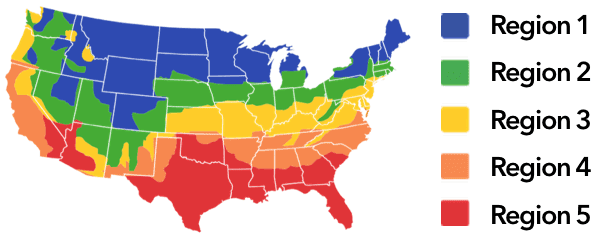
- Cold climate heating: Hyper Heat models are rated to -13°F, standard models to +5°F. The calculator turns Hyper Heat on for regions 1 to 3, but you can override it.
- Climate region: filled in from your location. Check it against the map further down.
The extra options cover ceiling height, insulation, air tightness and windows. Leave the defaults for an average house, and change them if yours is drafty, poorly insulated or has tall ceilings.
The tool turns your square footage into a rough heating and cooling load. (For a room-by-room number, use our HVAC load calculator.) Each single-zone unit has a size limit, and when your load is bigger than the largest one, the calculator adds a second, smaller unit to cover the rest.
Example: a 30,000 BTU load on a 22-33 SEER single-zone setup is priced as an 18,000 BTU unit plus a 12,000 BTU unit. That’s two systems, and the price reflects it.
Pricing one head for a bedroom or small addition? Choose Single Zone and enter a room under 500 sq. ft.
Once you have a ballpark, get free quotes from local HVAC installers and see how their bids compare.
Quick Answers
Answers use Ohio averages; energy prices updated October 2026.
Is a heat pump cheaper to run than natural gas in Ohio?
Not in Ohio right now. Natural gas buys 63,517 BTUs per dollar; a heat pump at a COP of 3 buys 43,990. Power would have to drop below about 16.1¢ per kWh to flip that (the Ohio average is 23.3¢), or the heat pump would need a higher COP.
How does electricity in Ohio compare with the national average?
Ohio averages 23.3¢ per kWh, 7% above the U.S. average of 21.7¢ and the 16th highest of the 50 states and DC. AC and heat pump running costs rise and fall with that rate.
Do I need a cold-climate heat pump in Ohio?
It’s a smart upgrade. With a statewide average winter low around 20°F, a standard heat pump handles most nights in Ohio, but cold snaps cut its output. A cold-climate model or a backup heat source covers those.
How much does a heat pump save over baseboard heat in Ohio?
At a COP of 3, about two-thirds. At the Ohio average of 23.3¢ per kWh, baseboard heat costs about $68.20 per million BTU; a heat pump delivers the same heat for about $22.73.
When is the best time to replace HVAC in Ohio?
Spring or fall, before you need it. Installers are busiest in the first heat wave and the first cold snap, and an emergency swap leaves no time to compare quotes.
Should I replace the furnace and AC at the same time?
If both are well into their life, usually yes: one crew visit, one labor bill, and a matched indoor coil and outdoor unit, which is what the efficiency rating assumes. If one of them is fairly new, price the jobs separately.
Run your own numbers: Central AC cost estimator or Heat pump cost calculator.
 See Costs in Your Area!
Start Here - Enter your zip
HVAC Costs in Ohio
Typical installed prices in Ohio, equipment and labor.
What a Mitsubishi Mini Split Costs
Most whole-house Mitsubishi jobs land at $24,690 to $66,200 installed, usually five to eight indoor heads on one or more outdoor units. Five standard-heat heads sit near the bottom of that range. Eight Hyper Heat heads in a big house up north push toward the top.
That’s on par with, or above, a high-efficiency central air system plus a new furnace. What you get for the money: one system for heating and cooling, and no gas line.
Ask about rebates before you sign. Efficient Mitsubishi models often qualify for utility or state incentives, but the amounts vary a lot by ZIP code, so get current figures from your installer or utility.
Do You Need Hyper Heat (H2i)?
If your winters regularly drop below zero, yes. H2i models keep making heat down to -13°F outdoors, thanks to a bigger outdoor coil, a stronger compressor and a heated base pan that stops ice from building up.
In regions 1 through 3 on the map, pay for H2i. Milder regions can usually skip it.
Mitsubishi vs. a Central Heat Pump
Many standard central heat pumps lose output as the temperature drops toward freezing, and then the furnace takes over. So you pay for both.
A top-tier central heat pump like the Lennox XP25 with a communicating furnace often runs $21,450 to $36,300 or more installed, and its proprietary thermostat adds a few hundred dollars. You still burn gas or propane all winter. A basic AC and furnace from any brand does the same job for roughly $13,320 to $20,930.
A whole-house H2i Mitsubishi system runs about $27,000 to $66,200, so it’s not the budget choice. But it really does heat at -13°F, and it burns no fossil fuel. Add solar and it runs mostly on power you make yourself. Our heat pump electricity guide covers operating costs.
Quick Answers
Can a Mitsubishi mini split replace my furnace?
In most homes, a correctly sized Hyper Heat system can. No oil, propane or gas needed.
Is Mitsubishi worth it over cheaper brands?
In cold climates, yes. In mild areas, compare other brands with our mini split cost calculator or the Daikin mini split calculator.
What else should I price before I decide?
Run a ducted option through the heat pump calculator and the furnace price calculator, then line those numbers up against your Mitsubishi estimate.
See costs in your area
Start Here - Enter Your Zip Code