Cooper & Hunter Mini Split Cost Calculator (2027 Prices)
Enter your square footage, room count and winter rating, and this calculator prices a Cooper & Hunter mini split installed or DIY, and sizes it in BTUs. C&H usually runs about a third under a comparable Mitsubishi. Know your number before you call anyone and a padded bid is easy to spot.
C&H Mini-Split Installation Costs in Columbus, OH
- DIY Install Cost (equipment)
- $0 - $0
- Estimated Load
- Cooling: 0 BTUs
- Estimated Load
- Heating: 0 BTUs
See costs in your area Start Here - Enter Your Zip Code
How to Use the Cooper & Hunter Calculator
Three inputs do most of the work:
- Square footage: count only the space you heat and cool. Skip the garage.
- Rooms: count every room that gets its own indoor head. Each head is a zone, and zones drive the price.
- Cold-climate rating: pick the one that fits your winters. The cold-climate section below tells you when the Hyper model is worth it.
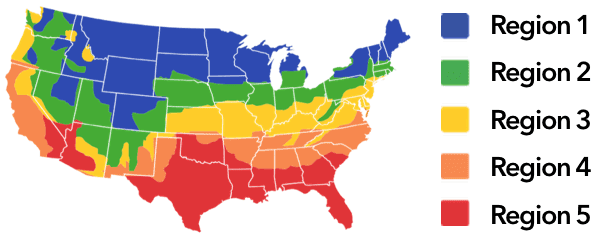
The tool guesses your climate region from your location. Check it against the map before you hit Calculate.
You’ll get low, mid and high installed prices, plus an equipment-only figure that already counts the line set, control wire and line hide. Tools for a DIY install (vacuum pump, gauges, flaring kit) show up as a separate line. Location can swing any of these numbers about 15 percent either way, with the West Coast running highest.
Quick Answers
Answers use Ohio averages; energy prices updated October 2026.
Is a heat pump cheaper to run than natural gas in Ohio?
Not in Ohio right now. Natural gas buys 63,517 BTUs per dollar; a heat pump at a COP of 3 buys 43,990. Power would have to drop below about 16.1¢ per kWh to flip that (the Ohio average is 23.3¢), or the heat pump would need a higher COP.
How does electricity in Ohio compare with the national average?
Ohio averages 23.3¢ per kWh, 7% above the U.S. average of 21.7¢ and the 16th highest of the 50 states and DC. AC and heat pump running costs rise and fall with that rate.
Do I need a cold-climate heat pump in Ohio?
It’s a smart upgrade. With a statewide average winter low around 20°F, a standard heat pump handles most nights in Ohio, but cold snaps cut its output. A cold-climate model or a backup heat source covers those.
How much does a heat pump save over baseboard heat in Ohio?
At a COP of 3, about two-thirds. At the Ohio average of 23.3¢ per kWh, baseboard heat costs about $68.20 per million BTU; a heat pump delivers the same heat for about $22.73.
When is the best time to replace HVAC in Ohio?
Spring or fall, before you need it. Installers are busiest in the first heat wave and the first cold snap, and an emergency swap leaves no time to compare quotes.
Should I replace the furnace and AC at the same time?
If both are well into their life, usually yes: one crew visit, one labor bill, and a matched indoor coil and outdoor unit, which is what the efficiency rating assumes. If one of them is fairly new, price the jobs separately.
Run your own numbers: Central AC cost estimator or Heat pump cost calculator.
HVAC Costs in Ohio
Typical installed prices in Ohio, equipment and labor.
Cooper & Hunter Mini Split Cost: What Homeowners Pay
On a two- to four-zone system, most homeowners pay $3,020 to $4,830 per zone, fully installed by a licensed HVAC company. That covers the condenser share, the indoor head, refrigerant lines, mounting hardware and labor. Per-zone cost creeps up as you add heads, so a five-zone job can top $6,440 a zone.
Going single-zone? Figure $5,130 to $6,290 for one 12,000 BTU head, because one room pays for the whole outdoor unit instead of splitting it.
The headline price leaves out power. With no dedicated HVAC circuit and outdoor disconnect near the condenser spot, an electrician will usually charge another $660 to $1,320 for the breaker, wire run and disconnect. If your panel has no open breaker slots, get that priced up front so it doesn’t turn into a change order.
| Cost piece (one 12,000 BTU zone) | Typical range |
|---|---|
| Equipment, single-zone system | $2,970 – $4,480 |
| Equipment, each head on a multi-zone | $1,330 – $1,750 |
| Line set, wire, line hide, bracket or pad | $540 – $870 |
| Installation labor | $1,690 – $2,390 |
| Typical installed total | $5,130 – $6,740 |
| New circuit + disconnect (only if missing) | $660 – $1,320 |
Add up the line items and you’ll usually land below the top of that total. The upper end covers 22+ SEER units, long line runs and tricky walls; real quotes cluster inside the typical band.
Why Is Cooper & Hunter About a Third Cheaper Than Mitsubishi?
A comparable Mitsubishi system typically runs a third to a half more, and that holds even after a contractor adds labor. Two things explain the gap.
Reputation. Mitsubishi, Fujitsu and Daikin are Japanese-engineered, they’ve been here longer, and commercial architects write them into specs by habit. Mitsubishi in particular has outspent everyone on marketing. Cooper & Hunter is the newer US name, but the hardware comes out of one of the world’s biggest HVAC factories, and in my experience it holds its own against the premium brands.
Install time. A C&H multi-zone condenser talks to its heads without branch boxes or field programming. Go past three zones on a Mitsubishi and you need both, which means more parts and more billable hours.
Where Does the Money Go?
Equipment: the heating rating sets the price
Efficiency spans roughly 18 SEER on the entry units to 25 SEER on the best single-zone models. Multi-zone condensers mostly land around 20 to 22 SEER. That’s not C&H cutting corners; larger systems always rate lower, whatever the badge says.
The bigger price driver is how cold it can get outside before the unit stops heating well. Base models are rated to about +5°F. The Sophia Hyper line keeps going at -22°F, and it sits at the top of the price list.
A single 1-ton zone costs $2,970 to $4,480 in hardware, from an entry 18 SEER, +5°F unit at the bottom to a 20 SEER Hyper at the top. Each head on a multi-zone system runs about $1,330 to $1,750.
Accessories and mounting
Copper refrigerant lines, communication wire, line hide covers and a wall bracket or condenser pad add $540 to $870 per indoor unit. Multi-zone setups come in cheaper per head, since only one outdoor unit gets mounted.
Labor
Installers charge $1,690 to $2,390 per zone. Don’t expect a multi-zone discount here: every head needs its own line set run, wired and leak-tested, so hours climb with room count.
Most of the spread comes from your local market and the contractor’s experience. Established licensed shops seldom quote under about $1,690 a zone. A much lower number usually comes from someone new trying to build up reviews on your house.
The worst ductless job I’ve watched unfold was a three-zone system a plumber subcontracted out; it leaked refrigerant and needed three service calls before its first birthday. The best was a homeowner who did the grunt work and hired a veteran tech for nothing but the flare connections and the vacuum. Those two steps decide whether a mini split lasts, so that’s where the money should go.
Options That Raise or Lower Your Quote
Indoor unit style
Wall-mounted heads are the budget pick and the fastest install. They hang high, around 6 to 7 feet up. Floor consoles cost a bit more.
Ceiling cassettes recess between joists so only the grille shows, and concealed-duct units hide in an attic, soffit or basement and push air through short duct runs to a room or two. Both carry a real premium: framing work, enough cavity space to fit the unit, and usually a condensate pump to move the drain water.
Higher SEER
Going from 18 to 20 SEER adds only a few percent to the price, while the 22+ SEER single-zone units run about 20 to 25 percent more. Higher SEER lowers your power bill but doesn’t change the size of system you need. If you’re replacing an old central air unit in the 9 to 13 SEER range, even the 18 SEER entry model will make a dent in summer bills.
Cold-climate heating
In Regions 1 and 2, buy the -22°F Hyper version. Don’t overthink it. In Region 3 (New Jersey, Maryland, Tennessee, Oregon and similar) I’d still pay for it.
The upgrade adds roughly $260 per zone, or about $1,030 to $1,270 across a four-zone system. Even if you bought the system mainly for cooling, you get a heat source that keeps working in a hard freeze. Hyper-heat models are also the ones most likely to qualify when utilities or state programs run heat pump rebates.
Cheapest upgrade of all: tighten up the house first. Sealing drafts and adding insulation cuts the heating and cooling load, so you can buy a smaller system that’s cheaper to install and to run. Our BTU load calculator shows how far the number drops.
Cooper & Hunter Mini Split FAQ
Is Cooper & Hunter a good brand?
Yes, for most homes. You get strong efficiency, genuine cold-weather heating and dependable parts at a price the Japanese brands can’t touch. The best endorsement I’ve seen came from my own supply house: it dropped Fujitsu and now stocks Cooper & Hunter exclusively, and its contractors report very few callbacks. For one tough single-zone room in my own house, the Hyper beat every Fujitsu option I priced.
Can I install a C&H mini split myself?
You can. Cooper & Hunter sells direct to homeowners and designs its units with DIYers in mind. A self-install usually saves 30 to 40 percent. The smart middle ground is to mount the heads and run the lines yourself, then pay a pro to make the connections and pull the vacuum.
What will it cost to run?
Our ductless heat pump energy cost calculator gives a monthly estimate. Feed it your local electric rate for a realistic number.
How do I get real installation quotes?
Get up to four free quotes from local HVAC contractors and line them up next to your calculator estimate. Anything far outside the range deserves a hard question.
Pricing other options too? Run the same house through our mini split cost calculator for other brands, or see what a ducted heat pump would cost instead.
$6010 - $7910
 See costs in your area
Start Here - Enter Your Zip Code