Furnace Size Calculator 2027: What BTU Furnace Do I Need?
Square footage alone won’t size a furnace: insulation, windows and ducts can triple the heat a house loses. This calculator runs a simplified heat-loss check on your climate, home and ducts, so you buy a furnace that keeps up on the coldest night without paying for size you’ll never use.
Furnace Size (BTU load) in Columbus, OH
- Estimated Load
- Heating: 0 BTU
- Recommended Equipment
- Heating: 0 BTU Furnace
See costs in your area Start Here - Enter Your Zip Code
Most people shopping for a furnace never think about insulation. Over ten years, though, it can be worth tens of thousands of dollars. Picture a 2000 sq. ft. home in Illinois or Massachusetts.
Build it super-insulated, with 30R walls, a 60R attic and triple-glazed 0.21U windows, and it needs 47800 - 48200 BTUs per hour. A 50K BTU furnace covers it.
Give the same house the worst insulation grade and the load climbs to 152200 - 154700 BTUs per hour. You’d burn 3 times the energy and need a furnace 3 times the size.
That gap is roughly 100K BTUs an hour, which is about 1 therm of natural gas. Natural gas in IL costs $2.40/therm. In MA it’s $1.94/therm.
If the furnace runs 15-20 minutes out of every hour, the poorly insulated house costs an EXTRA $14.4 - $19.2 / per day in IL, and $11.64 - $15.52 per day in MA.
How to Use the Furnace Size Calculator
Work down the form, then hit Calculate. The duct settings move the answer most, so don’t rush them.
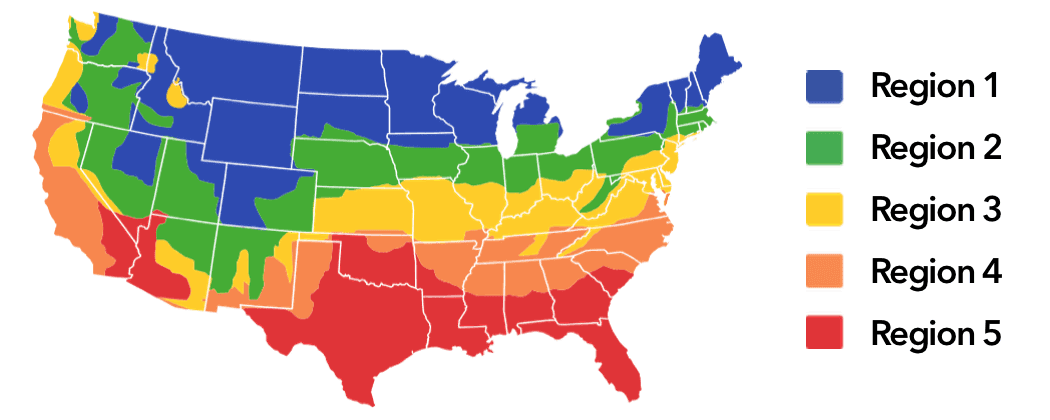
- Climate region: filled in from your location. Check it against the map under the calculator. California, Arizona and New Mexico run from desert heat to high-mountain cold, so pick the region that matches your town, not the state.
- Home size: heated living space only. It starts at your state’s average home.
- Indoor temp: your winter thermostat setting (default 72°F).
- Efficiency and fuel: 90%+ AFUE counts as high efficiency; standard units run 80-86%. Most homes burn natural gas. Oil furnaces sit around 85%.
- Duct type: most flex duct is R-6, the usual code minimum. Choose bare metal and the duct insulation option goes away.
- House insulation: one setting that resets walls, attic and windows together. Rough wall values: 2×4 fiberglass R-13, 2×6 fiberglass R-19, 2×6 closed-cell spray foam about R-30.
- Show More Options: duct location and duct insulation live here, along with ceiling height, window count and separate wall, attic and window grades. Set the duct location even if you skip the rest. Ducts in an unheated attic or crawl space can lose 40% of your heat.
Treat the result as a solid starting point, not a substitute for the full load calc your installer should run.
Quick Answers
Answers use Illinois averages; energy prices updated October 2026.
Is a heat pump cheaper to run than natural gas in Illinois?
Not in Illinois right now. Natural gas buys 78,802 BTUs per dollar; a heat pump at a COP of 3 buys 44,526. Power would have to drop below about 13.0¢ per kWh to flip that (the Illinois average is 23.0¢), or the heat pump would need a higher COP.
How does electricity in Illinois compare with the national average?
Illinois averages 23.0¢ per kWh, 6% above the U.S. average of 21.7¢ and the 17th highest of the 50 states and DC. AC and heat pump running costs rise and fall with that rate.
Do I need a cold-climate heat pump in Illinois?
Plan on one. Illinois’s statewide average winter low is about 19°F, and standard heat pumps lose a lot of output in that range. Cold-climate models are built to keep heating below zero; size for your coldest nights, not an average day.
How much does a heat pump save over baseboard heat in Illinois?
At a COP of 3, about two-thirds. At the Illinois average of 23.0¢ per kWh, baseboard heat costs about $67.38 per million BTU; a heat pump delivers the same heat for about $22.46.
When is the best time to replace HVAC in Illinois?
Spring or fall, before you need it. Statewide winter lows average around 19°F, so finish heating work by early fall. Installers are busiest in the first heat wave and the first cold snap, and an emergency swap leaves no time to compare quotes.
Should I replace the furnace and AC at the same time?
If both are well into their life, usually yes: one crew visit, one labor bill, and a matched indoor coil and outdoor unit, which is what the efficiency rating assumes. If one of them is fairly new, price the jobs separately.
Run your own numbers: Central AC cost estimator or Heat pump cost calculator.
Heating Costs in Ohio
Typical installed prices for heating systems in Ohio.
The 50-BTU Rule of Thumb Oversizes Most Furnaces
A real Manual J takes hours and hundreds of measurements, so plenty of installers skip it. They multiply your square footage by 45 or 50, then tack on another 10,000 BTUs. That cushion isn’t for you. It’s so nobody calls the shop in January about cold bedrooms.
The shortcut ignores what actually drives heat loss: insulation, drafts, windows and duct location. And sizing can miss both ways:
- Too big: short-cycling, wasted fuel, and you paid for capacity you’ll never use.
- Too small: fine most of the winter, then it falls behind once it’s single digits or below zero.
Our calculator uses 14 inputs. That’s far simpler than Manual J, but it catches what the rule of thumb misses.
How Much Does Insulation Change Furnace Size?
More than anything else you control. Take a 2,000 sq. ft. house in a cold-winter state like Illinois or Massachusetts. Tight and well insulated, it might get by on a 50,000 BTU furnace. Same floor plan with thin walls and single-pane glass? Think 150,000 BTUs or more. Triple the furnace for identical square footage.
To see what upgrades would do for your house, run the calculator twice: once as the house is now, once with better walls, attic or windows. If the number drops a lot, an attic insulation upgrade is usually the cheapest place to start.
Pro tip: plug your load into our BTU fuel cost calculator to compare gas, oil, propane, electric and pellets in your state.
How Much Heat Do Your Ducts Lose?
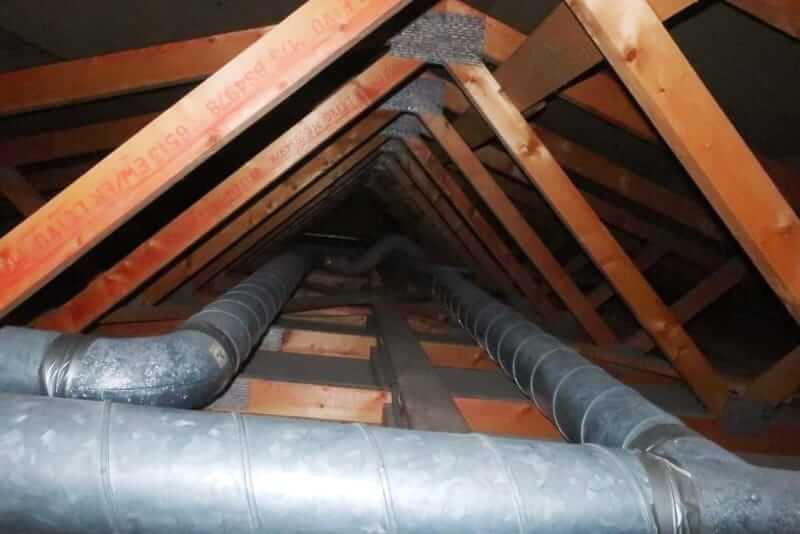
Ducts are the part nobody thinks about. In an attic or crawl space, losing 20 to 40 percent is common, and the worst setups get close to half. That’s $200 to $400 of every $1,000 you spend on heat, warming joists instead of people.
Worst case, worked out
Bare metal ducts in a vented attic. It’s 5°F outside, so the attic sits near 15°F, and every bit of furnace heat passes through that thin steel first.
- Area: 100 feet of 12-inch square duct exposes about 400 sq. ft. of metal.
- U-factor: 26-gauge steel is roughly R-0.5. Call it R-1, so U = 1.
- ΔT: 140°F supply air against a 15°F attic is a 125°F difference.
1 (U) × 400 sq. ft. × 125°F = 50,000 BTU/hr lost
On a 100,000 BTU, 95% AFUE furnace, half the output is gone. Subtract 5% up the flue and only about 45,000 BTUs reach the house, before a single drafty window is counted.
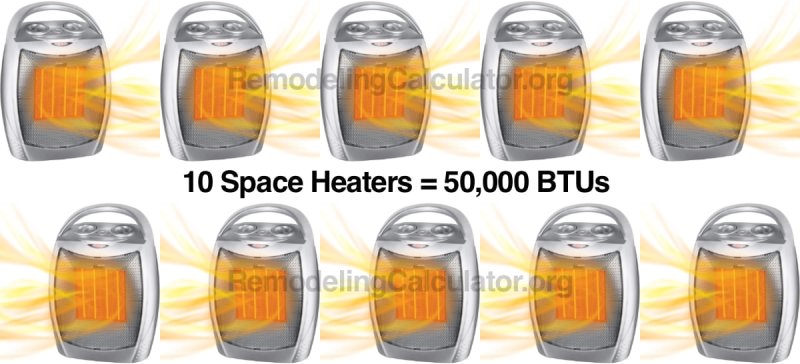
How much is 50,000 BTUs? About ten 1,500-watt space heaters running flat out, all dumping heat into the attic.
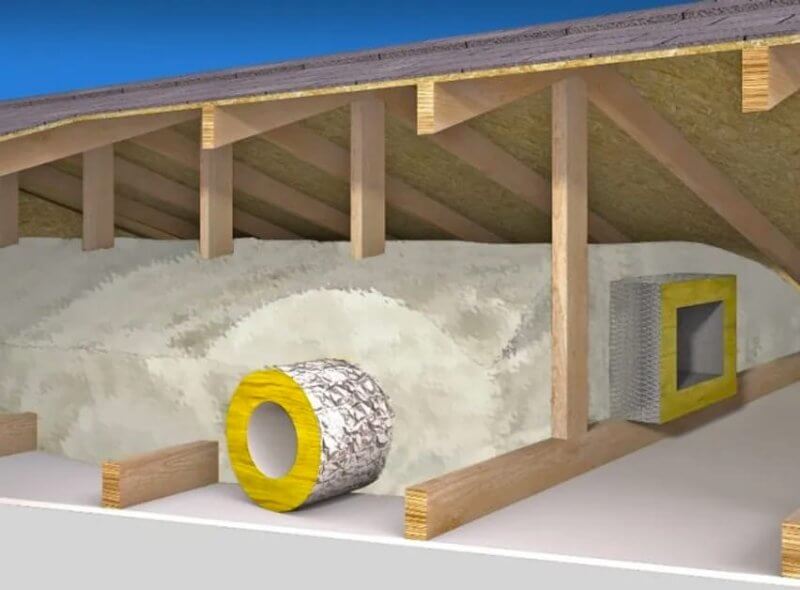
Same ducts, wrapped in R-10
0.1 (U) × 400 sq. ft. × 125°F = 5,000 BTU/hr lost
That’s a 90% cut. With flue losses you keep about 90,000 of 100,000 BTUs. Insulate the attic too and ΔT shrinks to 20-50°F, so losses drop further. Sealed, well-insulated ducts can get losses down to 4-5%.
Before you buy a bigger furnace to make up for bad ducts, price the fix with our ductwork cost calculator.
Furnace Sizing FAQ
Is a high-efficiency furnace worth it?
Not always. A 90%+ unit burns less gas but costs more to install and maintain. In milder climates a standard 80-86% furnace often wins on lifetime cost. Compare both in our furnace replacement cost calculator.
Do I still need a Manual J?
For the final pick, yes. If a contractor won’t do one, or quotes a size far above this calculator’s number, ask them to explain the gap.
Ready to compare real prices? Get free quotes from local HVAC pros.
 See costs in your area
Start Here - Enter Your Zip Code