Tankless Water Heater Installation Cost 2027: Calculator
Pick gas or electric, answer a few questions, and this calculator prices a tankless water heater installed, unit and labor, at your local rates. Most jobs land between $1,700 and $3,450, so you’ll have a fair number to hold contractor bids against.
Estimate Tankless Water Heater Costs in Columbus, OH
See costs in your area Start Here - Enter Your Zip Code
How to Use the Tankless Water Heater Cost Calculator
The calculator doesn’t price a bare swap. It adds the parts a real tankless job needs, so each answer moves the total.
- Fuel Type. Choose the fuel the house already has. Gas jobs include a hookup kit, about $520 for a basic connection. Your pick also decides which question comes next.
- Vent Type (gas only). Tankless exhaust can’t go up the old chimney in most homes, so most gas jobs need a power vent. It adds roughly $520 to $680. Not sure? Run it both ways and let your installer tell you which one the house needs. Building new? New homes almost never have a masonry chimney, so pick Power Vent.
- Your Service (electric only). Whole-house electric units are hungry. Pick 100-150 AMP and the calculator adds about $1,590 to $2,060 for a panel upgrade. The amp rating is printed on your main breaker.
- Quality. Don’t default to Premium. The top tier mostly buys app control and fancy displays. Better is where the reliable brands live.
- Job Type. Replace Old adds the labor to disconnect and haul away the old heater. New Construction leaves it out.
Labor is priced for the location in the calculator’s title, so make sure it’s yours. The West Coast runs about 40% above the cheapest region, Texas and its neighbors. You get a low, mid and high figure that mirrors the spread you’ll see in actual bids. To test it against the real thing, request free quotes from licensed plumbers near you. There’s no obligation to hire.
HVAC Costs in Ohio
Typical installed prices in Ohio, equipment and labor.
What a Tankless Water Heater Costs Installed
Premium gas units that need a power vent, or electric units that force a panel upgrade, can push past $4,040 and top $5,190 on the West Coast. The table below shows national-average ranges before either of those extras. Unit prices include the installer’s markup, gas units include the hookup kit, and labor runs about $1,160 to $1,680 for either fuel, depending on your region.
| Type | Unit only | Labor | Installed total |
|---|---|---|---|
| Point-of-use electric (one sink or shower) | $150 – $390 | $250 – $700 | $400 – $1,080 |
| Whole-house electric, standard | $420 – $1,240 | $1,160 – $1,680 | $1,730 – $2,890 |
| Whole-house electric, high-end | $1,560 – $2,020 | $1,160 – $1,680 | $2,830 – $3,690 |
| Gas, budget | $900 – $1,180 | $1,160 – $1,680 | $2,190 – $2,840 |
| Gas, mid-range | $1,450 – $1,850 | $1,160 – $1,680 | $2,710 – $3,530 |
| Gas, premium | $2,020 – $2,660 | $1,160 – $1,680 | $3,320 – $4,320 |
| Solar water heating system | Sold as a package | $4,620 – $9,230 (more for large systems) | |
Gas costs more because of what goes around the unit: the gas hookup, often a vent through the wall or roof, and sometimes a condensate drain. Electric skips the flue, but a whole-house unit needs heavy dedicated circuits, and on a 100-amp house the panel work can cost more than any vent.
A point-of-use heater moves only about 0.5 to 2 gallons per minute, which suits one far-off bathroom or a wet bar. A whole-house model is rated for roughly 5 to 10 gpm at a mild temperature rise (less in cold climates, as the sizing example below shows). That covers a shower and the washer at once. Big households sometimes run one of each.
Rinnai, Noritz, Takagi, Rheem and Bosch cover most of the gas market, with A.O. Smith usually at the top of the price range. On the electric side you’ll mostly see Stiebel Eltron, EcoSmart, Eemax, Rheem and Bosch.
Solar is the outlier: the highest price up front and the lowest running cost. It cuts water-heating costs by 50 to 80% with nothing burning in the house. If you’re going that route, our solar panel angle calculator shows whether your roof faces the right way.
The federal tax credits that once covered efficient gas units and solar water heating have ended. Some utilities and states still run their own programs, so check ENERGY STAR’s rebate finder and your utility’s website before you buy.
Extra Costs That Show Up on Tankless Bids
This is where quotes from different contractors drift apart, so ask each one to list these items separately.
- Gas line upsizing. At full fire, a tankless burner pulls several times the gas of a tank. The calculator covers a basic hookup. If your existing line is too small, a new run costs more, depending on how far it travels from the meter.
- Power venting. About $520 to $680 when the old chimney can’t be reused, which covers most homes.
- Electrical service. Whole-house electric units often need a 200-amp panel. On an older 100-amp house, figure about $1,590 to $2,060 for that upgrade, more if the panel itself is worn out. Have an electrician quote it before you commit to electric.
- Water treatment. Hard water scales up a heat exchanger quickly. A softener or a scale-reducing filter protects the warranty.
- Permits. Gas, venting and electrical work almost always need one. A legitimate contractor pulls it without being asked.
About the cheapest bid: When one quote comes in far below the others, ask for a license number, a current insurance certificate and who’s pulling the permit. The lowball bidder often skips all three, and a bad gas connection is the wrong place to save a few hundred dollars.
Is a Tankless Water Heater Worth It?
On energy savings alone, usually not. The Department of Energy puts the yearly savings at about $108 for a gas tankless unit over a gas tank, and around $45 for electric over electric. Tankless costs roughly $1,140 to $2,310 more than a tank installed, so that gap takes 8 to 20 years to close on gas, and far longer on electric. The honest case for tankless is everything except the utility bill.
What you gain: hot water that doesn’t run out as long as the unit is sized right, a heater that typically lasts 20-plus years (a tank is usually done at 10 to 12), heat-exchanger warranties around 15 years versus 6 to 12 on tanks, no 50-gallon tank waiting to rust through and flood the basement, and a wall-mounted box that frees up a closet corner.
What you give up: roughly double the upfront cost, a more involved install, yearly descaling (or a softener if your water is hard), and a real penalty for undersizing. If two showers at once leave somebody cold, the extra money bought you nothing.
If a smaller bill is the main goal, a high-efficiency tank is the better buy. Our water heater replacement cost page prices that route.
Gas or electric?
Use the fuel you already have. Bringing a gas line into an all-electric house, or swapping gas for a big electric circuit, can eat any savings for a decade.
If you’re choosing fresh, gas wins for larger families. It pushes far more hot water per minute, and in most of the country it’s cheaper to run. Electric wins on price and simplicity: the unit is cheaper, there’s no flue, and nobody cuts a vent through your wall. It struggles in cold-water climates, though. Run your local utility rates through our heating costs calculator to see which fuel is cheaper where you live.
What Size Tankless Heater Does a Family of Four Need?
Undersizing is the most common tankless regret, so here’s the math for a family of four in Minnesota.
Start with the worst realistic morning. Two people shower at once (about 2 gpm each with standard heads) while someone runs the kitchen faucet (call it 1.5 gpm). That’s 5.5 gpm of demand. If the dishwasher or washer might run at the same time, add another 1 to 2.5 gpm, depending on age. Showerheads from before the mid-1990s can pull 3 to 5 gpm by themselves, so check yours.
Next, work out how much the heater has to warm the water. Groundwater in the northern states can get down to around 35°F in winter. Say this family’s water comes in at 40°F and they want 120°F at the tap. That’s an 80°F rise.
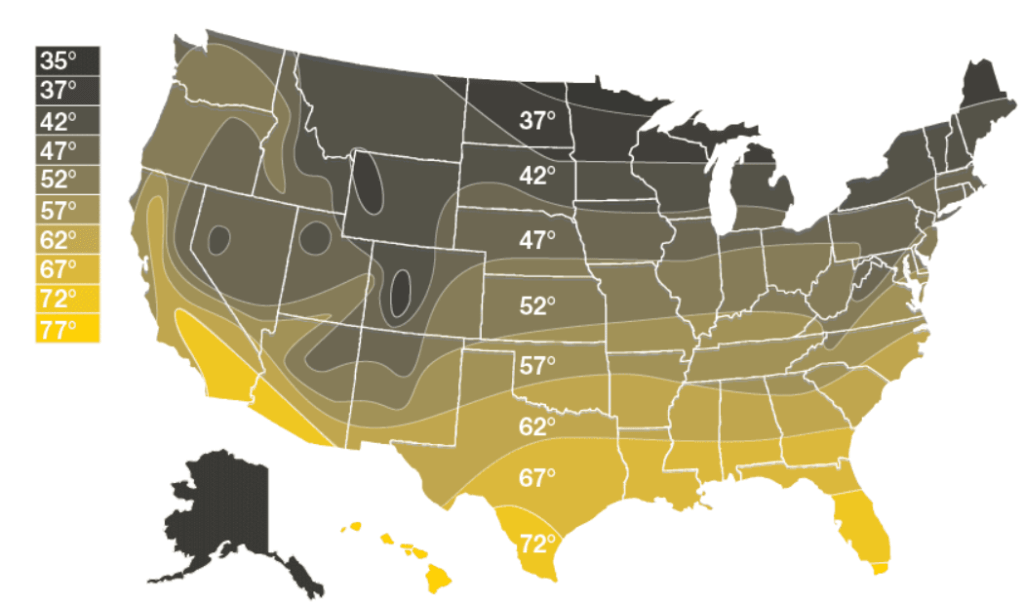
With a little margin, they need about 6 gpm at an 80°F rise. No single residential unit gets there: the biggest gas models (around 199,000 BTU) deliver roughly 5 gpm at that rise, and whole-house electric falls well short in a Minnesota winter. The practical fix is 1.5 gpm showerheads, which drops the peak to about 4.5 gpm, or two gas units piped together. Read the flow chart on the spec sheet, not the big gpm number on the box, because manufacturers quote that figure at a gentle rise.
The same family in Houston, with water coming in near 77°F, needs only about a 43°F rise. A mid-size gas unit or even a strong electric one would keep up. Same house, same showers, very different heater.
Tankless Installation Questions
How long does a tankless install take?
A straightforward electric swap is usually done in half a day. Gas jobs with new venting or pipe usually take the better part of a day.
How long will it last?
Twenty years or more with yearly flushing. Skip the descaling in a hard-water area and you’ll cut that short.
What’s the cheapest way to go tankless?
A point-of-use electric unit for a single fixture. For the whole house, stay with your current fuel and compare a few quotes from local installers before you pick one.
Still weighing it? Run both fuels through the calculator above, then price a standard tank on our water heater replacement cost page. Heat with a boiler? The boiler cost calculator prices an indirect tank instead. Redoing the bathroom at the same time? The bathroom remodel cost estimator covers the rest of the job.
 See costs in your area
Start Here - Enter Your Zip Code