2027 HVAC Prices in Charleston, WV: Install, Running Cost, Payback
Adjust your home size & electric cost in Charleston, WV
For a 1,750 sq. ft. house in Charleston, plan on 3 tons of cooling (about 36,000 BTU). Installed at 14 SEER, the rating with the best long-run math here, that system runs $7,130 to $8,590. As a smaller market of about 47,000 people, Charleston comes in roughly 0% under the West Virginia statewide figure.
This is the cost of swapping old equipment for new on the existing duct system. Anything structural, such as new runs, a bigger circuit or a rooftop mount, is extra.
Buying Central Air in Charleston: The Price Ladder
Each step up in efficiency costs more in Charleston. The entry 14 SEER system is $7,130 to $8,590; 16 SEER is $9,050 to $10,900; 18 SEER is $13,780 to $16,610; 20 SEER is $19,110 to $23,030.
Charleston Next to the West Virginia Average, by SEER
| System (3 ton) | Charleston | West Virginia average | Materials |
|---|---|---|---|
| 14 SEER | $7,130 - $8,590 | $7,120 - $8,580 | $4,480 |
| 16 SEER | $9,050 - $10,900 | $9,030 - $10,890 | $5,630 |
| 18 SEER | $13,780 - $16,610 | $13,760 - $16,590 | $8,450 |
| 20 SEER | $19,110 - $23,030 | $19,080 - $23,000 | $11,630 |
The condenser, coil and parts come to about $4,480 on a 14 SEER job and $5,630 on a 16 SEER job; everything else in the Charleston price is installation.
The Charleston Price Adjustment, Explained
Two identical systems can draw different quotes in two West Virginia cities, because labor and overhead are set locally. In numbers: a 16 SEER install averaging $9,030 to $10,890 statewide comes to $9,050 to $10,900 in Charleston, about 0% less.
The same estimate covers all 42 ZIP codes with a Charleston mailing address in our database, in Kanawha County. Ask each Charleston bidder for model numbers, warranty terms and a clear yes or no on permit, disposal and thermostat.
Ten Summers of Cooling Bills in Charleston
Every cooling cost below starts from $0.192 per kWh, the West Virginia average and about 11% below the national average of $0.217. Rates have not stood still: West Virginia power rose roughly 4.39% per year in our ten-year record, reaching about $0.30/kWh by 2036 if it keeps going.
Each line is one SEER rating; touch or hover a year to read its dollar figures. The climb is the 4.39% yearly increase WV rates showed over ten years.
Starting point: this summer at WV's current rate. From there the rate grows 4.39% per year, compounded, and each season cost is rounded up to $10.
A 9 SEER unit costs about $1,320 a year to run here; 16 SEER cuts that to about $750 on roughly 3,858 kWh.
Upgrade Payback Finder: Your Old AC vs a New One
Choose your current AC and a replacement rating. Every result assumes a 3-ton system and West Virginia electric rates ($0.192/kWh today, up 4.39% a year).
| Installed price of the new system | $7,750 |
| Electricity saved, first year | $480 |
| Saved over 10 summers (rates rising) | $5,830 |
| Payback | 12.5 years |
| Net after 10 summers | -$1,920 |
Savings alone fall short: 9 to 14 SEER is still $1,920 behind after 10 summers in WV.
These figures treat the whole install as the price of switching from a unit that still runs. For a dead unit, only the step up from a basic 14 SEER bid has to pay back.
Old 9 SEER vs New: Charleston Numbers
| 9 SEER | 14 SEER | 16 SEER | 18 SEER | 20 SEER | |
|---|---|---|---|---|---|
| Installation Cost | - | $7,750 | $9,830 | $14,980 | $20,770 |
| Electric Usage / Yr | 6,823 kWh | 4,344 kWh | 3,858 kWh | 3,480 kWh | 3,177 kWh |
| Electric Cost / Yr | $1,320 | $840 | $750 | $670 | $620 |
| Energy Savings / Yr | - | $480 | $580 | $650 | $710 |
| Payback (Rates Rising) | - | 12.5 years | 13.1 years | 16.4 years | 19.4 years |
| 10-Year Net (Rates Rising) | - | -$1,920 | -$2,860 | -$7,120 | -$12,200 |
In Charleston, 14 SEER gives the best mix of price and savings: about 12.5 years to recover its cost against an old 9 SEER unit.
Total Cost to Own Each SEER in Charleston
Buy Price vs 10-Year Running Cost: Total Cost of Ownership in WV
Three bars per rating: what it costs to install, what it costs to cool the house for 10 summers at West Virginia rates with the rate climbing 4.39% a year, and the sum. The rating with the shortest third bar costs the least to own. Tap or hover any bar to see the addition.
Cheapest over 10 years in West Virginia: 14 SEER at $17,960 all-in, made of $7,750 to install plus $10,220 to run.
How the electricity bar is built: this season at today's WV rate, then nine more seasons, each raised by the 4.39% yearly increase WV has averaged. Install is the typical price shown on this page. Every figure is rounded up to the next $10 separately, which can leave the parts $10 over the total.
Check the AC Price Where You Live
 See costs in your area
Start Here - Enter Your Zip Code
Heat, Cold and Equipment Choices in Charleston
Charleston lies near 38.4° N. Our model places West Virginia in climate region 3, where summer days average around 85°F and winter afternoons about 40°F statewide. A heat pump in Charleston works hard in two seasons, which makes build quality and service access as important as the efficiency label.
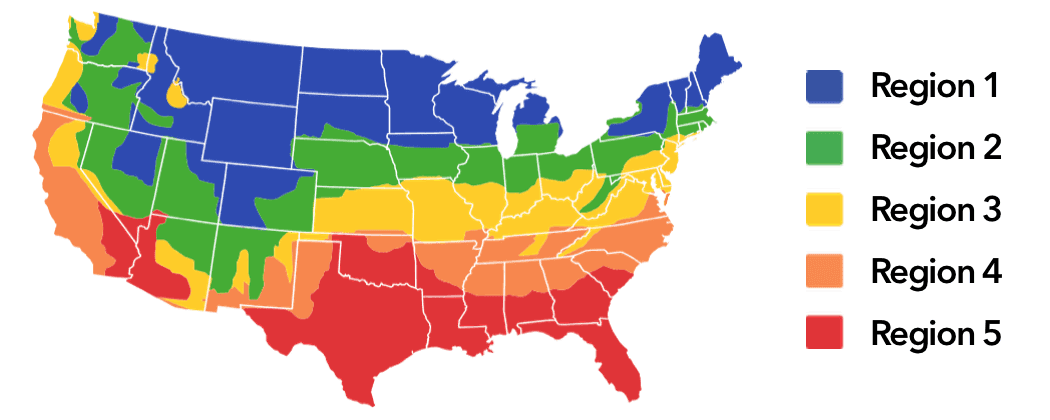
Climate zones run from 1 (cool) to 5 (hot); West Virginia is in Zone 3.
An oversized unit in muggy Charleston weather cools fast, shuts off early and leaves the house clammy. Right sizing fixes that.
The closest city in this guide is Huntington, about 45 miles to the west; it has its own price page.
A heat pump covers most Charleston heating days efficiently, with backup heat for the coldest stretches. Bigger is not better. An oversized system costs more to buy, cycles too often and controls humidity poorly.
Ducts, Access and Layout in Charleston Homes
Ducts in Charleston homes often run through a hot attic or a crawlspace, where they lose cooling. Sealing and insulating them is a cheap add-on to an upgrade. Short drives and simple access help explain why Charleston prices sit at or below the West Virginia average.
Each ductless head hangs high on an inside wall and connects through one narrow wall opening, so older houses avoid torn-up plaster.
When Charleston Installers Have Room
If you hold off until the first Charleston heat wave, expect a longer wait for an install date and little leverage on price. Ask whether the bid includes the permit fee and the inspection visit; installers commonly arrange both.
Nearby West Virginia Markets
Compare Charleston with these West Virginia markets (16 SEER, installed):
- Huntington, WV (west, 45 mi): $9,040 to $10,900
- Morgantown, WV (northeast, 130 mi): $8,990 to $10,840
- Parkersburg, WV (north, 65 mi): $8,990 to $10,830
Nearby places such as South Charleston, Dunbar, Tad, Institute and Teays Valley can use the Charleston figures as a starting point.
The West Virginia HVAC cost guide covers statewide prices, SEER comparisons and the cost model behind these numbers. Before collecting bids, run your own numbers in the AC size calculator and the heat pump calculator.
Figures are planning estimates. Your price depends on the house, the equipment, the ducts and the contractor; get a Manual J load calculation before you buy.
Quick Answers
Figures below use West Virginia averages; energy prices as of October 2026.
Does a heat pump heat for less than natural gas in West Virginia?
Not in West Virginia at today's prices. Natural gas delivers 63,481 BTUs per dollar and a COP-3 heat pump 53,232. Power would need to fall under about 16.1¢ per kWh for the heat pump to win (the West Virginia average is 19.2¢), or the unit would need a higher COP.
Is electricity in West Virginia expensive compared with other states?
At 19.2¢ per kWh, West Virginia runs 11% under the national figure of 21.7¢, the 26th cheapest among the 50 states and DC. Every AC and heat pump cost on this page moves with that rate.
Is a cold-climate heat pump needed in West Virginia?
Worth considering. West Virginia winter lows average about 23°F, mild enough for a standard unit most nights, cold enough that a cold-climate model or a backup source earns its keep in a freeze.
What does a heat pump save over electric baseboard in West Virginia?
About two-thirds. At 19.2¢ per kWh (the West Virginia average), a million BTU of heat costs about $56.36 from baseboards and about $18.79 from a heat pump running at COP 3.
What is the best season to replace an AC or furnace in West Virginia?
Spring or fall, while the old system still runs. The first heat wave and the first cold snap fill every installer's calendar; replacing on your own schedule leaves room to compare quotes.
Is it smart to replace the furnace and AC together?
Often. Two old units replaced in one visit share the labor, and the indoor coil gets matched to the outdoor unit as the rating requires. A young furnace or AC can stay; quote the other separately.
Check it for your own home: Central AC cost estimator or Heat pump cost calculator.
More HVAC Cost Guides
West Virginia HVAC costs (statewide) · HVAC costs in every state