What a New HVAC System Costs in South Burlington, VT (2027)
Adjust your home size & electric cost in South Burlington, VT
Start with the house: 2,000 sq. ft. calls for about 36,000 BTU, a 3-ton unit. In South Burlington, the 14 SEER version of that system costs $7,910 to $9,530 installed and gives the lowest ten-year total of the ratings we price. South Burlington quotes tend to run about 1% below the statewide model; the city has roughly 20,000 residents.
Read the range as a standard swap. If the job needs new duct runs, a larger breaker or a condenser on a roof or wall bracket, the bid climbs from there.
What Each Efficiency Level Costs in South Burlington
South Burlington prices by rating: $7,910 to $9,530 gets 14 SEER, $10,040 to $12,100 gets 16 SEER, $15,300 to $18,440 gets 18 SEER and $21,210 to $25,570 gets 20 SEER.
Price by Rating: South Burlington and Statewide
| System (3 ton) | South Burlington | Vermont average | Materials |
|---|---|---|---|
| 14 SEER | $7,910 - $9,530 | $7,990 - $9,630 | $4,980 |
| 16 SEER | $10,040 - $12,100 | $10,150 - $12,230 | $6,250 |
| 18 SEER | $15,300 - $18,440 | $15,460 - $18,630 | $9,380 |
| 20 SEER | $21,210 - $25,570 | $21,430 - $25,830 | $12,910 |
Equipment is the smaller share of the bill: about $4,980 at 14 SEER and $6,250 at 16 SEER. Labor, travel and the contractor's overhead make up the rest.
How Much the South Burlington Market Adds or Saves
Wages, insurance, fuel and shop rent all differ from one market to the next, and installers build those costs into every bid. In numbers: a 16 SEER install averaging $10,150 to $12,230 statewide comes to $10,040 to $12,100 in South Burlington, about 1% less.
2 ZIP codes in our database carry a South Burlington address, all in Chittenden County; each one gets this estimate. The cheapest bid is often the one that leaves out the permit, a new line set or duct sealing. Compare complete scopes, not headline prices.
Ten Summers of Cooling Bills in South Burlington
At $0.339 per kWh, about 56% above the national average of $0.217, Vermont electricity sets how fast efficiency pays for itself. Rates have not stood still: Vermont power rose roughly 2.07% per year in our ten-year record, reaching about $0.42/kWh by 2036 if it keeps going.
Hover or tap any year to see what each rating costs to run that season. Rates rise 2.07% a year, the VT ten-year trend.
Starting point: this summer at VT's current rate. From there the rate grows 2.07% per year, compounded, and each season cost is rounded up to $10.
Season by season, 16 SEER uses about 2,443 kWh in South Burlington, near $830; a 9 SEER unit would run up about $1,470.
Upgrade Payback Finder: Your Old AC vs a New One
Choose your current AC and a replacement rating. Every result assumes a 3-ton system and Vermont electric rates ($0.339/kWh today, up 2.07% a year).
| Installed price of the new system | $8,600 |
| Electricity saved, first year | $540 |
| Saved over 10 summers (rates rising) | $5,850 |
| Payback | 14.1 years |
| Net after 10 summers | -$2,750 |
Savings alone fall short: 9 to 14 SEER is still $2,750 behind after 10 summers in VT.
If the old unit still works, the full install price is the cost of the upgrade. If it has to be replaced anyway, compare the extra price over a 14 SEER bid with the extra savings.
Old 9 SEER vs New: South Burlington Numbers
| 9 SEER | 14 SEER | 16 SEER | 18 SEER | 20 SEER | |
|---|---|---|---|---|---|
| Installation Cost | - | $8,600 | $10,910 | $16,630 | $23,050 |
| Electric Usage / Yr | 4,320 kWh | 2,751 kWh | 2,443 kWh | 2,203 kWh | 2,012 kWh |
| Electric Cost / Yr | $1,470 | $940 | $830 | $750 | $690 |
| Energy Savings / Yr | - | $540 | $640 | $720 | $790 |
| Payback (Rates Rising) | - | 14.1 years | 14.8 years | 19.1 years | 23.2 years |
| 10-Year Net (Rates Rising) | - | -$2,750 | -$3,920 | -$8,730 | -$14,450 |
Lower bills cover a 14 SEER upgrade in about 14.1 years in South Burlington, assuming rates keep rising as they have.
Buy Price vs Ten Years of Power in South Burlington
Buy Price vs 10-Year Running Cost: Total Cost of Ownership in VT
Three bars per rating: what it costs to install, what it costs to cool the house for 10 summers at Vermont rates with the rate climbing 2.07% a year, and the sum. The rating with the shortest third bar costs the least to own. Tap or hover any bar to see the addition.
After 10 years, 14 SEER is the cheapest system to own in Vermont: $18,850 all-in ($8,600 installed + $10,260 of electricity).
Energy inflation is built in: season one is priced at today's VT rate, and each of the nine seasons after it costs 2.07% more than the one before, the historic yearly increase. The install figure is the typical installed price on this page. Parts and totals are each rounded up to $10, so the parts may sum $10 above the total.
Price a Central AC for Your ZIP Code
Matching the System to South Burlington Weather
The sizing for South Burlington (about 44.5° N) uses Vermont averages: climate region 1, summer afternoons near 80°F, winter lows near 8°F. Cold months dominate the South Burlington calendar; air conditioning matters mainly in the warm stretches of summer.
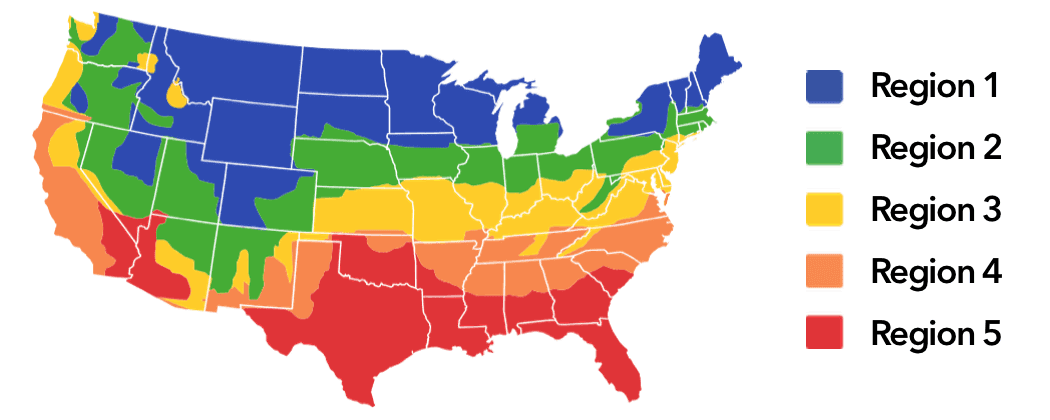
Climate zones run from 1 (cool) to 5 (hot); Vermont is in Zone 1.
Sticky indoor air in South Burlington? A variable-speed blower runs long and slow, which pulls more moisture out; pair it with a thermostat that can dehumidify.
Burlington is the nearest guide city to South Burlington, roughly 3 miles to the north.
Since heating carries most of the load here, spending more on the furnace or heat pump and keeping the AC at a standard rating often makes sense. Climate sets the baseline and the house sets the answer: a tight 2,000 sq. ft. home in South Burlington may need less than 3 tons, a leaky or sun-heavy one more.
Ductwork and Space in a South Burlington Install
Ducts in older South Burlington neighborhoods, where they exist at all, are often too small for modern equipment. Ask for an inspection before the quote. Fewer contractors work South Burlington, so start collecting bids before the old system fails.
A ductless heat pump heats as well as cools, so it can replace old electric baseboard heat.
Booking the Job in South Burlington
Book AC work in South Burlington during spring, ahead of a short but busy cooling season. Refrigerant work requires EPA certification, and many Vermont localities require a permit for equipment swaps, so check both before you sign.
Prices Around Vermont
Elsewhere in Vermont, the same 16 SEER job costs:
- Burlington, VT (north, 3 mi): $10,160 to $12,240
- Colchester, VT (north, 6 mi): $10,130 to $12,210
- Rutland, VT (south, 60 mi): $10,010 to $12,070
South Burlington contractors commonly work in Winooski, Williston, Shelburne, Essex Junction and Waterbury, so quotes there tend to fall in a similar range.
More on SEER ratings, rate trends and payback across the state: Vermont HVAC cost guide. The AC size calculator sizes the system; the heat pump calculator compares what it costs to run.
Use these numbers to budget. A licensed contractor's load calculation and written quote have the final word.
Quick Answers
Figures below use Vermont averages; energy prices as of October 2026.
Does a heat pump heat for less than natural gas in Vermont?
No, natural gas still wins in Vermont: 49,393 BTUs per dollar against 30,160 for a heat pump at COP 3. The break-even power price is about 20.7¢ per kWh, and the Vermont average is 33.9¢. A more efficient heat pump narrows the gap.
Is electricity in Vermont expensive compared with other states?
At 33.9¢ per kWh, Vermont runs 56% over the national figure of 21.7¢, the 9th most expensive among the 50 states and DC. Every AC and heat pump cost on this page moves with that rate.
Is a cold-climate heat pump needed in Vermont?
Yes, plan on one. Winter lows in Vermont average about 8°F statewide, where a standard heat pump loses much of its output. Cold-climate models keep heating below zero; size for the coldest nights.
What does a heat pump save over electric baseboard in Vermont?
About two-thirds. At 33.9¢ per kWh (the Vermont average), a million BTU of heat costs about $99.47 from baseboards and about $33.16 from a heat pump running at COP 3.
What is the best season to replace an AC or furnace in Vermont?
The shoulder seasons, spring and fall, ahead of need. Winter lows near 8°F statewide mean heating work should wrap up by early fall. The first heat wave and the first cold snap fill every installer's calendar; replacing on your own schedule leaves room to compare quotes.
Is it smart to replace the furnace and AC together?
When both are aging, generally yes: one visit, one labor charge, and a matched coil and condenser, which the efficiency rating assumes. If one is fairly new, price each job on its own.
Check it for your own home: Central AC cost estimator or Heat pump cost calculator.
More HVAC Cost Guides
Vermont HVAC costs (statewide) · HVAC costs in every state