Burlington, VT Central AC Replacement Cost, by SEER (2027)
Adjust your home size & electric cost in Burlington, VT
$8,000 to $9,640: that is the installed range for a 14 SEER system in Burlington, the rating that wins on ten-year cost here. The load behind it is a 2,000 sq. ft. home needing roughly 36,000 BTU, or 3 tons. With a population near 45,000, Burlington gets a discount of about 0% against the Vermont estimate.
A clean replacement is what we priced: outdoor unit, indoor coil or air handler, refrigerant lines, wiring and removal of the old equipment. Duct repairs and electrical upgrades are separate line items on most bids.
Installed AC Prices in Burlington, 14 to 20 SEER
Here is the Burlington spread for one 3-ton system: 14 SEER $8,000 to $9,640, 16 SEER $10,160 to $12,240, 18 SEER $15,470 to $18,650, 20 SEER $21,450 to $25,860.
3-Ton Central AC: Burlington Price vs Vermont Average
| System (3 ton) | Burlington | Vermont average | Materials |
|---|---|---|---|
| 14 SEER | $8,000 - $9,640 | $7,990 - $9,630 | $5,030 |
| 16 SEER | $10,160 - $12,240 | $10,150 - $12,230 | $6,320 |
| 18 SEER | $15,470 - $18,650 | $15,460 - $18,630 | $9,490 |
| 20 SEER | $21,450 - $25,860 | $21,430 - $25,830 | $13,050 |
Equipment is the smaller share of the bill: about $5,030 at 14 SEER and $6,320 at 16 SEER. Labor, travel and the contractor's overhead make up the rest.
Local Labor and the Burlington Price
Demand moves prices too. When local crews are booked solid, bids stay firm; where installers compete for work, there is room to negotiate. The statewide 16 SEER range of $10,150 to $12,230 drops to $10,160 to $12,240 in Burlington.
Every Burlington ZIP code we track, 5 of them in Chittenden County, uses the prices on this page. Ask each Burlington bidder for model numbers, warranty terms and a clear yes or no on permit, disposal and thermostat.
Operating Cost and Payback for Burlington Homes
At $0.339 per kWh, about 56% above the national average of $0.217, Vermont electricity sets how fast efficiency pays for itself. Vermont electricity has climbed about 2.07% a year over the past decade, and the ten-year figures below assume that trend continues.
Point at a year (or tap it on a phone) for the season cost of every rating. The lines climb 2.07% a year, matching how VT electric rates moved over the last decade.
Starting point: this summer at VT's current rate. From there the rate grows 2.07% per year, compounded, and each season cost is rounded up to $10.
Cooling this house with 16 SEER takes around 2,443 kWh per season, or about $830. The same summer on a 9 SEER unit costs about $1,470.
Upgrade Payback Finder: Your Old AC vs a New One
Choose your current AC and a replacement rating. Every result assumes a 3-ton system and Vermont electric rates ($0.339/kWh today, up 2.07% a year).
| Installed price of the new system | $8,690 |
| Electricity saved, first year | $540 |
| Saved over 10 summers (rates rising) | $5,850 |
| Payback | 14.2 years |
| Net after 10 summers | -$2,850 |
Not on savings alone: 9 to 14 SEER is $2,850 short after 10 summers in VT.
Replacing a working unit: the whole install counts as the cost. If the old one has failed, weigh each rating against a 14 SEER quote instead.
Old 9 SEER vs New: Burlington Numbers
| 9 SEER | 14 SEER | 16 SEER | 18 SEER | 20 SEER | |
|---|---|---|---|---|---|
| Installation Cost | - | $8,690 | $11,040 | $16,820 | $23,320 |
| Electric Usage / Yr | 4,320 kWh | 2,751 kWh | 2,443 kWh | 2,203 kWh | 2,012 kWh |
| Electric Cost / Yr | $1,470 | $940 | $830 | $750 | $690 |
| Energy Savings / Yr | - | $540 | $640 | $720 | $790 |
| Payback (Rates Rising) | - | 14.2 years | 15.0 years | 19.3 years | 23.4 years |
| 10-Year Net (Rates Rising) | - | -$2,850 | -$4,040 | -$8,920 | -$14,710 |
The payback math for Burlington favors 14 SEER: around 14.2 years to break even from a 9 SEER start.
Price Plus Running Cost: Burlington Totals
Buy Price vs 10-Year Running Cost: Total Cost of Ownership in VT
For each SEER rating: the installed price, 10 years of cooling electricity at Vermont rates (rising 2.07% a year), and the two added together. The shortest total bar is the cheapest system to own. Hover or tap a bar for the math.
Cheapest over 10 years in Vermont: 14 SEER at $18,950 all-in, made of $8,690 to install plus $10,260 to run.
How the electricity bar is built: this season at today's VT rate, then nine more seasons, each raised by the 2.07% yearly increase VT has averaged. Install is the typical price shown on this page. Every figure is rounded up to the next $10 separately, which can leave the parts $10 over the total.
Central AC Install Cost Near You
 See Costs in Your Area!
Start Here - Enter your zip
What Burlington Summers Ask of an Air Conditioner
In Vermont, which our map files under climate region 1, summer days average roughly 80°F and winter days roughly 27°F. Those statewide figures feed the Burlington numbers. In Burlington, the heating bill is the big one. Pick the cooling side for reliability and right sizing rather than maximum SEER.
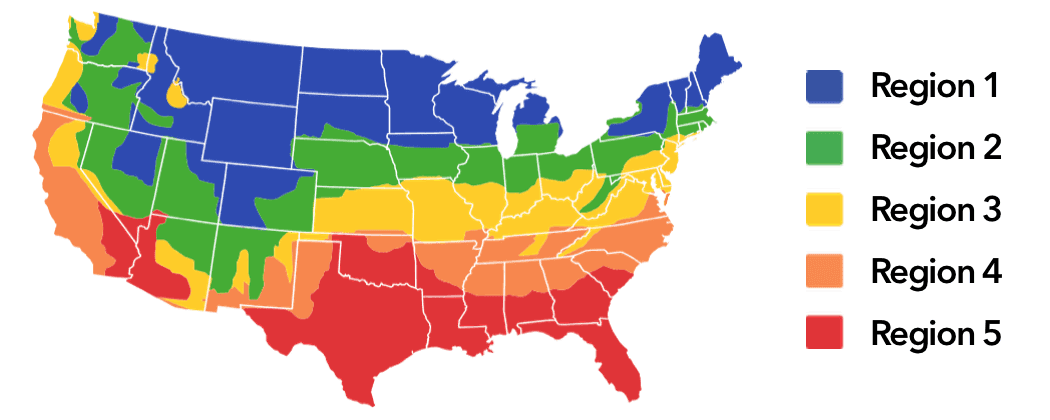
Climate zones run from 1 (cool) to 5 (hot); Vermont is in Zone 1.
Sticky indoor air in Burlington? A variable-speed blower runs long and slow, which pulls more moisture out; pair it with a thermostat that can dehumidify.
The closest city in this guide is South Burlington, about 3 miles to the south; it has its own price page.
Replacing the AC and the furnace together in Burlington matches the indoor coil to the blower, which is how the cooling side reaches its rated efficiency. Treat 36,000 BTU as the starting estimate. Insulation, window area, shade and air leaks can move the right size either way, which is what a Manual J load calculation measures.
Ducts, Access and Layout in Burlington Homes
Many older Vermont homes were built around boilers and radiators, with no ducts. In a Burlington house like that, central air means adding ducts, or going ductless instead. Short drives and simple access help explain why Burlington prices sit at or below the Vermont average.
Each ductless head hangs high on an inside wall and connects through one narrow wall opening, so older houses avoid torn-up plaster.
When Burlington Installers Have Room
Replace an old system in spring or fall. Burlington crews have open calendars then, and the house can go a day without heat or AC. Ask whether the bid includes the permit fee and the inspection visit; installers commonly arrange both.
Elsewhere in Vermont
The 16 SEER price in nearby Vermont cities:
- South Burlington, VT, 3 mi south: $10,040 to $12,100
- Colchester, VT, 4 mi northeast: $10,130 to $12,210
- Rutland, VT, 60 mi south: $10,010 to $12,070
Burlington contractors commonly work in Winooski, Essex Junction, Williston, Saint Albans and Waterbury, so quotes there tend to fall in a similar range.
For the statewide view, including efficiency comparisons and ten-year totals, read the Vermont HVAC cost guide. Plug in your own home size and energy prices with the AC size calculator and the heat pump calculator.
Modeled estimates, not quotes: equipment, duct condition, access and permit fees will move the final price.
Quick Answers
Figures below use Vermont averages; energy prices as of October 2026.
Does a heat pump heat for less than natural gas in Vermont?
No, natural gas still wins in Vermont: 49,393 BTUs per dollar against 30,160 for a heat pump at COP 3. The break-even power price is about 20.7¢ per kWh, and the Vermont average is 33.9¢. A more efficient heat pump narrows the gap.
Is electricity in Vermont expensive compared with other states?
Vermont pays 33.9¢ per kWh on average: 56% over the national figure of 21.7¢ and the 9th most expensive of 51. Cooling bills rise and fall with it.
Is a cold-climate heat pump needed in Vermont?
Yes, plan on one. Winter lows in Vermont average about 8°F statewide, where a standard heat pump loses much of its output. Cold-climate models keep heating below zero; size for the coldest nights.
What does a heat pump save over electric baseboard in Vermont?
Roughly two-thirds of the bill at COP 3. With the Vermont average at 33.9¢ per kWh, baseboard heat costs about $99.47 per million BTU and a heat pump about $33.16.
What is the best season to replace an AC or furnace in Vermont?
The shoulder seasons, spring and fall, ahead of need. Winter lows near 8°F statewide mean heating work should wrap up by early fall. Crews are busiest in the first hot week and the first freeze, and a forced emergency swap leaves no time to compare bids.
Is it smart to replace the furnace and AC together?
When both are aging, generally yes: one visit, one labor charge, and a matched coil and condenser, which the efficiency rating assumes. If one is fairly new, price each job on its own.
Check it for your own home: Central AC cost estimator or Heat pump cost calculator.
More HVAC Cost Guides
Vermont HVAC costs (statewide) · HVAC costs in every state