Charleston, SC HVAC Cost: Central Air and Heat Pump Prices (2027)
Adjust your home size & electric cost in Charleston, SC
Homeowners in Charleston, SC replacing central air with a 16 SEER unit should budget $10,650 to $12,830 installed. We sized it at 4 tons, about 48,000 BTU, for a home of 2,120 sq. ft. Market size pushes Charleston up: about 2% over the statewide estimate for a city of around 157,000 people.
Expect the quote to list the condenser, coil, line set, pad, disconnect and thermostat. Leaky or undersized ducts, an old electrical panel and the permit are the usual extras.
Installed AC Prices in Charleston, 14 to 20 SEER
Here is the Charleston spread for one 4-ton system: 14 SEER $8,520 to $10,270, 16 SEER $10,650 to $12,830, 18 SEER $16,270 to $19,610, 20 SEER $22,320 to $26,910.
4-Ton Central AC: Charleston Price vs South Carolina Average
| System (4 ton) | Charleston | South Carolina average | Materials |
|---|---|---|---|
| 14 SEER | $8,520 - $10,270 | $8,370 - $10,090 | $5,320 |
| 16 SEER | $10,650 - $12,830 | $10,460 - $12,600 | $6,590 |
| 18 SEER | $16,270 - $19,610 | $15,980 - $19,260 | $9,940 |
| 20 SEER | $22,320 - $26,910 | $21,920 - $26,420 | $13,550 |
The condenser, coil and parts come to about $5,320 on a 14 SEER job and $6,590 on a 16 SEER job; everything else in the Charleston price is installation.
Local Labor and the Charleston Price
Big markets pay crews more and spend more on parking, permits and travel time; small markets spend less but often have fewer bidders. That premium adds roughly $210 to a typical 16 SEER job in Charleston, compared with the statewide $10,460 to $12,600.
14 ZIP codes in our database carry a Charleston address, all in Charleston and Berkeley counties; each one gets this estimate. Rebates from utilities and manufacturers come and go; ask which ones apply in Charleston this year and who files the paperwork.
Operating Cost and Payback for Charleston Homes
At $0.189 per kWh, about 13% below the national average of $0.217, South Carolina electricity sets how fast efficiency pays for itself. Over the ten years in our data, South Carolina rates rose about 1.83% a year; at that pace the average would reach roughly $0.23/kWh by 2036.
Point at a year (or tap it on a phone) for the season cost of every rating. The lines climb 1.83% a year, matching how SC electric rates moved over the last decade.
The first point applies SC's current rate to this season; every point after it adds another year of the 1.83% average increase. Dollar figures are rounded up to the next $10.
A 9 SEER unit costs about $1,950 a year to run here; 16 SEER cuts that to about $1,110 on roughly 5,837 kWh.
Upgrade Payback Finder: Your Old AC vs a New One
Set the two menus: the system in your house now and the one you are weighing. The math uses a 4-ton unit at South Carolina electric rates, $0.189/kWh and climbing 1.83% yearly.
| Installed price of the new system | $11,570 |
| Electricity saved, first year | $850 |
| Saved over 10 summers (rates rising) | $9,220 |
| Payback | 12.3 years |
| Net after 10 summers | -$2,360 |
Not on savings alone: 9 to 16 SEER is $2,360 short after 10 summers in SC.
Replacing a working unit: the whole install counts as the cost. If the old one has failed, weigh each rating against a 14 SEER quote instead.
Charleston: What Each Upgrade From 9 SEER Returns
| 9 SEER | 14 SEER | 16 SEER | 18 SEER | 20 SEER | |
|---|---|---|---|---|---|
| Installation Cost | - | $9,260 | $11,570 | $17,680 | $24,260 |
| Electric Usage / Yr | 10,336 kWh | 6,595 kWh | 5,837 kWh | 5,248 kWh | 4,776 kWh |
| Electric Cost / Yr | $1,950 | $1,250 | $1,110 | $990 | $910 |
| Energy Savings / Yr | - | $710 | $850 | $960 | $1,050 |
| Payback (Rates Rising) | - | 11.9 years | 12.3 years | 16.0 years | 19.5 years |
| 10-Year Net (Rates Rising) | - | -$1,600 | -$2,360 | -$7,260 | -$12,870 |
In Charleston, 16 SEER gives the best mix of price and savings: about 12.3 years to recover its cost against an old 9 SEER unit.
Total Cost to Own Each SEER in Charleston
Buy Price vs 10-Year Running Cost: Total Cost of Ownership in SC
Install price plus ten seasons of electricity at South Carolina rates, growing 1.83% yearly, gives the real price of each system. Compare the total bars: the shortest one wins. Hover or tap for the breakdown.
Lowest 10-year total in South Carolina: 16 SEER, $23,530 ($11,570 up front, $11,960 in electricity).
How the electricity bar is built: this season at today's SC rate, then nine more seasons, each raised by the 1.83% yearly increase SC has averaged. Install is the typical price shown on this page. Every figure is rounded up to the next $10 separately, which can leave the parts $10 over the total. 14 SEER is left out: it is below the federal minimum for new central AC installs in South Carolina.
Check the AC Price Where You Live
 See Costs in Your Area!
Start Here - Enter your zip
What Charleston Summers Ask of an Air Conditioner
In South Carolina, which our map files under climate region 4, summer days average roughly 93°F and winter days roughly 56°F. Those statewide figures feed the Charleston numbers. In Charleston, the cooling side runs from late spring into fall; heating demand is real but brief.
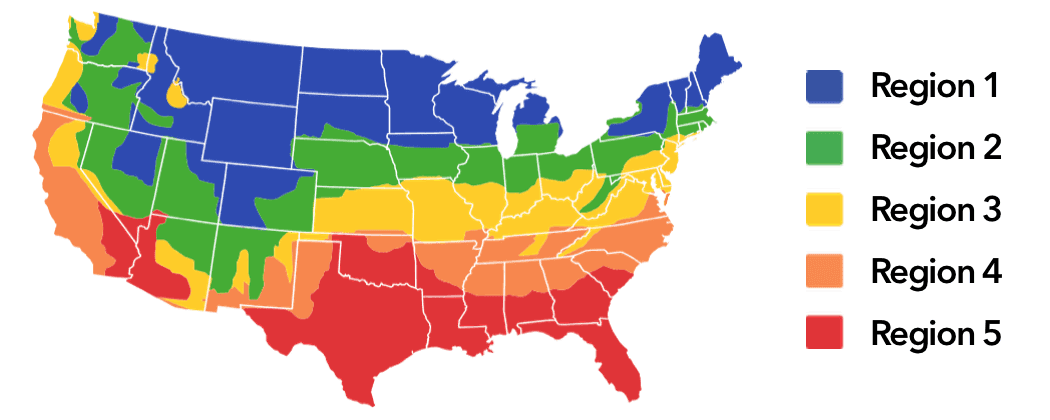
Climate zones run from 1 (cool) to 5 (hot); South Carolina is in Zone 4.
Charleston sits toward the south end of the South Carolina cities we cover, which shifts more of the HVAC budget toward cooling.
Moisture removal matters in Charleston; a correctly sized system with long, steady cycles keeps indoor humidity down.
Mount Pleasant is the nearest guide city to Charleston, roughly 8 miles to the east.
Heating in Charleston is a lighter job than cooling, so the heat pump or furnace rarely works hard. Square footage alone is a shortcut; a real load calculation for a Charleston home counts windows, insulation, orientation and leakage.
Ducts, Access and Layout in Charleston Homes
Most South Carolina homes run central forced air, so a typical Charleston job swaps the outdoor unit and the indoor coil or air handler. In Charleston, equipment choice and duct condition drive most of the difference between quotes.
With ducts in place, central air is usually cheaper; without them, or when you want room-by-room control, ductless wins.
Timing, Permits and Paperwork in Charleston
Charleston AC crews are busiest from late spring to the end of summer. Book between October and March for quicker dates. Refrigerant work requires EPA certification, and many South Carolina localities require a permit for equipment swaps, so check both before you sign.
Nearby South Carolina Markets
Other South Carolina cities in this guide, with distance from Charleston and the 16 SEER range:
- Columbia, SC: $10,630 to $12,810, 100 mi northwest
- North Charleston, SC: $10,610 to $12,780, 10 mi northwest
- Mount Pleasant, SC: $10,570 to $12,740, 8 mi east
- Rock Hill, SC: $10,540 to $12,710, 160 mi north
Charleston contractors commonly work in Johns Island, Sullivans Island, Folly Beach, Hanahan and Summerville, so quotes there tend to fall in a similar range.
See the South Carolina HVAC cost guide for how Charleston compares with the rest of the state and how the payback math works. Before collecting bids, run your own numbers in the AC size calculator and the heat pump calculator.
Figures are planning estimates. Your price depends on the house, the equipment, the ducts and the contractor; get a Manual J load calculation before you buy.
Quick Answers
Figures below use South Carolina averages; energy prices as of October 2026.
Does a heat pump heat for less than natural gas in South Carolina?
Yes, in South Carolina. Running at COP 3, a heat pump gets 54,305 BTUs of heat per dollar; natural gas gets 50,788. It keeps that lead while power stays under about 20.2¢ per kWh (the South Carolina average is 18.9¢). The margin shrinks on the coldest nights, when the COP drops.
Is electricity in South Carolina expensive compared with other states?
At 18.9¢ per kWh, South Carolina runs 13% under the national figure of 21.7¢, the 24th cheapest among the 50 states and DC. Every AC and heat pump cost on this page moves with that rate.
Is a cold-climate heat pump needed in South Carolina?
It helps. With winter lows around 34°F, a standard heat pump covers most South Carolina nights, but its output drops in cold snaps; a cold-climate model or backup heat fills that gap.
What does a heat pump save over electric baseboard in South Carolina?
About two-thirds. At 18.9¢ per kWh (the South Carolina average), a million BTU of heat costs about $55.24 from baseboards and about $18.41 from a heat pump running at COP 3.
What is the best season to replace an AC or furnace in South Carolina?
Spring or fall, while the old system still runs. Summer days in South Carolina average about 93°F, so have cooling work done by early spring. Crews are busiest in the first hot week and the first freeze, and a forced emergency swap leaves no time to compare bids.
Is it smart to replace the furnace and AC together?
When both are aging, generally yes: one visit, one labor charge, and a matched coil and condenser, which the efficiency rating assumes. If one is fairly new, price each job on its own.
Check it for your own home: Central AC cost estimator or Heat pump cost calculator.
More HVAC Cost Guides
South Carolina HVAC costs (statewide) · HVAC costs in every state