Raleigh, NC HVAC Cost: Central Air and Heat Pump Prices (2027)
Adjust your home size & electric cost in Raleigh, NC
Start with the house: 2,150 sq. ft. calls for about 48,000 BTU, a 4-ton unit. In Raleigh, the 16 SEER version of that system costs $10,810 to $13,030 installed and gives the lowest ten-year total of the ratings we price. As one of the largest cities in North Carolina, home to roughly 482,000 people, Raleigh prices about 3% above the North Carolina statewide figure.
The price assumes your ducts can stay. When an installer finds crushed runs, too few returns or a dated disconnect, those repairs show up as added lines.
What Each Efficiency Level Costs in Raleigh
Here is the Raleigh spread for one 4-ton system: 14 SEER $8,650 to $10,430, 16 SEER $10,810 to $13,030, 18 SEER $16,520 to $19,910, 20 SEER $22,660 to $27,320.
4-Ton Central AC: Raleigh Price vs North Carolina Average
| System (4 ton) | Raleigh | North Carolina average | Materials |
|---|---|---|---|
| 14 SEER | $8,650 - $10,430 | $8,370 - $10,090 | $5,400 |
| 16 SEER | $10,810 - $13,030 | $10,460 - $12,600 | $6,690 |
| 18 SEER | $16,520 - $19,910 | $15,980 - $19,260 | $10,090 |
| 20 SEER | $22,660 - $27,320 | $21,920 - $26,420 | $13,750 |
Split a Raleigh quote into parts and labor and the equipment side is about $5,400 for 14 SEER, $6,690 for 16 SEER.
Raleigh Against the North Carolina Baseline
Two identical systems can draw different quotes in two North Carolina cities, because labor and overhead are set locally. That premium adds roughly $390 to a typical 16 SEER job in Raleigh, compared with the statewide $10,460 to $12,600.
The same estimate covers all 44 ZIP codes with a Raleigh mailing address in our database, in Wake County. Find out how many days the job takes, who schedules the inspection and what the labor warranty covers. Good answers usually mean a good installer.
The Running-Cost Side of the Raleigh Decision
Every cooling cost below starts from $0.185 per kWh, the North Carolina average and about 15% below the national average of $0.217. North Carolina electricity has climbed about 1.88% a year over the past decade, and the ten-year figures below assume that trend continues.
Hover or tap any year to see what each rating costs to run that season. Rates rise 1.88% a year, the NC ten-year trend.
Starting point: this summer at NC's current rate. From there the rate grows 1.88% per year, compounded, and each season cost is rounded up to $10.
Our model runs the AC about 13.3 hours a day in season. On that basis a 2,150 sq. ft. home in Raleigh pays about $1,080 a year at 16 SEER and $1,910 at 9 SEER.
Upgrade Payback Finder: Your Old AC vs a New One
Set the two menus: the system in your house now and the one you are weighing. The math uses a 4-ton unit at North Carolina electric rates, $0.185/kWh and climbing 1.88% yearly.
| Installed price of the new system | $11,750 |
| Electricity saved, first year | $840 |
| Saved over 10 summers (rates rising) | $9,060 |
| Payback | 12.6 years |
| Net after 10 summers | -$2,700 |
Savings alone fall short: 9 to 16 SEER is still $2,700 behind after 10 summers in NC.
These figures treat the whole install as the price of switching from a unit that still runs. For a dead unit, only the step up from a basic 14 SEER bid has to pay back.
Leaving a 9 SEER Unit Behind in Raleigh
| 9 SEER | 14 SEER | 16 SEER | 18 SEER | 20 SEER | |
|---|---|---|---|---|---|
| Installation Cost | - | $9,400 | $11,750 | $17,950 | $24,630 |
| Electric Usage / Yr | 10,336 kWh | 6,595 kWh | 5,837 kWh | 5,248 kWh | 4,776 kWh |
| Electric Cost / Yr | $1,910 | $1,220 | $1,080 | $970 | $890 |
| Energy Savings / Yr | - | $700 | $840 | $940 | $1,030 |
| Payback (Rates Rising) | - | 12.2 years | 12.6 years | 16.5 years | 20.0 years |
| 10-Year Net (Rates Rising) | - | -$1,880 | -$2,700 | -$7,720 | -$13,450 |
Coming from 9 SEER, a 16 SEER replacement earns back its price in roughly 12.6 years of lower Raleigh bills, with rate increases included.
Buy Price vs Ten Years of Power in Raleigh
Buy Price vs 10-Year Running Cost: Total Cost of Ownership in NC
For each SEER rating: the installed price, 10 years of cooling electricity at North Carolina rates (rising 1.88% a year), and the two added together. The shortest total bar is the cheapest system to own. Hover or tap a bar for the math.
Lowest 10-year total in North Carolina: 16 SEER, $23,490 ($11,750 up front, $11,750 in electricity).
Energy inflation is built in: season one is priced at today's NC rate, and each of the nine seasons after it costs 1.88% more than the one before, the historic yearly increase. The install figure is the typical installed price on this page. Parts and totals are each rounded up to $10, so the parts may sum $10 above the total. 14 SEER is left out: it is below the federal minimum for new central AC installs in North Carolina.
Price a Central AC for Your ZIP Code
 See costs in your area
Start Here - Enter Your Zip Code
What Raleigh Summers Ask of an Air Conditioner
Climate region 4 is where our map puts North Carolina. Across the state, summer days average near 90°F and winter nights near 30°F; Raleigh sits at about 35.8° N. Cooling season in Raleigh starts early and runs late. Winters are shorter but still bring freezing nights.
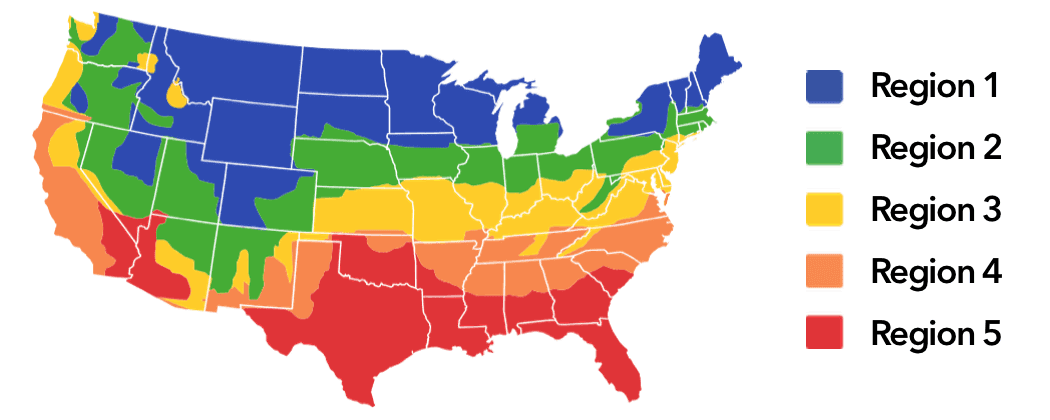
Climate zones run from 1 (cool) to 5 (hot); North Carolina is in Zone 4.
In humid Raleigh weather, the AC is also a dehumidifier, and it only works as one when it runs long enough.
Durham is the nearest guide city to Raleigh, roughly 20 miles to the northwest.
Heating in Raleigh is a lighter job than cooling, so the heat pump or furnace rarely works hard. Bigger is not better. An oversized system costs more to buy, cycles too often and controls humidity poorly.
Before the Quote: Your Raleigh House
Duct condition, the air handler's location and electrical capacity drive most of the variation between Raleigh quotes. Many Raleigh jobs are simple replacements, so bids tend to cluster more tightly than in the largest metros.
One outdoor unit can feed several ductless heads, a common fix for Raleigh homes without ducts.
Timing, Permits and Paperwork in Raleigh
Late fall and winter are slow for cooling work in Raleigh, which can mean quicker scheduling and more flexible pricing. Confirm the installer holds the license and insurance North Carolina requires, and who handles the permit; skipped permits can cause trouble at resale.
Elsewhere in North Carolina
Compare Raleigh with these North Carolina markets (16 SEER, installed):
- Charlotte, NC (west, 130 mi): $10,900 to $13,140
- Greensboro, NC (west, 70 mi): $10,740 to $12,950
- Durham, NC (northwest, 20 mi): $10,740 to $12,940
- Winston-Salem, NC (west, 90 mi): $10,720 to $12,920
Raleigh contractors commonly work in Cary, Apex, Wake Forest, Clayton and Chapel Hill, so quotes there tend to fall in a similar range.
Statewide averages and the assumptions behind every estimate are in the North Carolina HVAC cost guide. For an estimate built on your home, try the AC size calculator, then the heat pump calculator.
Estimates are adjusted for Raleigh; real quotes vary with your home, the equipment and the installer.
Quick Answers
Figures below use North Carolina averages; energy prices as of October 2026.
Does a heat pump heat for less than natural gas in North Carolina?
Yes, in North Carolina. Running at COP 3, a heat pump gets 55,422 BTUs of heat per dollar; natural gas gets 45,378. It keeps that lead while power stays under about 22.6¢ per kWh (the North Carolina average is 18.5¢). The margin shrinks on the coldest nights, when the COP drops.
Is electricity in North Carolina expensive compared with other states?
At 18.5¢ per kWh, North Carolina runs 15% under the national figure of 21.7¢, the 23rd cheapest among the 50 states and DC. Every AC and heat pump cost on this page moves with that rate.
Is a cold-climate heat pump needed in North Carolina?
It helps. With winter lows around 30°F, a standard heat pump covers most North Carolina nights, but its output drops in cold snaps; a cold-climate model or backup heat fills that gap.
What does a heat pump save over electric baseboard in North Carolina?
About two-thirds. At 18.5¢ per kWh (the North Carolina average), a million BTU of heat costs about $54.13 from baseboards and about $18.04 from a heat pump running at COP 3.
What is the best season to replace an AC or furnace in North Carolina?
Spring or fall, while the old system still runs. Summer days in North Carolina average about 90°F, so have cooling work done by early spring. Crews are busiest in the first hot week and the first freeze, and a forced emergency swap leaves no time to compare bids.
Is it smart to replace the furnace and AC together?
Often. Two old units replaced in one visit share the labor, and the indoor coil gets matched to the outdoor unit as the rating requires. A young furnace or AC can stay; quote the other separately.
Check it for your own home: Central AC cost estimator or Heat pump cost calculator.
More HVAC Cost Guides
North Carolina HVAC costs (statewide) · HVAC costs in every state