2027 HVAC Prices in Durham, NC: Install, Running Cost, Payback
Adjust your home size & electric cost in Durham, NC
A 4-ton, 16 SEER system is our pick for a typical 2,150 sq. ft. home in Durham, and it installs for $10,740 to $12,940. That capacity works out to roughly 48,000 BTU. Our Durham numbers sit about 3% over the statewide model, a premium we apply to markets of this size (population near 296,000).
This is the cost of swapping old equipment for new on the existing duct system. Anything structural, such as new runs, a bigger circuit or a rooftop mount, is extra.
Four Ratings, Four Prices: Durham
From the cheapest 14 SEER bid ($8,590) to the priciest 20 SEER one ($27,140), Durham quotes for a 4-ton system span a wide band. Most buyers sit in the middle: 16 SEER at $10,740 to $12,940 or 18 SEER at $16,410 to $19,780.
Price by Rating: Durham and Statewide
| System (4 ton) | Durham | North Carolina average | Materials |
|---|---|---|---|
| 14 SEER | $8,590 - $10,360 | $8,370 - $10,090 | $5,370 |
| 16 SEER | $10,740 - $12,940 | $10,460 - $12,600 | $6,640 |
| 18 SEER | $16,410 - $19,780 | $15,980 - $19,260 | $10,020 |
| 20 SEER | $22,520 - $27,140 | $21,920 - $26,420 | $13,660 |
The condenser, coil and parts come to about $5,370 on a 14 SEER job and $6,640 on a 16 SEER job; everything else in the Durham price is installation.
The Durham Price Adjustment, Explained
Big markets pay crews more and spend more on parking, permits and travel time; small markets spend less but often have fewer bidders. That premium adds roughly $310 to a typical 16 SEER job in Durham, compared with the statewide $10,460 to $12,600.
Every Durham ZIP code we track, 16 of them in Durham County, uses the prices on this page. Collect three written bids for the same model, the same SEER and the same scope, then compare line by line instead of by the bottom number.
What Durham Pays to Keep Cool
We price Durham running costs at the North Carolina average of $0.185/kWh (about 15% below the national average of $0.217); if your bill shows a different rate, enter it in the form above. Over the ten years in our data, North Carolina rates rose about 1.88% a year; at that pace the average would reach roughly $0.22/kWh by 2036.
Each line is one SEER rating; touch or hover a year to read its dollar figures. The climb is the 1.88% yearly increase NC rates showed over ten years.
2026 = this season at NC's current rate. Each later year compounds the historic 1.88%/yr rise; costs rounded up to $10.
A 9 SEER unit costs about $1,910 a year to run here; 16 SEER cuts that to about $1,080 on roughly 5,837 kWh.
Upgrade Payback Finder: Your Old AC vs a New One
Choose your current AC and a replacement rating. Every result assumes a 4-ton system and North Carolina electric rates ($0.185/kWh today, up 1.88% a year).
| Installed price of the new system | $11,670 |
| Electricity saved, first year | $840 |
| Saved over 10 summers (rates rising) | $9,060 |
| Payback | 12.6 years |
| Net after 10 summers | -$2,620 |
Savings alone fall short: 9 to 16 SEER is still $2,620 behind after 10 summers in NC.
Replacing a working unit: the whole install counts as the cost. If the old one has failed, weigh each rating against a 14 SEER quote instead.
Durham: What Each Upgrade From 9 SEER Returns
| 9 SEER | 14 SEER | 16 SEER | 18 SEER | 20 SEER | |
|---|---|---|---|---|---|
| Installation Cost | - | $9,340 | $11,670 | $17,830 | $24,470 |
| Electric Usage / Yr | 10,336 kWh | 6,595 kWh | 5,837 kWh | 5,248 kWh | 4,776 kWh |
| Electric Cost / Yr | $1,910 | $1,220 | $1,080 | $970 | $890 |
| Energy Savings / Yr | - | $700 | $840 | $940 | $1,030 |
| Payback (Rates Rising) | - | 12.2 years | 12.6 years | 16.4 years | 19.9 years |
| 10-Year Net (Rates Rising) | - | -$1,820 | -$2,620 | -$7,600 | -$13,290 |
In Durham, 16 SEER gives the best mix of price and savings: about 12.6 years to recover its cost against an old 9 SEER unit.
Price Plus Running Cost: Durham Totals
Buy Price vs 10-Year Running Cost: Total Cost of Ownership in NC
Install price plus ten seasons of electricity at North Carolina rates, growing 1.88% yearly, gives the real price of each system. Compare the total bars: the shortest one wins. Hover or tap for the breakdown.
After 10 years, 16 SEER is the cheapest system to own in North Carolina: $23,410 all-in ($11,670 installed + $11,750 of electricity).
Includes energy inflation: electricity = this season's cost at today's NC rate, then each of the next nine seasons raised by the historic 1.88%/yr rate increase. Install = the typical installed price on this page. Each figure is rounded up to the next $10 on its own, so the two parts can add up to $10 more than the total. 14 SEER is left out: it is below the federal minimum for new central AC installs in North Carolina.
Central AC Install Cost Near You
 See costs in your area
Start Here - Enter Your Zip Code
What Durham Summers Ask of an Air Conditioner
Run time drives the bill, and run time follows the weather. For Durham we use North Carolina averages from climate region 4: about 90°F on summer days, 30°F on winter nights. Plan the system around summer in Durham, with dependable heat for the cold spells that do arrive.
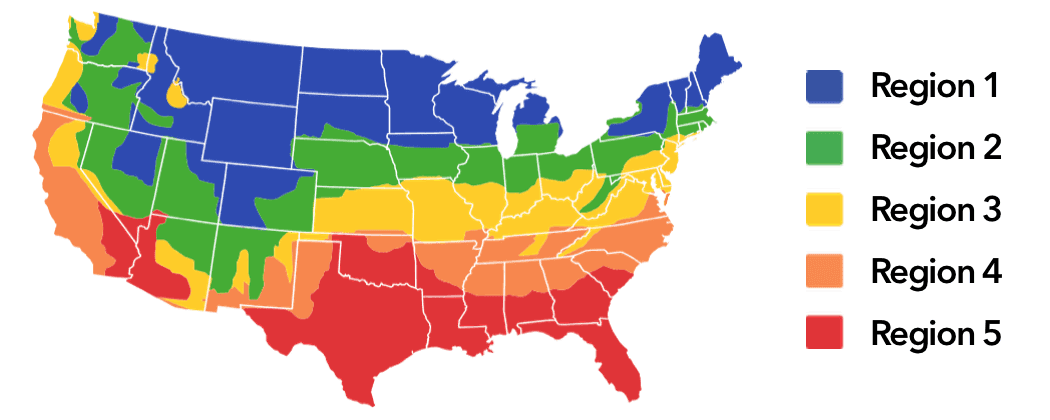
Climate zones run from 1 (cool) to 5 (hot); North Carolina is in Zone 4.
Sticky indoor air in Durham? A variable-speed blower runs long and slow, which pulls more moisture out; pair it with a thermostat that can dehumidify.
Raleigh is the nearest guide city to Durham, roughly 20 miles to the southeast.
On most winter days in Durham a heat pump keeps up with ease; backup heat covers the occasional freeze. Square footage alone is a shortcut; a real load calculation for a Durham home counts windows, insulation, orientation and leakage.
Ductwork and Space in a Durham Install
Ducts in Durham homes often run through a hot attic or a crawlspace, where they lose cooling. Sealing and insulating them is a cheap add-on to an upgrade. Installers in Durham can usually reach the outdoor pad and the indoor equipment easily, so labor tracks the system itself.
Each ductless head hangs high on an inside wall and connects through one narrow wall opening, so older houses avoid torn-up plaster.
Booking the Job in Durham
Aim for a Durham install in the late-fall-to-early-spring stretch; in summer, waits run longest. Ask whether the bid includes the permit fee and the inspection visit; installers commonly arrange both.
Nearby North Carolina Markets
Elsewhere in North Carolina, the same 16 SEER job costs:
- Charlotte, NC: $10,900 to $13,140, 120 mi southwest
- Raleigh, NC: $10,810 to $13,030, 20 mi southeast
- Greensboro, NC: $10,740 to $12,950, 50 mi west
- Winston-Salem, NC: $10,720 to $12,920, 75 mi west
Nearby places such as Chapel Hill, Morrisville, Cary, Apex and Wake Forest can use the Durham figures as a starting point.
See the North Carolina HVAC cost guide for how Durham compares with the rest of the state and how the payback math works. The AC size calculator gives a closer size estimate, and the heat pump calculator compares operating costs if you are weighing a heat pump.
Modeled estimates, not quotes: equipment, duct condition, access and permit fees will move the final price.
Quick Answers
Figures below use North Carolina averages; energy prices as of October 2026.
Does a heat pump heat for less than natural gas in North Carolina?
It does in North Carolina: 55,422 BTUs per dollar from a COP-3 heat pump against 45,378 from natural gas. Electricity would have to pass about 22.6¢ per kWh to erase that (the North Carolina average is 18.5¢). Expect the edge to thin in cold snaps, when heat pump efficiency falls.
Is electricity in North Carolina expensive compared with other states?
North Carolina pays 18.5¢ per kWh on average: 15% under the national figure of 21.7¢ and the 23rd cheapest of 51. Cooling bills rise and fall with it.
Is a cold-climate heat pump needed in North Carolina?
It helps. With winter lows around 30°F, a standard heat pump covers most North Carolina nights, but its output drops in cold snaps; a cold-climate model or backup heat fills that gap.
What does a heat pump save over electric baseboard in North Carolina?
About two-thirds. At 18.5¢ per kWh (the North Carolina average), a million BTU of heat costs about $54.13 from baseboards and about $18.04 from a heat pump running at COP 3.
What is the best season to replace an AC or furnace in North Carolina?
The shoulder seasons, spring and fall, ahead of need. Summer days in North Carolina average about 90°F, so have cooling work done by early spring. The first heat wave and the first cold snap fill every installer's calendar; replacing on your own schedule leaves room to compare quotes.
Is it smart to replace the furnace and AC together?
Often. Two old units replaced in one visit share the labor, and the indoor coil gets matched to the outdoor unit as the rating requires. A young furnace or AC can stay; quote the other separately.
Check it for your own home: Central AC cost estimator or Heat pump cost calculator.
More HVAC Cost Guides
North Carolina HVAC costs (statewide) · HVAC costs in every state