What a New HVAC System Costs in Denver, CO (2027)
Adjust your home size & electric cost in Denver, CO
Homeowners in Denver, CO replacing central air with a 14 SEER unit should budget $8,340 to $10,050 installed. We sized it at 4 tons, about 45,000 BTU, for a home of 2,460 sq. ft. Our Denver numbers sit about 4% over the statewide model, a premium we apply to markets of this size (population near 717,000).
Expect the quote to list the condenser, coil, line set, pad, disconnect and thermostat. Leaky or undersized ducts, an old electrical panel and the permit are the usual extras.
Four Ratings, Four Prices: Denver
Here is the Denver spread for one 4-ton system: 14 SEER $8,340 to $10,050, 16 SEER $10,500 to $12,660, 18 SEER $16,400 to $19,770, 20 SEER $22,300 to $26,880.
4-Ton Central AC: Denver Price vs Colorado Average
| System (4 ton) | Denver | Colorado average | Materials |
|---|---|---|---|
| 14 SEER | $8,340 - $10,050 | $8,020 - $9,670 | $5,220 |
| 16 SEER | $10,500 - $12,660 | $10,100 - $12,180 | $6,510 |
| 18 SEER | $16,400 - $19,770 | $15,780 - $19,020 | $10,020 |
| 20 SEER | $22,300 - $26,880 | $21,450 - $25,860 | $13,540 |
Most of what you pay is not the box: equipment runs about $6,510 on a 16 SEER install, and labor plus overhead carry the balance.
How Much the Denver Market Adds or Saves
A contractor's costs follow the local economy: what the crew earns, what insurance costs and how long it takes to get to the job. That premium adds roughly $440 to a typical 16 SEER job in Denver, compared with the statewide $10,100 to $12,180.
Every Denver ZIP code we track, 57 of them in Denver, Jefferson and Arapahoe counties, uses the prices on this page. Ask how the contractor sized the system. A room-by-room load calculation beats copying the tonnage off the old unit, which may have been wrong to begin with.
Operating Cost and Payback for Denver Homes
Every cooling cost below starts from $0.200 per kWh, the Colorado average and about 8% below the national average of $0.217. A 1.88% yearly rise in Colorado electric rates, the decade trend, is built into every ten-year number on this page.
Each line is one SEER rating; touch or hover a year to read its dollar figures. The climb is the 1.88% yearly increase CO rates showed over ten years.
Starting point: this summer at CO's current rate. From there the rate grows 1.88% per year, compounded, and each season cost is rounded up to $10.
At that rate, a 16 SEER system in Denver uses about 2,981 kWh a season, roughly $600 a year; a worn 9 SEER unit would cost about $1,060.
Upgrade Payback Finder: Your Old AC vs a New One
Pick the unit you have and the one you are considering. Figures are for a 4-ton system at Colorado electric rates ($0.200/kWh, rising 1.88% a year).
| Installed price of the new system | $9,060 |
| Electricity saved, first year | $390 |
| Saved over 10 summers (rates rising) | $4,170 |
| Payback | 19.8 years |
| Net after 10 summers | -$4,890 |
Savings alone fall short: 9 to 14 SEER is still $4,890 behind after 10 summers in CO.
If the old unit still works, the full install price is the cost of the upgrade. If it has to be replaced anyway, compare the extra price over a 14 SEER bid with the extra savings.
Denver: What Each Upgrade From 9 SEER Returns
| 9 SEER | 14 SEER | 16 SEER | 18 SEER | 20 SEER | |
|---|---|---|---|---|---|
| Installation Cost | - | $9,060 | $11,410 | $17,820 | $24,240 |
| Electric Usage / Yr | 5,278 kWh | 3,366 kWh | 2,981 kWh | 2,682 kWh | 2,443 kWh |
| Electric Cost / Yr | $1,060 | $680 | $600 | $540 | $490 |
| Energy Savings / Yr | - | $390 | $460 | $520 | $570 |
| Payback (Rates Rising) | - | 19.8 years | 20.6 years | 26.7 years | 31.6 years |
| 10-Year Net (Rates Rising) | - | -$4,890 | -$6,400 | -$12,160 | -$18,050 |
In Denver, 14 SEER gives the best mix of price and savings: about 19.8 years to recover its cost against an old 9 SEER unit.
Total Cost to Own Each SEER in Denver
Buy Price vs 10-Year Running Cost: Total Cost of Ownership in CO
For each SEER rating: the installed price, 10 years of cooling electricity at Colorado rates (rising 1.88% a year), and the two added together. The shortest total bar is the cheapest system to own. Hover or tap a bar for the math.
After 10 years, 14 SEER is the cheapest system to own in Colorado: $16,400 all-in ($9,060 installed + $7,340 of electricity).
Includes energy inflation: electricity = this season's cost at today's CO rate, then each of the next nine seasons raised by the historic 1.88%/yr rate increase. Install = the typical installed price on this page. Each figure is rounded up to the next $10 on its own, so the two parts can add up to $10 more than the total.
Check the AC Price Where You Live
The Denver Climate in AC Terms
Climate region 1 is where our map puts Colorado. Across the state, summer days average near 85°F and winter nights near 14°F; Denver sits at about 39.7° N. Short summers mean a Denver air conditioner logs fewer hours than most, and a top-tier SEER takes longer to earn back its price.
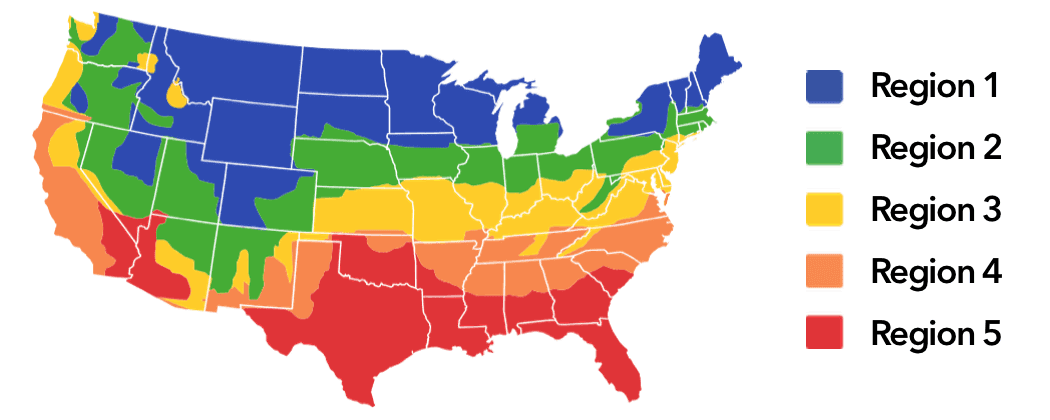
Climate zones run from 1 (cool) to 5 (hot); Colorado is in Zone 1.
Since Denver summers are usually dry, a well-sized AC cools efficiently without long dehumidifying cycles.
Lakewood is the nearest guide city to Denver, roughly 7 miles to the west.
When both the furnace and the AC in a Denver home are near the end, doing them in one visit saves a second labor charge. Climate sets the baseline and the house sets the answer: a tight 2,460 sq. ft. home in Denver may need less than 4 tons, a leaky or sun-heavy one more.
What Denver Housing Means for the Job
Leaky or undersized ducts can rob a new system of much of its rated efficiency, so their condition matters as much as the equipment. City logistics such as permits, parking and hoisting equipment can add a day to a Denver install.
With ducts in place, central air is usually cheaper; without them, or when you want room-by-room control, ductless wins.
Booking the Job in Denver
Replace an old system in spring or fall. Denver crews have open calendars then, and the house can go a day without heat or AC. Most jurisdictions want a permit and inspection for an HVAC replacement; ask whether your contractor pulls it and whether the fee is in the price.
Nearby Colorado Markets
Same 16 SEER system, other Colorado cities:
- Colorado Springs, CO: $10,450 to $12,590, 60 mi south
- Aurora, CO: $10,420 to $12,560, 9 mi east
- Fort Collins, CO: $10,300 to $12,410, 60 mi north
- Lakewood, CO: $10,390 to $12,520, 7 mi west
Denver contractors commonly work in Englewood, Westminster, Arvada, Littleton and Boulder, so quotes there tend to fall in a similar range.
Statewide averages and the assumptions behind every estimate are in the Colorado HVAC cost guide. The AC size calculator sizes the system; the heat pump calculator compares what it costs to run.
Use these numbers to budget. A licensed contractor's load calculation and written quote have the final word.
Quick Answers
Figures below use Colorado averages; energy prices as of October 2026.
Does a heat pump heat for less than natural gas in Colorado?
No, natural gas still wins in Colorado: 80,965 BTUs per dollar against 51,131 for a heat pump at COP 3. The break-even power price is about 12.6¢ per kWh, and the Colorado average is 20.0¢. A more efficient heat pump narrows the gap.
Is electricity in Colorado expensive compared with other states?
At 20.0¢ per kWh, Colorado runs 8% under the national figure of 21.7¢, the 21st most expensive among the 50 states and DC. Every AC and heat pump cost on this page moves with that rate.
Is a cold-climate heat pump needed in Colorado?
In most homes, yes. A statewide average winter low near 14°F is past the comfort zone of standard heat pumps; a cold-climate unit sized for the worst nights holds up.
What does a heat pump save over electric baseboard in Colorado?
Roughly two-thirds of the bill at COP 3. With the Colorado average at 20.0¢ per kWh, baseboard heat costs about $58.67 per million BTU and a heat pump about $19.56.
What is the best season to replace an AC or furnace in Colorado?
Spring or fall, while the old system still runs. Winter lows near 14°F statewide mean heating work should wrap up by early fall. Crews are busiest in the first hot week and the first freeze, and a forced emergency swap leaves no time to compare bids.
Is it smart to replace the furnace and AC together?
Often. Two old units replaced in one visit share the labor, and the indoor coil gets matched to the outdoor unit as the rating requires. A young furnace or AC can stay; quote the other separately.
Check it for your own home: Central AC cost estimator or Heat pump cost calculator.
More HVAC Cost Guides
Colorado HVAC costs (statewide) · HVAC costs in every state