2027 HVAC Prices in Mesa, AZ: Install, Running Cost, Payback
Adjust your home size & electric cost in Mesa, AZ
Homeowners in Mesa, AZ replacing central air with a 16 SEER unit should budget $10,550 to $12,720 installed. We sized it at 4 tons, about 45,000 BTU, for a home of 2,040 sq. ft. Market size pushes Mesa up: about 4% over the statewide estimate for a city of around 512,000 people.
The price assumes your ducts can stay. When an installer finds crushed runs, too few returns or a dated disconnect, those repairs show up as added lines.
Buying Central Air in Mesa: The Price Ladder
Spend $8,380 to $10,100 in Mesa and you get a 14 SEER system. Mid-range 16 SEER lands at $10,550 to $12,720. High-efficiency 18 SEER costs $16,480 to $19,870, and 20 SEER $22,410 to $27,010.
Price by Rating: Mesa and Statewide
| System (4 ton) | Mesa | Arizona average | Materials |
|---|---|---|---|
| 14 SEER | $8,380 - $10,100 | $8,020 - $9,670 | $5,240 |
| 16 SEER | $10,550 - $12,720 | $10,100 - $12,180 | $6,540 |
| 18 SEER | $16,480 - $19,870 | $15,780 - $19,020 | $10,070 |
| 20 SEER | $22,410 - $27,010 | $21,450 - $25,860 | $13,610 |
Of a 16 SEER quote in Mesa, roughly $6,540 buys the hardware. The remainder pays the crew and runs the shop.
Mesa Against the Arizona Baseline
Wages, insurance, fuel and shop rent all differ from one market to the next, and installers build those costs into every bid. That premium adds roughly $500 to a typical 16 SEER job in Mesa, compared with the statewide $10,100 to $12,180.
We apply these figures across Mesa's 19 ZIP codes (Maricopa County), downtown and edge alike. Ask how the contractor sized the system. A room-by-room load calculation beats copying the tonnage off the old unit, which may have been wrong to begin with.
What Mesa Pays to Keep Cool
Power in Arizona costs about $0.181 per kWh on average (about 17% below the national average of $0.217); your utility and plan may differ. Rates have not stood still: Arizona power rose roughly 2.02% per year in our ten-year record, reaching about $0.22/kWh by 2036 if it keeps going.
Point at a year (or tap it on a phone) for the season cost of every rating. The lines climb 2.02% a year, matching how AZ electric rates moved over the last decade.
Starting point: this summer at AZ's current rate. From there the rate grows 2.02% per year, compounded, and each season cost is rounded up to $10.
At that rate, a 16 SEER system in Mesa uses about 5,506 kWh a season, roughly $1,000 a year; a worn 9 SEER unit would cost about $1,770.
Upgrade Payback Finder: Your Old AC vs a New One
Pick the unit you have and the one you are considering. Figures are for a 4-ton system at Arizona electric rates ($0.181/kWh, rising 2.02% a year).
| Installed price of the new system | $11,470 |
| Electricity saved, first year | $770 |
| Saved over 10 summers (rates rising) | $8,420 |
| Payback | 13.2 years |
| Net after 10 summers | -$3,050 |
Savings alone fall short: 9 to 16 SEER is still $3,050 behind after 10 summers in AZ.
These figures treat the whole install as the price of switching from a unit that still runs. For a dead unit, only the step up from a basic 14 SEER bid has to pay back.
Mesa: What Each Upgrade From 9 SEER Returns
| 9 SEER | 14 SEER | 16 SEER | 18 SEER | 20 SEER | |
|---|---|---|---|---|---|
| Installation Cost | - | $9,110 | $11,470 | $17,910 | $24,360 |
| Electric Usage / Yr | 9,747 kWh | 6,216 kWh | 5,506 kWh | 4,953 kWh | 4,511 kWh |
| Electric Cost / Yr | $1,770 | $1,130 | $1,000 | $900 | $820 |
| Energy Savings / Yr | - | $640 | $770 | $870 | $950 |
| Payback (Rates Rising) | - | 12.6 years | 13.2 years | 17.4 years | 20.9 years |
| 10-Year Net (Rates Rising) | - | -$2,100 | -$3,050 | -$8,400 | -$13,970 |
The payback math for Mesa favors 16 SEER: around 13.2 years to break even from a 9 SEER start.
Price Plus Running Cost: Mesa Totals
Buy Price vs 10-Year Running Cost: Total Cost of Ownership in AZ
For each SEER rating: the installed price, 10 years of cooling electricity at Arizona rates (rising 2.02% a year), and the two added together. The shortest total bar is the cheapest system to own. Hover or tap a bar for the math.
Cheapest over 10 years in Arizona: 16 SEER at $22,400 all-in, made of $11,470 to install plus $10,930 to run.
Energy inflation is built in: season one is priced at today's AZ rate, and each of the nine seasons after it costs 2.02% more than the one before, the historic yearly increase. The install figure is the typical installed price on this page. Parts and totals are each rounded up to $10, so the parts may sum $10 above the total. 14 SEER is left out: it is below the federal minimum for new central AC installs in Arizona.
Central AC Install Cost Near You
Weather, Sizing and the Mesa AC
The sizing for Mesa (about 33.4° N) uses Arizona averages: climate region 4, summer afternoons near 97°F, winter lows near 31°F. In Mesa, the air conditioner is close to a year-round appliance, so reliability and efficiency both earn their keep.
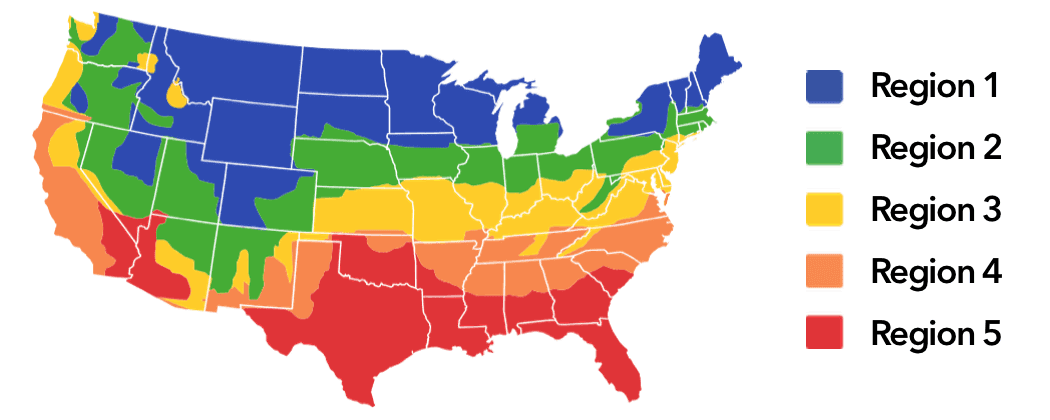
Climate zones run from 1 (cool) to 5 (hot); Arizona is in Zone 4.
Evaporative coolers can work in dry Mesa weather for some homes, though central AC holds a steadier temperature on the hottest afternoons.
Gilbert is the nearest guide city to Mesa, roughly 7 miles to the south.
With short Mesa winters, put the budget into a higher SEER rating and sealed ducts; extra heating capacity rarely pays off here. Climate sets the baseline and the house sets the answer: a tight 2,040 sq. ft. home in Mesa may need less than 4 tons, a leaky or sun-heavy one more.
What Mesa Housing Means for the Job
A quick duct check during the Mesa estimate visit can catch leaks or weak returns before they limit a new system. Dense Mesa neighborhoods bring tight lots, shared walls and building rules, all of which can add labor or push the condenser onto a roof or wall bracket.
A ductless heat pump heats as well as cools, so it can replace old electric baseboard heat.
Booking the Job in Mesa
Plan replacements for the mildest part of the Mesa year; a mid-summer failure puts you in line behind everyone else. Most jurisdictions want a permit and inspection for an HVAC replacement; ask whether your contractor pulls it and whether the fee is in the price.
Elsewhere in Arizona
Compare Mesa with these Arizona markets (16 SEER, installed):
- Phoenix, AZ (west, 20 mi): $10,620 to $12,800
- Tucson, AZ (southeast, 95 mi): $10,460 to $12,610
- Chandler, AZ (southwest, 11 mi): $10,470 to $12,620
- Gilbert, AZ (south, 7 mi): $10,470 to $12,620
Surrounding towns such as Scottsdale, Tempe, Apache Junction, Fountain Hills and San Tan Valley usually draw quotes in the Mesa range.
These Mesa figures come from the same model as our Arizona HVAC cost guide, which goes deeper on SEER and long-term cost. For an estimate built on your home, try the AC size calculator, then the heat pump calculator.
Figures are planning estimates. Your price depends on the house, the equipment, the ducts and the contractor; get a Manual J load calculation before you buy.
Quick Answers
Figures below use Arizona averages; energy prices as of October 2026.
Does a heat pump heat for less than natural gas in Arizona?
It does in Arizona: 56,524 BTUs per dollar from a COP-3 heat pump against 45,371 from natural gas. Electricity would have to pass about 22.6¢ per kWh to erase that (the Arizona average is 18.1¢). Expect the edge to thin in cold snaps, when heat pump efficiency falls.
Is electricity in Arizona expensive compared with other states?
Arizona pays 18.1¢ per kWh on average: 17% under the national figure of 21.7¢ and the 20th cheapest of 51. Cooling bills rise and fall with it.
Is a cold-climate heat pump needed in Arizona?
It helps. With winter lows around 31°F, a standard heat pump covers most Arizona nights, but its output drops in cold snaps; a cold-climate model or backup heat fills that gap.
What does a heat pump save over electric baseboard in Arizona?
Roughly two-thirds of the bill at COP 3. With the Arizona average at 18.1¢ per kWh, baseboard heat costs about $53.08 per million BTU and a heat pump about $17.69.
What is the best season to replace an AC or furnace in Arizona?
The shoulder seasons, spring and fall, ahead of need. Summer days in Arizona average about 97°F, so have cooling work done by early spring. The first heat wave and the first cold snap fill every installer's calendar; replacing on your own schedule leaves room to compare quotes.
Is it smart to replace the furnace and AC together?
Often. Two old units replaced in one visit share the labor, and the indoor coil gets matched to the outdoor unit as the rating requires. A young furnace or AC can stay; quote the other separately.
Check it for your own home: Central AC cost estimator or Heat pump cost calculator.
More HVAC Cost Guides
Arizona HVAC costs (statewide) · HVAC costs in every state