Home Heating Cost in West Virginia (2027): Natural Gas vs Oil vs Electric
Heating costs for your home size in West Virginia
This page answers one question for West Virginia: which fuel heats a house for the least money right now. The inputs are current state-average energy rates and a heating load for Climate Region #3; the method is the one inside our heating cost calculator, set to mid-efficiency equipment.
Pick natural gas and a 1,750 sq. ft. West Virginia home costs about $1,290 to heat for the season. Pick electric baseboard heat and the same season costs about $3,650.
West Virginia Heating Cost per Season, Fuel by Fuel
| Fuel & equipment | Price | Season use | Cost / season |
|---|---|---|---|
| Natural gasnatural gas boiler, 82 AFUE | $1.57per therm | 814therms | ~$1,290 |
| Electric heat pumpductless, ~2.9 COP | $0.192per kWh | 6,746kWh | ~$1,300 |
| Propanepropane boiler, 82 AFUE | $3.59per gal | 890gals | ~$3,200 |
| Heating oiloil boiler, 82 AFUE | $5.89per gal | 587gals | ~$3,460 |
| Electric baseboardresistance heat | $0.192per kWh | 18,976kWh | ~$3,650 |
Each row is one heating season for 1,750 sq. ft., rounded up to $10. Switch the insulation level to see how much the house itself moves the bill. Method: our heating cost calculator.
A Season of Heat, Fuel by Fuel
Same house, same winter, five fuels. Hover a bar for the use and the rate behind it.
Season = the modeled West Virginia heating load on standard mid-efficiency equipment; fuels ranked like the heating cost calculator (pellet and wood stoves are manual-load and stay unranked).
Heating Costs Over the Next 10 Winters
This chart carries the season costs forward 10 winters. Electricity follows its West Virginia track record, about 4.39% a year (2013 to 2023, energy database). Natural gas, heating oil and propane have no long series in our data, so they get two clear cases rather than an invented rate. Hover or tap a column for that winter's costs.
Each column is one heating season for the house above at average insulation. Totals are rounded up to $10.
If natural gas, heating oil and propane stay at today's prices, natural gas costs about $12,820 over 10 winters here, against about $44,620 for electric baseboard heat.
How West Virginia Winters Set the Heating Load
Region #3 covers the in-between states, and West Virginia is one of them. Average winter days reach about 40°F; nights fall to about 23°F. A moderate load means the gap between fuels is smaller in dollars than it is up north.
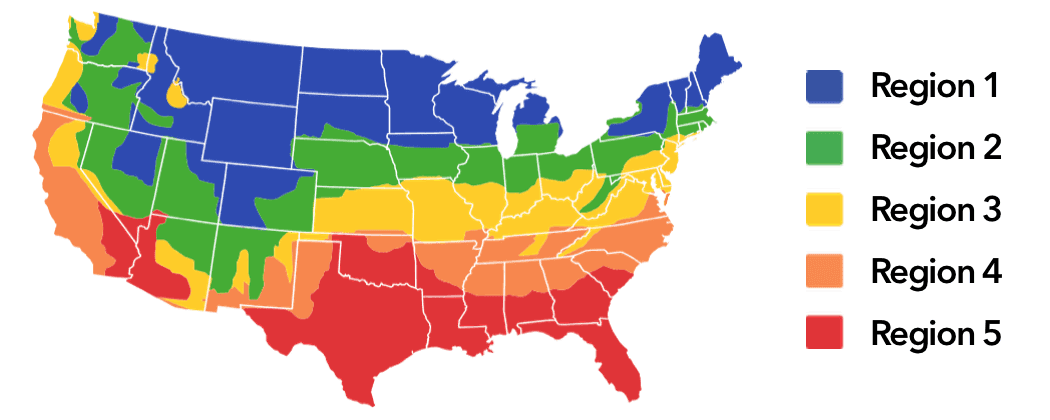
Climate details worth raising with an installer:
Freeze risk. A no-heat call is an emergency when pipes can freeze. A service visit in early fall catches worn igniters, weak capacitors and clogged filters before the busy season.
Wet winters. In damp, chilly weather a heat pump collects frost on its outdoor coil and runs short defrost cycles. Good drainage under the unit keeps the meltwater from refreezing around it.
Deep snow. Snow can bury an outdoor heat-pump unit and block the plastic side-wall vents of a high-efficiency furnace. Set the outdoor unit on a stand above the usual drift line and keep vent openings clear; a blocked intake shuts a furnace down.
Natural gas is produced in West Virginia itself. At $1.57 per therm, it is the fuel to compare against wherever a natural gas line is available. Two seasons of demand leave spring and fall as the calm months for installers. If the AC is old too, one heat pump visit can replace both systems.
Three Things That Change the Number
Walls and attic. Insulation moves the load about 12% between average and poor, and the same between average and well insulated. That is roughly $160 a season with natural gas here.
The ducts. A forced-air system with bare ducts loses roughly 17% of its output on the way to the rooms, according to the calculator's duct model. Ductless systems and radiators skip that loss.
The equipment. Our figures assume 82 AFUE. Swap in a 93 AFUE condensing boiler and the natural gas bill drops by about $160; keep running a tired 62 AFUE unit and it rises by about $420.
How a Heat Pump Changes the Electric Bill
Both electric rows use the same $0.192 per kWh rate. The difference is the machine: resistance heat converts power to heat one for one, while a heat pump gets about 2.9 units of heat per unit of power here. The result is about $1,300 a season instead of $3,650. That puts it in second place in West Virginia, after natural gas.
West Virginia Heating: Quick Answers
What heats a West Virginia house for the least money?
By today's rates, natural gas wins at about $1,290 a season, with a heat pump next at about $1,300. Natural gas only helps where a natural gas line reaches the house.
What is better insulation worth on a West Virginia heating bill?
With natural gas, a poorly insulated 1,750 sq. ft. home costs about $1,440 a season and a well-insulated one about $1,130. That $310 gap repeats every winter.
Is it worth switching off heating oil in West Virginia?
Today's numbers favor the switch: about $3,460 a season on heating oil against about $1,290 on natural gas. That is roughly $21,780 over 10 winters if prices hold, before any installation cost. That option needs natural gas service at the street.
Wood and pellet stoves are not ranked here because someone has to load them. The pellet stove calculator prices them on their own.
Fine print: estimates, not bills. The fuel prices are West Virginia averages and the heat load is modeled, so treat the figures as a fair comparison of fuels rather than a forecast of your statement.