Home Heating Cost in Wisconsin (2027): Natural Gas vs Oil vs Electric
Heating costs for your home size in Wisconsin
How much heat does a Wisconsin home burn in a winter, and what does it cost on each fuel? We take today's average rates for natural gas, heating oil, propane and electricity, apply a Region #1 heating load for your home size, and price the result the way our heating cost calculator does.
The spread is wide: about $1,370 a winter with natural gas versus about $5,810 with electric baseboard heat, for one 1,820 sq. ft. home in Wisconsin. That $4,440 difference comes from the fuel alone.
Wisconsin Heating Cost per Season, Fuel by Fuel
| Fuel & equipment | Price | Season use | Cost / season |
|---|---|---|---|
| Natural gasnatural gas boiler, 82 AFUE | $1.25per therm | 1,092therms | ~$1,370 |
| Propanepropane boiler, 82 AFUE | $1.81per gal | 1,194gals | ~$2,170 |
| Electric heat pumpductless, ~2.9 COP | $0.228per kWh | 11,908kWh | ~$2,720 |
| Heating oiloil boiler, 82 AFUE | $5.58per gal | 787gals | ~$4,400 |
| Electric baseboardresistance heat | $0.228per kWh | 25,459kWh | ~$5,810 |
Rounded up to $10. Rates are current Wisconsin averages; the load is a 1,820 sq. ft. home at the insulation level you pick above. Same method as the heating cost calculator.
A Season of Heat, Fuel by Fuel
Same house, same winter, five fuels. Hover a bar for the use and the rate behind it.
Season = the modeled Wisconsin heating load on standard mid-efficiency equipment; fuels ranked like the heating cost calculator (pellet and wood stoves are manual-load and stay unranked).
What 10 Winters of Heat Could Cost in Wisconsin
A fuel that wins this winter can lose later if its price climbs faster. The electric lines below rise at Wisconsin's own electricity trend, about 2.49% a year from 2013 to 2023. For natural gas, heating oil and propane our data has no comparable history, so you choose: hold them at today's price, or let them climb at the electricity pace. Tap or hover any winter to read the numbers.
Each column is one heating season for the house above at average insulation. Totals are rounded up to $10.
If natural gas, heating oil and propane stay at today's prices, natural gas costs about $13,670 over 10 winters here, against about $65,010 for electric baseboard heat.
How Wisconsin Winters Set the Heating Load
Region #1 on the map means long, hard winters: daytime averages of about 24°F, nighttime averages near 7°F. In Wisconsin, that load makes fuel price and equipment efficiency matter more than almost anywhere else.
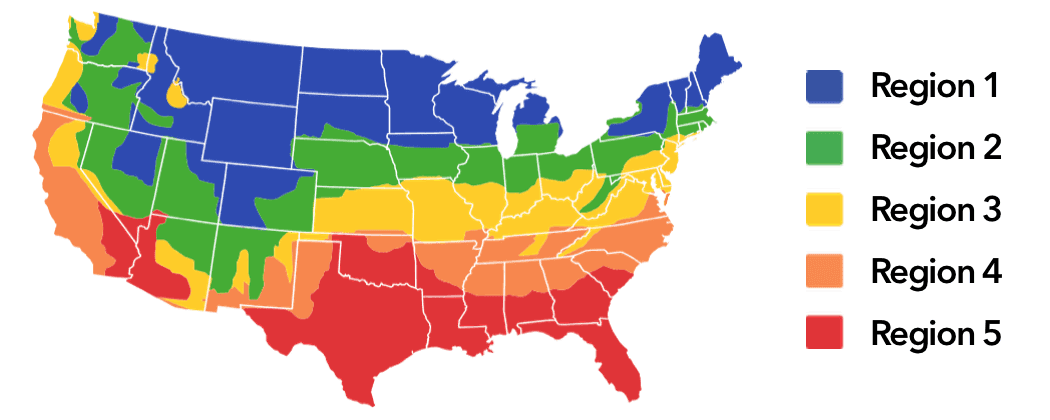
Climate details worth raising with an installer:
Drifts. Plan where the snow will pile before the outdoor unit and the furnace vents go in. A raised stand and vents set above the drift line keep the system breathing through a heavy winter.
Ice dams. Icicles along the eaves mean heat is leaking into the attic and melting the roof snow from below. Sealing the attic floor and adding insulation stops the leak, which trims the heating bill and the ice at the same time.
Wind-driven drafts. A cold wind finds every crack in the shell and turns it into a draft the heating system must answer. Caulk, weatherstripping and foam at the rim joist cut that load on any fuel.
Great Lakes snow bands can drop a foot of snow on parts of Wisconsin in a day. After each storm, clear the heat pump's outdoor unit and the furnace vents so the system keeps running. Order a new furnace or boiler before the first deep freeze, ideally in late summer. Midwinter installs are rushed jobs priced for urgency.
Three Things That Change the Number
- Up the flue. Going from 82 to 93 AFUE saves about $170 a season on natural gas. Holding on to an aging 62 AFUE unit costs about $450 extra.
- Walls and attic. Insulation moves the load about 12% between average and poor, and the same between average and well insulated. That is roughly $170 a season with natural gas here.
- Out of the ducts. Bare ducts in unheated space waste about 17% of a furnace's heat; sealed, insulated ducts keep most of it in the house.
The Heat Pump Line, Explained
If your home heats with baseboards, the heat-pump row is the upgrade path. In Wisconsin the model credits a heat pump with about 2.2 kWh of heat per kWh, after a cold-climate deduction, so the season drops from roughly $5,810 to $2,720, about $3,090 less every winter. It still comes in above natural gas and propane here.
Heating Cost Questions for Wisconsin
What is the cheapest way to heat a home in Wisconsin?
Right now it is natural gas, at about $1,370 a season for 1,820 sq. ft. The runner-up is propane at about $2,170. Natural gas only helps where a natural gas line reaches the house.
Is it worth switching off heating oil in Wisconsin?
On fuel cost, yes. Heating oil runs about $4,400 a season for this house; natural gas would cost about $1,370. Over 10 winters at today's prices that gap is about $30,250: the budget a conversion has to beat. The natural gas route works only where a natural gas line can reach the property.
How much does insulation change the heating bill here?
Quite a bit. On natural gas, the same 1,820 sq. ft. house runs about $1,540 a season when poorly insulated and about $1,210 when well insulated, a yearly difference of about $330.
Pellet and wood stoves can heat cheaply too, but they are manual-load fuels: we price them in the pellet stove calculator and leave them out of the ranking, as the heating cost calculator does.
Fine print: estimates, not bills. The fuel prices are Wisconsin averages and the heat load is modeled, so treat the figures as a fair comparison of fuels rather than a forecast of your statement.