Home Heating Cost in Washington (2027): Natural Gas vs Oil vs Electric
Heating costs for your home size in Washington
How much heat does a Washington home burn in a winter, and what does it cost on each fuel? We take today's average rates for natural gas, heating oil, propane and electricity, apply a Region #2 heating load for your home size, and price the result the way our heating cost calculator does.
In Washington, a season of heat for 2,180 sq. ft. costs roughly $1,880 at the low end (a heat pump) and $5,520 at the high end (heating oil).
Season Heating Cost in Washington: Five Fuels Compared
| Fuel & equipment | Price | Season use | Cost / season |
|---|---|---|---|
| Electric heat pumpductless, ~2.9 COP | $0.165per kWh | 11,335kWh | ~$1,880 |
| Natural gasnatural gas boiler, 82 AFUE | $1.91per therm | 1,177therms | ~$2,250 |
| Electric baseboardresistance heat | $0.165per kWh | 27,421kWh | ~$4,530 |
| Propanepropane boiler, 82 AFUE | $3.94per gal | 1,286gals | ~$5,070 |
| Heating oiloil boiler, 82 AFUE | $6.50per gal | 848gals | ~$5,520 |
Season estimates for a 2,180 sq. ft. home, rounded up to $10, from the same math and rates as our heating cost calculator. Use the buttons to see a drafty or a tight house.
A Season of Heat, Fuel by Fuel
Same house, same winter, five fuels. Hover a bar for the use and the rate behind it.
Season = the modeled Washington heating load on standard mid-efficiency equipment; fuels ranked like the heating cost calculator (pellet and wood stoves are manual-load and stay unranked).
Heating Costs Over the Next 10 Winters
Today's ranking is one winter. Over 10 winters, price trends matter too. Electricity in Washington rose about 2.54% a year between 2013 and 2023 in our energy data, and both electric lines follow that trend. We have no matching long record for natural gas, heating oil or propane, so the buttons show two cases instead of a guess. Hover or tap a winter for every fuel's cost.
Each column is one heating season for the house above at average insulation. Totals are rounded up to $10.
With natural gas, oil and propane held at today's prices, 10 winters on a heat pump add up to about $21,010, and on heating oil to about $55,150. Watch the crossing: the heat pump line climbs past natural gas in winter 9 in this case.
How Washington Winters Set the Heating Load
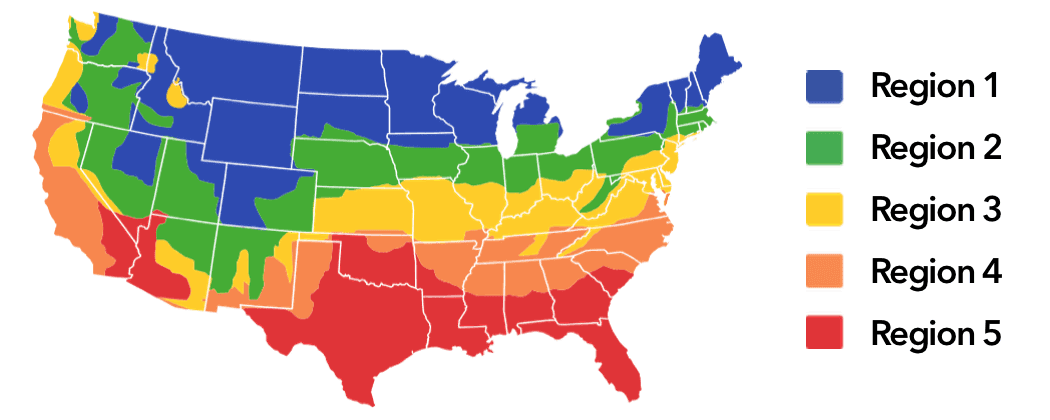
Winter in Washington averages about 37°F by day and 26°F by night, which puts it in Region #2 on the map below, one step down from the coldest band. Heating still dominates the energy budget here.
Climate details worth raising with an installer:
Damp cold. Moist air near freezing frosts a heat pump's outdoor coil, so the unit pauses to defrost now and then. That is normal; a model with demand-based defrost wastes less energy doing it.
Smoke seasons. A ducted heating system with a high-grade filter at the return can scrub smoke from the whole house when fires burn nearby. Stock extra filters before the season.
Coastal corrosion. Outdoor heat-pump units near salt water wear out sooner. Ask for corrosion-protected coils, and place the unit out of direct spray where you can.
The Northwest gets much of its electricity from dams, and that history shows in moderate power prices. At $0.165 per kWh, electric heat, and a heat pump above all, holds up well in Washington. A long, cool, wet season means many hours of gentle heating. Variable-speed equipment suits that pattern; ask for it when you compare quotes.
What Moves the Bill Besides the Fuel
- Burner efficiency. The table assumes a mid-efficiency boiler at 82 AFUE. A condensing unit at 93 AFUE burns less fuel for the same heat, about $270 a season less on natural gas here. An old 62 AFUE unit burns about $730 more.
- Insulation and air sealing. The model moves the load 12% either way: from average to poorly insulated, or from average to well insulated. On a heat pump in Washington, each step is about $230 a season. Try the insulation buttons above the table.
- Out of the ducts. Bare ducts in unheated space waste about 17% of a furnace's heat; sealed, insulated ducts keep most of it in the house.
The Heat Pump Line, Explained
Both electric rows use the same $0.165 per kWh rate. The difference is the machine: resistance heat converts power to heat one for one, while a heat pump gets about 2.5 units of heat per unit of power here, counting the efficiency a heat pump loses in hard cold. The result is about $1,880 a season instead of $4,530. Here it is also the cheapest of the five fuels.
Washington Heating: Quick Answers
What is the cheapest way to heat a home in Washington?
At current rates the winner is a heat pump, about $1,880 a season for this house; natural gas follows at about $2,250. A heat pump needs no fuel delivery and no natural gas line, only electricity.
Does it pay to replace an oil boiler in Washington?
On fuel cost, yes. Heating oil runs about $5,520 a season for this house; a heat pump would cost about $1,880. Over 10 winters at today's prices that gap is about $36,440: the budget a conversion has to beat.
What is better insulation worth on a Washington heating bill?
Quite a bit. On a heat pump, the same 2,180 sq. ft. house runs about $2,100 a season when poorly insulated and about $1,650 when well insulated, a yearly difference of about $450.
Wood and pellet stoves are not ranked here because someone has to load them. The pellet stove calculator prices them on their own.
How to read this page: every figure is a model estimate built on today's Washington average rates. It ranks fuels fairly against each other; your own bill depends on the weather, the building and the equipment.