Home Heating Cost in Vermont (2027): Natural Gas vs Oil vs Electric
Heating costs for your home size in Vermont
Every figure below starts from Vermont's current average energy prices and runs them through the seasonal model behind our heating cost calculator: a Climate Region #1 heating load sized to your home, served by standard mid-efficiency equipment.
Heating a 2,000 sq. ft. home through a Vermont winter runs from about $2,430 on natural gas, the cheapest fuel here, up to roughly $9,500 on electric baseboard heat, the priciest.
Season Heating Cost in Vermont: Five Fuels Compared
| Fuel & equipment | Price | Season use | Cost / season |
|---|---|---|---|
| Natural gasnatural gas boiler, 82 AFUE | $2.02per therm | 1,200therms | ~$2,430 |
| Electric heat pumpductless, ~2.9 COP | $0.339per kWh | 13,086kWh | ~$4,450 |
| Propanepropane boiler, 82 AFUE | $3.77per gal | 1,312gals | ~$4,950 |
| Heating oiloil boiler, 82 AFUE | $5.99per gal | 865gals | ~$5,190 |
| Electric baseboardresistance heat | $0.339per kWh | 27,977kWh | ~$9,500 |
Each row is one heating season for 2,000 sq. ft., rounded up to $10. Switch the insulation level to see how much the house itself moves the bill. Method: our heating cost calculator.
A Season of Heat, Fuel by Fuel
Same house, same winter, five fuels. Hover a bar for the use and the rate behind it.
Season = the modeled Vermont heating load on standard mid-efficiency equipment; fuels ranked like the heating cost calculator (pellet and wood stoves are manual-load and stay unranked).
What 10 Winters of Heat Could Cost in Vermont
This chart carries the season costs forward 10 winters. Electricity follows its Vermont track record, about 2.07% a year (2013 to 2023, energy database). Natural gas, heating oil and propane have no long series in our data, so they get two clear cases rather than an invented rate. Hover or tap a column for that winter's costs.
Each column is one heating season for the house above at average insulation. Totals are rounded up to $10.
With natural gas, oil and propane held at today's prices, 10 winters on natural gas add up to about $24,290, and on electric baseboard heat to about $104,290. Note the crossing in winter 7: from then on, the heat pump costs more than propane held at today's price.
How Vermont Winters Set the Heating Load
Vermont falls in Climate Region #1, the coldest band on the map below. Winter afternoons average about 27°F and nights drop to around 8°F, so a furnace or boiler here runs long cycles for months, and heat is the biggest energy cost of the year.
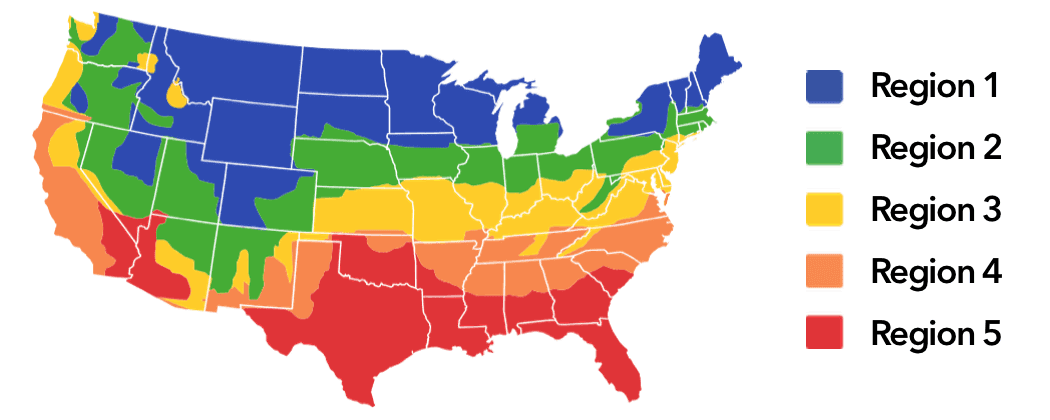
Climate details worth raising with an installer:
Eave icicles. A row of icicles is warm air escaping through the ceiling. Fixing the attic floor with air sealing and more insulation keeps that heat in the rooms, where the furnace or heat pump meant it to go.
Drifts. Plan where the snow will pile before the outdoor unit and the furnace vents go in. A raised stand and vents set above the drift line keep the system breathing through a heavy winter.
Freeze risk. A no-heat call is an emergency when pipes can freeze. A service visit in early fall catches worn igniters, weak capacitors and clogged filters before the busy season.
Vermont is part of the Northeast's heating-oil country: plenty of houses here were built around an oil boiler. Compare the heating oil row, priced at $5.99 a gallon, with the rows above it before the next tank delivery. Order a new furnace or boiler before the first deep freeze, ideally in late summer. Midwinter installs are rushed jobs priced for urgency.
What Moves the Bill Besides the Fuel
Insulation and air sealing. The model moves the load 12% either way: from average to poorly insulated, or from average to well insulated. On natural gas in Vermont, each step is about $300 a season. Try the insulation buttons above the table.
The equipment. Our figures assume 82 AFUE. Swap in a 93 AFUE condensing boiler and the natural gas bill drops by about $290; keep running a tired 62 AFUE unit and it rises by about $790.
Ductwork. Bare ducts lose about 17% of a furnace's heat in the calculator's duct model. Sealing and insulating them recovers most of it. Boilers and ductless heat pumps have no such loss.
How a Heat Pump Changes the Electric Bill
If your home heats with baseboards, the heat-pump row is the upgrade path. In Vermont the model credits a heat pump with about 2.2 kWh of heat per kWh, after a cold-climate deduction, so the season drops from roughly $9,500 to $4,450, about $5,060 less every winter. Here it ranks second, behind natural gas.
Heating Cost Questions for Vermont
Does it pay to replace an oil boiler in Vermont?
For most homes, yes. This house would spend about $5,190 a season on heating oil and about $2,430 on natural gas, so 10 winters at flat prices leave roughly $27,520 on the table. Weigh that against the conversion quote. That option needs natural gas service at the street.
Which heating fuel costs least in Vermont?
By today's rates, natural gas wins at about $2,430 a season, with a heat pump next at about $4,450. Natural gas only helps where a natural gas line reaches the house.
How much does insulation change the heating bill here?
Using natural gas, poor insulation pushes this 2,000 sq. ft. house to about $2,730 a season, and good insulation brings it down to about $2,140. The difference, about $590, comes back every winter.
Pellet and wood stoves can heat cheaply too, but they are manual-load fuels: we price them in the pellet stove calculator and leave them out of the ranking, as the heating cost calculator does.
How to read this page: every figure is a model estimate built on today's Vermont average rates. It ranks fuels fairly against each other; your own bill depends on the weather, the building and the equipment.