Home Heating Cost in Virginia (2027): Natural Gas vs Oil vs Electric
Heating costs for your home size in Virginia
Below, a typical Virginia house is heated five ways. Current average prices for each fuel feed the same seasonal load model our heating cost calculator uses (Climate Region #3, mid-efficiency equipment), so the numbers compare like for like.
Take a 2,100 sq. ft. Virginia home: a heat pump is the low-cost fuel at about $1,740 a season, and electric baseboard heat sits at the other end near $4,880. Same house, same winter: a gap of about $3,140.
Season Heating Cost in Virginia: Five Fuels Compared
| Fuel & equipment | Price | Season use | Cost / season |
|---|---|---|---|
| Electric heat pumpductless, ~2.9 COP | $0.214per kWh | 8,095kWh | ~$1,740 |
| Natural gasnatural gas boiler, 82 AFUE | $1.93per therm | 977therms | ~$1,890 |
| Propanepropane boiler, 82 AFUE | $3.68per gal | 1,068gals | ~$3,930 |
| Heating oiloil boiler, 82 AFUE | $5.95per gal | 704gals | ~$4,190 |
| Electric baseboardresistance heat | $0.214per kWh | 22,772kWh | ~$4,880 |
Rounded up to $10. Rates are current Virginia averages; the load is a 2,100 sq. ft. home at the insulation level you pick above. Same method as the heating cost calculator.
A Season of Heat, Fuel by Fuel
Same house, same winter, five fuels. Hover a bar for the use and the rate behind it.
Season = the modeled Virginia heating load on standard mid-efficiency equipment; fuels ranked like the heating cost calculator (pellet and wood stoves are manual-load and stay unranked).
Heating Costs Over the Next 10 Winters
A fuel that wins this winter can lose later if its price climbs faster. The electric lines below rise at Virginia's own electricity trend, about 3.49% a year from 2013 to 2023. For natural gas, heating oil and propane our data has no comparable history, so you choose: hold them at today's price, or let them climb at the electricity pace. Tap or hover any winter to read the numbers.
Each column is one heating season for the house above at average insulation. Totals are rounded up to $10.
With natural gas, oil and propane held at today's prices, 10 winters on natural gas add up to about $18,900, and on electric baseboard heat to about $57,110. The heat pump starts cheaper than natural gas, but passes it in winter 4 if natural gas prices hold still.
How Virginia Winters Set the Heating Load
With winter highs around 46°F and lows around 26°F, Virginia lands in Climate Region #3. It's a mixed climate: a real heating season, and a cooling season that matters too.
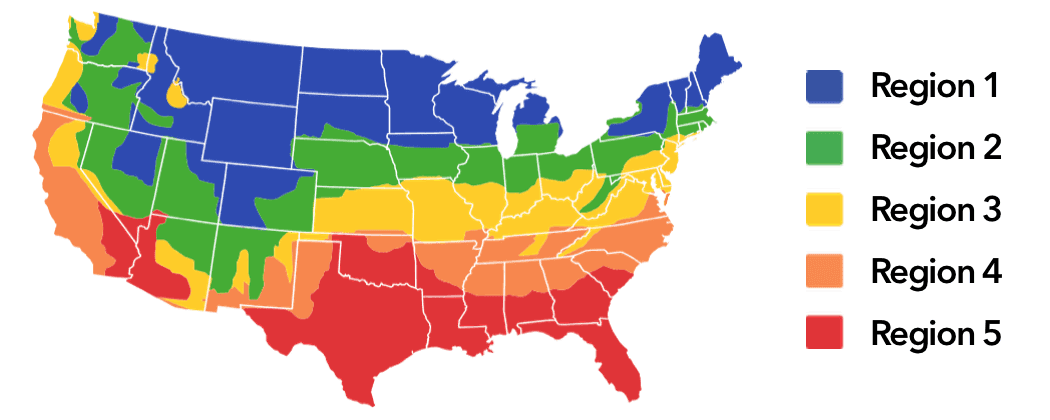
Climate details worth raising with an installer:
Frost on the coil. Wet air close to freezing builds frost on an outdoor heat pump, which then runs brief defrost cycles. Set the unit where meltwater drains away so it does not refreeze around the base.
Freeze risk. A no-heat call is an emergency when pipes can freeze. A service visit in early fall catches worn igniters, weak capacitors and clogged filters before the busy season.
Coastal corrosion. Outdoor heat-pump units near salt water wear out sooner. Ask for corrosion-protected coils, and place the unit out of direct spray where you can.
Heat pumps are a common heating choice across the South, where they also carry the long cooling season. In Virginia, one runs on electricity at $0.214 per kWh. Two seasons of demand leave spring and fall as the calm months for installers. If the AC is old too, one heat pump visit can replace both systems.
What Moves the Bill Besides the Fuel
Insulation and air sealing. The model moves the load 12% either way: from average to poorly insulated, or from average to well insulated. On a heat pump in Virginia, each step is about $210 a season. Try the insulation buttons above the table.
The ducts. A forced-air system with bare ducts loses roughly 17% of its output on the way to the rooms, according to the calculator's duct model. Ductless systems and radiators skip that loss.
Up the flue. Going from 82 to 93 AFUE saves about $230 a season on natural gas. Holding on to an aging 62 AFUE unit costs about $610 extra.
How a Heat Pump Changes the Electric Bill
Both electric rows use the same $0.214 per kWh rate. The difference is the machine: resistance heat converts power to heat one for one, while a heat pump gets about 2.9 units of heat per unit of power here. The result is about $1,740 a season instead of $4,880. In Virginia that makes it the lowest-cost fuel in the table.
Common Questions About Heating a Virginia Home
What heats a Virginia house for the least money?
Right now it is a heat pump, at about $1,740 a season for 2,100 sq. ft. The runner-up is natural gas at about $1,890. A heat pump needs no fuel delivery and no natural gas line, only electricity.
Is insulation worth it for heating in Virginia?
With a heat pump, a poorly insulated 2,100 sq. ft. home costs about $1,940 a season and a well-insulated one about $1,530. That $420 gap repeats every winter.
Does it pay to replace an oil boiler in Virginia?
Today's numbers favor the switch: about $4,190 a season on heating oil against about $1,740 on a heat pump. That is roughly $24,560 over 10 winters if prices hold, before any installation cost.
Pellet and wood stoves stay out of the ranking because they need hand loading; see the pellet stove calculator for their costs.
How to read this page: every figure is a model estimate built on today's Virginia average rates. It ranks fuels fairly against each other; your own bill depends on the weather, the building and the equipment.