Home Heating Cost in Pennsylvania (2027): Natural Gas vs Oil vs Electric
Heating costs for your home size in Pennsylvania
Below, a typical Pennsylvania house is heated five ways. Current average prices for each fuel feed the same seasonal load model our heating cost calculator uses (Climate Region #2, mid-efficiency equipment), so the numbers compare like for like.
In Pennsylvania, a season of heat for 2,040 sq. ft. costs roughly $1,900 at the low end (natural gas) and $6,400 at the high end (electric baseboard heat).
What a Season of Heat Costs in Pennsylvania, by Fuel
| Fuel & equipment | Price | Season use | Cost / season |
|---|---|---|---|
| Natural gasnatural gas boiler, 82 AFUE | $1.72per therm | 1,101therms | ~$1,900 |
| Electric heat pumpductless, ~2.9 COP | $0.249per kWh | 10,607kWh | ~$2,650 |
| Propanepropane boiler, 82 AFUE | $3.15per gal | 1,203gals | ~$3,790 |
| Heating oiloil boiler, 82 AFUE | $5.83per gal | 794gals | ~$4,640 |
| Electric baseboardresistance heat | $0.249per kWh | 25,660kWh | ~$6,400 |
Season estimates for a 2,040 sq. ft. home, rounded up to $10, from the same math and rates as our heating cost calculator. Use the buttons to see a drafty or a tight house.
A Season of Heat, Fuel by Fuel
Same house, same winter, five fuels. Hover a bar for the use and the rate behind it.
Season = the modeled Pennsylvania heating load on standard mid-efficiency equipment; fuels ranked like the heating cost calculator (pellet and wood stoves are manual-load and stay unranked).
10-Year Heating Cost Outlook for Pennsylvania
Today's ranking is one winter. Over 10 winters, price trends matter too. Electricity in Pennsylvania rose about 3.62% a year between 2013 and 2023 in our energy data, and both electric lines follow that trend. We have no matching long record for natural gas, heating oil or propane, so the buttons show two cases instead of a guess. Hover or tap a winter for every fuel's cost.
Each column is one heating season for the house above at average insulation. Totals are rounded up to $10.
Fossil fuels flat, electricity on its trend: the cheapest 10-winter total is natural gas at about $18,930; the most expensive is electric baseboard heat at about $75,420.
Winter in Pennsylvania: What the Climate Asks For
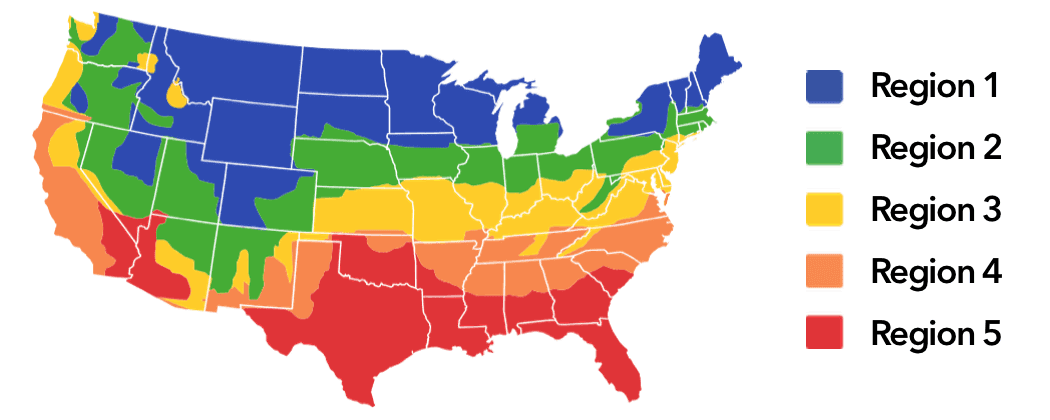
Winter in Pennsylvania averages about 35°F by day and 19°F by night, which puts it in Region #2 on the map below, one step down from the coldest band. Heating still dominates the energy budget here.
Climate details worth raising with an installer:
Freeze risk. A no-heat call is an emergency when pipes can freeze. A service visit in early fall catches worn igniters, weak capacitors and clogged filters before the busy season.
Roof ice. When warm house air escapes into the attic, snow on the roof melts and refreezes at the cold eaves. That ice is a visible heat-loss meter: air sealing and attic insulation fix both problems.
Drifts. Plan where the snow will pile before the outdoor unit and the furnace vents go in. A raised stand and vents set above the drift line keep the system breathing through a heavy winter.
As a natural gas producing state, Pennsylvania has service in most towns. At $1.72 per therm, natural gas sets the bar for any other fuel in the table where a line is available. Shoulder seasons are the time to shop: spring and early fall. By the first cold week, service calls pile up and quotes come back slower.
Beyond Fuel: Where Heating Money Leaks
The shell of the house. A well-insulated home needs about 12% less heat than an average one in this model, and a drafty one about 12% more; with natural gas in Pennsylvania, each step is worth about $230 a season.
The ducts. A forced-air system with bare ducts loses roughly 17% of its output on the way to the rooms, according to the calculator's duct model. Ductless systems and radiators skip that loss.
Burner efficiency. The table assumes a mid-efficiency boiler at 82 AFUE. A condensing unit at 93 AFUE burns less fuel for the same heat, about $230 a season less on natural gas here. An old 62 AFUE unit burns about $620 more.
Heat Pump vs. Electric Baseboard in Pennsylvania
Electric baseboard turns each kWh into one kWh of heat. A heat pump moves heat from outdoors instead, delivering about 2.5 kWh of warmth per kWh in this model, after a cold-climate deduction. At $0.249 per kWh, that cuts the electric heating bill from about $6,400 to about $2,650 a season, a saving of roughly $3,750. Only natural gas costs less here.
Heating Cost Questions for Pennsylvania
What heats a Pennsylvania house for the least money?
At current rates the winner is natural gas, about $1,900 a season for this house; a heat pump follows at about $2,650. Natural gas only helps where a natural gas line reaches the house.
How much does insulation change the heating bill here?
With natural gas, a poorly insulated 2,040 sq. ft. home costs about $2,120 a season and a well-insulated one about $1,670. That $460 gap repeats every winter.
Should a Pennsylvania home on heating oil convert?
Today's numbers favor the switch: about $4,640 a season on heating oil against about $1,900 on natural gas. That is roughly $27,390 over 10 winters if prices hold, before any installation cost. Natural gas requires a service line to the house.
Pellet and wood stoves can heat cheaply too, but they are manual-load fuels: we price them in the pellet stove calculator and leave them out of the ranking, as the heating cost calculator does.
About these numbers: seasonal estimates from current average Pennsylvania energy rates and a modeled heating load. Use them to compare fuels, not as a quote; real bills follow your winter, your house and your equipment.