Home Heating Cost in Oregon (2027): Natural Gas vs Oil vs Electric
Heating costs for your home size in Oregon
Fuel choice moves a heating bill more than almost anything else, so we priced all five side by side for Oregon. Rates are today's state averages, the load comes from Climate Region #3 and your square footage, and the equipment is a standard mid-efficiency setup, as in our heating cost calculator.
Heating a 1,940 sq. ft. home through a Oregon winter runs from about $1,350 on a heat pump, the cheapest fuel here, up to roughly $4,240 on heating oil, the priciest.
What a Season of Heat Costs in Oregon, by Fuel
| Fuel & equipment | Price | Season use | Cost / season |
|---|---|---|---|
| Electric heat pumpductless, ~2.9 COP | $0.179per kWh | 7,478kWh | ~$1,350 |
| Natural gasnatural gas boiler, 82 AFUE | $1.84per therm | 903therms | ~$1,670 |
| Electric baseboardresistance heat | $0.179per kWh | 21,037kWh | ~$3,780 |
| Propanepropane boiler, 82 AFUE | $3.94per gal | 986gals | ~$3,890 |
| Heating oiloil boiler, 82 AFUE | $6.50per gal | 651gals | ~$4,240 |
Each row is one heating season for 1,940 sq. ft., rounded up to $10. Switch the insulation level to see how much the house itself moves the bill. Method: our heating cost calculator.
A Season of Heat, Fuel by Fuel
Same house, same winter, five fuels. Hover a bar for the use and the rate behind it.
Season = the modeled Oregon heating load on standard mid-efficiency equipment; fuels ranked like the heating cost calculator (pellet and wood stoves are manual-load and stay unranked).
The Next 10 Winters, Fuel by Fuel
This chart carries the season costs forward 10 winters. Electricity follows its Oregon track record, about 2.72% a year (2013 to 2023, energy database). Natural gas, heating oil and propane have no long series in our data, so they get two clear cases rather than an invented rate. Hover or tap a column for that winter's costs.
Each column is one heating season for the house above at average insulation. Totals are rounded up to $10.
Fossil fuels flat, electricity on its trend: the cheapest 10-winter total is a heat pump at about $15,180; the most expensive is electric baseboard heat at about $42,700. The heat pump starts cheaper than natural gas, but passes it in winter 10 if natural gas prices hold still.
Winter in Oregon: What the Climate Asks For
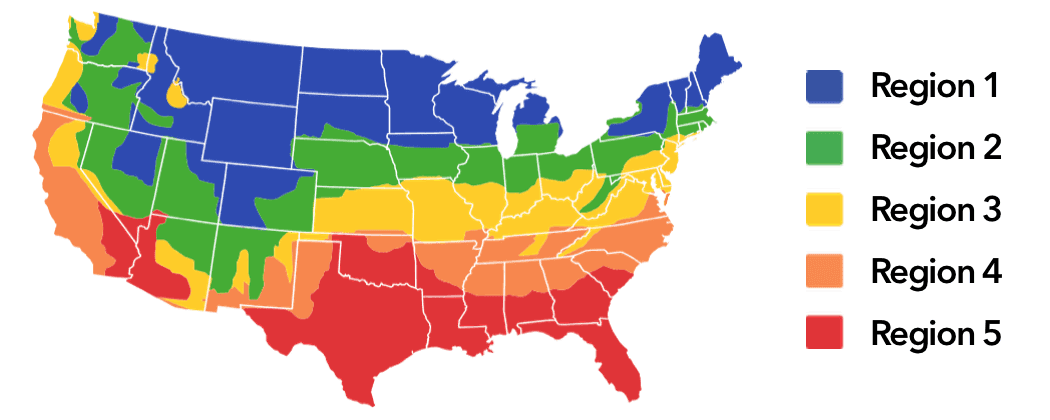
Region #3 covers the in-between states, and Oregon is one of them. Average winter days reach about 41°F; nights fall to about 26°F. A moderate load means the gap between fuels is smaller in dollars than it is up north.
Climate details worth raising with an installer:
Wet winters. In damp, chilly weather a heat pump collects frost on its outdoor coil and runs short defrost cycles. Good drainage under the unit keeps the meltwater from refreezing around it.
Wildfire smoke. When smoke reaches your area, a forced-air system doubles as an air cleaner if the return holds a better filter. Keep spare filters on hand.
Light heating load. A small seasonal bill means heating upgrades take many years to pay back. Mid-efficiency equipment, kept in tune, is often the sensible choice.
The Northwest gets much of its electricity from dams, and that history shows in moderate power prices. At $0.179 per kWh, electric heat, and a heat pump above all, holds up well in Oregon. Winters here are long and damp more than bitterly cold, so the system runs many hours at moderate output. That favors a heat pump that modulates over one that cycles on and off.
Beyond Fuel: Where Heating Money Leaks
- The equipment. Our figures assume 82 AFUE. Swap in a 93 AFUE condensing boiler and the natural gas bill drops by about $200; keep running a tired 62 AFUE unit and it rises by about $540.
- The shell of the house. A well-insulated home needs about 12% less heat than an average one in this model, and a drafty one about 12% more; with a heat pump in Oregon, each step is worth about $170 a season.
- Out of the ducts. Bare ducts in unheated space waste about 17% of a furnace's heat; sealed, insulated ducts keep most of it in the house.
Why the Heat Pump Beats Baseboard
A heat pump is an air conditioner that runs in reverse in winter. Pulling heat from outdoor air, it yields about 2.9 kWh of warmth for every kWh it uses in Oregon. Same $0.179 rate, but about $2,440 less per season than baseboard heat. In Oregon that makes it the lowest-cost fuel in the table.
Common Questions About Heating a Oregon Home
What is the cheapest way to heat a home in Oregon?
By today's rates, a heat pump wins at about $1,350 a season, with natural gas next at about $1,670. Unlike natural gas, a heat pump works anywhere the house has electric service.
Should a Oregon home on heating oil convert?
On fuel cost, yes. Heating oil runs about $4,240 a season for this house; a heat pump would cost about $1,350. Over 10 winters at today's prices that gap is about $28,930: the budget a conversion has to beat.
Is insulation worth it for heating in Oregon?
Quite a bit. On a heat pump, the same 1,940 sq. ft. house runs about $1,510 a season when poorly insulated and about $1,180 when well insulated, a yearly difference of about $330.
Pellet and wood stoves stay out of the ranking because they need hand loading; see the pellet stove calculator for their costs.
About these numbers: seasonal estimates from current average Oregon energy rates and a modeled heating load. Use them to compare fuels, not as a quote; real bills follow your winter, your house and your equipment.