Home Heating Cost in Oklahoma (2027): Natural Gas vs Oil vs Electric
Heating costs for your home size in Oklahoma
This page answers one question for Oklahoma: which fuel heats a house for the least money right now. The inputs are current state-average energy rates and a heating load for Climate Region #4; the method is the one inside our heating cost calculator, set to mid-efficiency equipment.
Take a 1,940 sq. ft. Oklahoma home: a heat pump is the low-cost fuel at about $820 a season, and electric baseboard heat sits at the other end near $2,310. Same house, same winter: a gap of about $1,490.
What a Season of Heat Costs in Oklahoma, by Fuel
| Fuel & equipment | Price | Season use | Cost / season |
|---|---|---|---|
| Electric heat pumpductless, ~2.9 COP | $0.179per kWh | 4,562kWh | ~$820 |
| Natural gasnatural gas boiler, 82 AFUE | $2.00per therm | 551therms | ~$1,110 |
| Propanepropane boiler, 82 AFUE | $2.29per gal | 602gals | ~$1,390 |
| Heating oiloil boiler, 82 AFUE | $5.74per gal | 397gals | ~$2,280 |
| Electric baseboardresistance heat | $0.179per kWh | 12,832kWh | ~$2,310 |
Season estimates for a 1,940 sq. ft. home, rounded up to $10, from the same math and rates as our heating cost calculator. Use the buttons to see a drafty or a tight house.
A Season of Heat, Fuel by Fuel
Same house, same winter, five fuels. Hover a bar for the use and the rate behind it.
Season = the modeled Oklahoma heating load on standard mid-efficiency equipment; fuels ranked like the heating cost calculator (pellet and wood stoves are manual-load and stay unranked).
10-Year Heating Cost Outlook for Oklahoma
Today's ranking is one winter. Over 10 winters, price trends matter too. Electricity in Oklahoma rose about 2.04% a year between 2013 and 2023 in our energy data, and both electric lines follow that trend. We have no matching long record for natural gas, heating oil or propane, so the buttons show two cases instead of a guess. Hover or tap a winter for every fuel's cost.
Winter 1 uses today's rates and later winters apply the trend, all at average insulation; every total is rounded up to the next $10.
With natural gas, oil and propane held at today's prices, 10 winters on a heat pump add up to about $8,980, and on electric baseboard heat to about $25,250.
Winter in Oklahoma: What the Climate Asks For
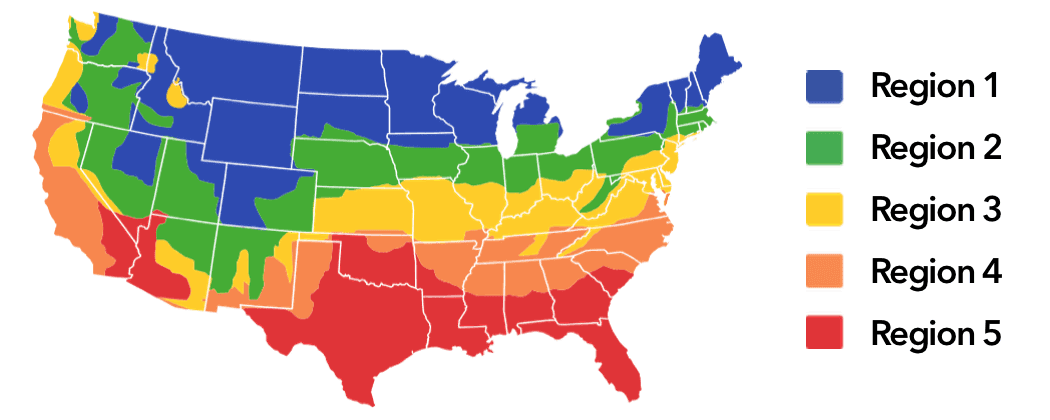
Winters here are short and fairly gentle, about 50°F in the afternoon and 27°F at night. That puts Oklahoma in Region #4, where cooling usually costs more than heating over a year.
What the local weather means for heating equipment:
Wind-driven drafts. A cold wind finds every crack in the shell and turns it into a draft the heating system must answer. Caulk, weatherstripping and foam at the rim joist cut that load on any fuel.
Hail damage. Hailstones bend the thin fins of an outdoor coil and cut its airflow. A coil guard or a sheltered spot is a small cost; straighten or replace damaged fins after a storm.
Hard freezes. If the heat fails during a deep freeze, water pipes can split within hours. Book the tune-up before the first cold snap, and consider a freeze alarm or a thermostat that sends alerts.
Natural gas is produced in Oklahoma itself. At $2.00 per therm, it is the fuel to compare against wherever a natural gas line is available. Winter is short here, so heating gets attention only when it fails on the first cold night. A fall check, or replacing heat and AC together, avoids that.
Beyond Fuel: Where Heating Money Leaks
- The shell of the house. A well-insulated home needs about 12% less heat than an average one in this model, and a drafty one about 12% more; with a heat pump in Oklahoma, each step is worth about $100 a season.
- Up the flue. Going from 82 to 93 AFUE saves about $140 a season on natural gas. Holding on to an aging 62 AFUE unit costs about $360 extra.
- Ductwork. Bare ducts lose about 17% of a furnace's heat in the calculator's duct model. Sealing and insulating them recovers most of it. Boilers and ductless heat pumps have no such loss.
Why the Heat Pump Beats Baseboard
Electric baseboard turns each kWh into one kWh of heat. A heat pump moves heat from outdoors instead, delivering about 2.9 kWh of warmth per kWh in this model. At $0.179 per kWh, that cuts the electric heating bill from about $2,310 to about $820 a season, a saving of roughly $1,490. Here it is also the cheapest of the five fuels.
Heating Cost Questions for Oklahoma
What is the cheapest way to heat a home in Oklahoma?
Right now it is a heat pump, at about $820 a season for 1,940 sq. ft. The runner-up is natural gas at about $1,110. A heat pump needs no fuel delivery and no natural gas line, only electricity.
Does it pay to replace an oil boiler in Oklahoma?
On fuel cost, yes. Heating oil runs about $2,280 a season for this house; a heat pump would cost about $820. Over 10 winters at today's prices that gap is about $14,620: the budget a conversion has to beat.
Is insulation worth it for heating in Oklahoma?
Using a heat pump, poor insulation pushes this 1,940 sq. ft. house to about $920 a season, and good insulation brings it down to about $730. The difference, about $200, comes back every winter.
Pellet and wood stoves can heat cheaply too, but they are manual-load fuels: we price them in the pellet stove calculator and leave them out of the ranking, as the heating cost calculator does.
About these numbers: seasonal estimates from current average Oklahoma energy rates and a modeled heating load. Use them to compare fuels, not as a quote; real bills follow your winter, your house and your equipment.