Home Heating Cost in Colorado (2027): Natural Gas vs Oil vs Electric
Heating costs for your home size in Colorado
Fuel choice moves a heating bill more than almost anything else, so we priced all five side by side for Colorado. Rates are today's state averages, the load comes from Climate Region #1 and your square footage, and the equipment is a standard mid-efficiency setup, as in our heating cost calculator.
In Colorado, a season of heat for 2,460 sq. ft. costs roughly $1,830 at the low end (natural gas) and $6,890 at the high end (electric baseboard heat).
Colorado Heating Fuel Costs for One Season
| Fuel & equipment | Price | Season use | Cost / season |
|---|---|---|---|
| Natural gasnatural gas boiler, 82 AFUE | $1.23per therm | 1,477therms | ~$1,830 |
| Electric heat pumpductless, ~2.9 COP | $0.200per kWh | 16,096kWh | ~$3,230 |
| Propanepropane boiler, 82 AFUE | $2.39per gal | 1,613gals | ~$3,860 |
| Heating oiloil boiler, 82 AFUE | $6.30per gal | 1,064gals | ~$6,710 |
| Electric baseboardresistance heat | $0.200per kWh | 34,411kWh | ~$6,890 |
Season estimates for a 2,460 sq. ft. home, rounded up to $10, from the same math and rates as our heating cost calculator. Use the buttons to see a drafty or a tight house.
A Season of Heat, Fuel by Fuel
Same house, same winter, five fuels. Hover a bar for the use and the rate behind it.
Season = the modeled Colorado heating load on standard mid-efficiency equipment; fuels ranked like the heating cost calculator (pellet and wood stoves are manual-load and stay unranked).
Heating Costs Over the Next 10 Winters
A fuel that wins this winter can lose later if its price climbs faster. The electric lines below rise at Colorado's own electricity trend, about 1.88% a year from 2013 to 2023. For natural gas, heating oil and propane our data has no comparable history, so you choose: hold them at today's price, or let them climb at the electricity pace. Tap or hover any winter to read the numbers.
Season costs at average insulation; winter 1 is today's prices. Totals rounded up to $10.
With natural gas, oil and propane held at today's prices, 10 winters on natural gas add up to about $18,240, and on electric baseboard heat to about $75,020.
Why Colorado Weather Shapes the Heating Bill
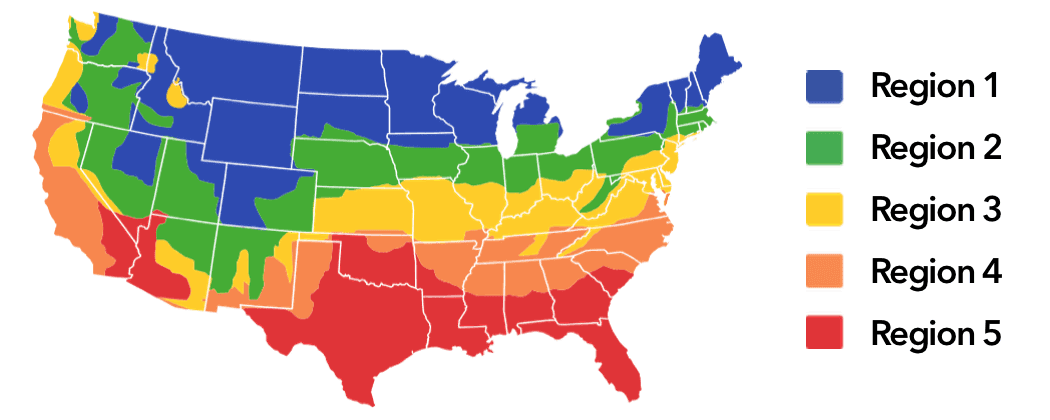
Region #1 on the map means long, hard winters: daytime averages of about 39°F, nighttime averages near 14°F. In Colorado, that load makes fuel price and equipment efficiency matter more than almost anywhere else.
Climate details worth raising with an installer:
Snow cover. A heat pump's outdoor coil needs open air to work, and condensing furnaces breathe through low wall vents. Both need clearance from snowbanks, so ask the installer how high they mount the unit and the vents.
Hail. Hail flattens the thin aluminum fins on a heat pump's outdoor coil, and crushed fins choke airflow. Hail guards are inexpensive; check the coil after a big storm.
Wind. Strong winter wind pushes cold air through every gap in the house: sills, rim joists, attic hatches, outlets. Air sealing is cheap and works on every fuel in the table.
Wildfire smoke. When smoke reaches your area, a forced-air system doubles as an air cleaner if the return holds a better filter. Keep spare filters on hand.
High elevation in Colorado means less oxygen for a burner, so fuel-burning furnaces are set to a lower firing rate. Ask every bidder in Colorado to confirm the altitude adjustment. Plan heating work for late summer or early fall, when crews have room in their schedules. Have the current system serviced before the first cold snap, whatever fuel it burns.
What Moves the Bill Besides the Fuel
- The shell of the house. A well-insulated home needs about 12% less heat than an average one in this model, and a drafty one about 12% more; with natural gas in Colorado, each step is worth about $220 a season.
- Out of the ducts. Bare ducts in unheated space waste about 17% of a furnace's heat; sealed, insulated ducts keep most of it in the house.
- Up the flue. Going from 82 to 93 AFUE saves about $220 a season on natural gas. Holding on to an aging 62 AFUE unit costs about $590 extra.
How a Heat Pump Changes the Electric Bill
Electric baseboard turns each kWh into one kWh of heat. A heat pump moves heat from outdoors instead, delivering about 2.2 kWh of warmth per kWh in this model, after a cold-climate deduction. At $0.200 per kWh, that cuts the electric heating bill from about $6,890 to about $3,230 a season, a saving of roughly $3,670. Only natural gas costs less here.
Heating Cost Questions for Colorado
Which heating fuel costs least in Colorado?
At current rates the winner is natural gas, about $1,830 a season for this house; a heat pump follows at about $3,230. That assumes the home is on a natural gas main.
Is insulation worth it for heating in Colorado?
Using natural gas, poor insulation pushes this 2,460 sq. ft. house to about $2,050 a season, and good insulation brings it down to about $1,610. The difference, about $440, comes back every winter.
Is it worth switching off heating oil in Colorado?
On fuel cost, yes. Heating oil runs about $6,710 a season for this house; natural gas would cost about $1,830. Over 10 winters at today's prices that gap is about $48,820: the budget a conversion has to beat. That option needs natural gas service at the street.
Pellet and wood stoves stay out of the ranking because they need hand loading; see the pellet stove calculator for their costs.
Fine print: estimates, not bills. The fuel prices are Colorado averages and the heat load is modeled, so treat the figures as a fair comparison of fuels rather than a forecast of your statement.