Home Heating Cost in Alaska (2027): Natural Gas vs Oil vs Electric
Heating costs for your home size in Alaska
Below, a typical Alaska house is heated five ways. Current average prices for each fuel feed the same seasonal load model our heating cost calculator uses (Climate Region #1, mid-efficiency equipment), so the numbers compare like for like.
In Alaska, a season of heat for 1,910 sq. ft. costs roughly $1,680 at the low end (natural gas) and $8,750 at the high end (electric baseboard heat).
What a Season of Heat Costs in Alaska, by Fuel
| Fuel & equipment | Price | Season use | Cost / season |
|---|---|---|---|
| Natural gasnatural gas boiler, 82 AFUE | $1.46per therm | 1,146therms | ~$1,680 |
| Electric heat pumpductless, ~2.9 COP | $0.327per kWh | 12,497kWh | ~$4,100 |
| Propanepropane boiler, 82 AFUE | $3.94per gal | 1,253gals | ~$4,940 |
| Heating oiloil boiler, 82 AFUE | $6.50per gal | 826gals | ~$5,380 |
| Electric baseboardresistance heat | $0.327per kWh | 26,718kWh | ~$8,750 |
Season estimates for a 1,910 sq. ft. home, rounded up to $10, from the same math and rates as our heating cost calculator. Use the buttons to see a drafty or a tight house.
A Season of Heat, Fuel by Fuel
Same house, same winter, five fuels. Hover a bar for the use and the rate behind it.
Season = the modeled Alaska heating load on standard mid-efficiency equipment; fuels ranked like the heating cost calculator (pellet and wood stoves are manual-load and stay unranked).
What 10 Winters of Heat Could Cost in Alaska
A fuel that wins this winter can lose later if its price climbs faster. The electric lines below rise at Alaska's own electricity trend, about 3.21% a year from 2013 to 2023. For natural gas, heating oil and propane our data has no comparable history, so you choose: hold them at today's price, or let them climb at the electricity pace. Tap or hover any winter to read the numbers.
Each column is one heating season for the house above at average insulation. Totals are rounded up to $10.
With natural gas, oil and propane held at today's prices, 10 winters on natural gas add up to about $16,750, and on electric baseboard heat to about $101,270. The heat pump starts cheaper than propane, but passes it in winter 7 if propane prices hold still.
Why Alaska Weather Shapes the Heating Bill
Region #1 on the map means long, hard winters: daytime averages of about 11°F, nighttime averages near -2°F. In Alaska, that load makes fuel price and equipment efficiency matter more than almost anywhere else.
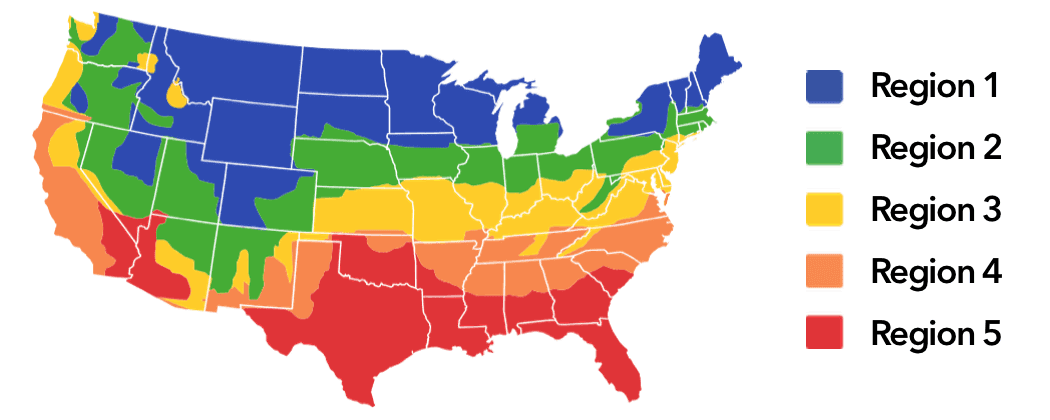
What the local weather means for heating equipment:
Deep snow. Snow can bury an outdoor heat-pump unit and block the plastic side-wall vents of a high-efficiency furnace. Set the outdoor unit on a stand above the usual drift line and keep vent openings clear; a blocked intake shuts a furnace down.
Windy cold. Wind raises the heating load by driving outside air through leaks. Weatherstripping and sealing the rim joist often pay back faster than any equipment upgrade.
Freeze risk. A no-heat call is an emergency when pipes can freeze. A service visit in early fall catches worn igniters, weak capacitors and clogged filters before the busy season.
Many Alaska communities sit off the road system, where heating oil and propane arrive by barge or plane and cost more than the state averages used here. If that is your situation, enter your delivered price in the heating cost calculator. The best window for new heating equipment here is the off-season, before the first hard freeze. A failure in January means paying for speed, not for the best quote.
Beyond Fuel: Where Heating Money Leaks
- The equipment. Our figures assume 82 AFUE. Swap in a 93 AFUE condensing boiler and the natural gas bill drops by about $200; keep running a tired 62 AFUE unit and it rises by about $550.
- Walls and attic. Insulation moves the load about 12% between average and poor, and the same between average and well insulated. That is roughly $210 a season with natural gas here.
- Ductwork. Bare ducts lose about 17% of a furnace's heat in the calculator's duct model. Sealing and insulating them recovers most of it. Boilers and ductless heat pumps have no such loss.
How a Heat Pump Changes the Electric Bill
A heat pump is an air conditioner that runs in reverse in winter. Pulling heat from outdoor air, it yields about 2.2 kWh of warmth for every kWh it uses in Alaska, counting the efficiency a heat pump loses in hard cold. Same $0.327 rate, but about $4,660 less per season than baseboard heat. Here it ranks second, behind natural gas.
Common Questions About Heating a Alaska Home
Which heating fuel costs least in Alaska?
Right now it is natural gas, at about $1,680 a season for 1,910 sq. ft. The runner-up is a heat pump at about $4,100. Natural gas counts only if the street has a natural gas main.
How much does insulation change the heating bill here?
With natural gas, a poorly insulated 1,910 sq. ft. home costs about $1,880 a season and a well-insulated one about $1,480. That $410 gap repeats every winter.
Is it worth switching off heating oil in Alaska?
On fuel cost, yes. Heating oil runs about $5,380 a season for this house; natural gas would cost about $1,680. Over 10 winters at today's prices that gap is about $36,970: the budget a conversion has to beat. That option needs natural gas service at the street.
Wood and pellet stoves are not ranked here because someone has to load them. The pellet stove calculator prices them on their own.
How to read this page: every figure is a model estimate built on today's Alaska average rates. It ranks fuels fairly against each other; your own bill depends on the weather, the building and the equipment.