New AC or Heat Pump in Seattle, WA: 2027 Installed Cost
Adjust your home size & electric cost in Seattle, WA
Start with the house: 2,180 sq. ft. calls for about 42,000 BTU, a 3.5-ton unit. In Seattle, the 14 SEER version of that system costs $9,090 to $10,960 installed and gives the lowest ten-year total of the ratings we price. Our Seattle numbers sit about 4% over the statewide model, a premium we apply to markets of this size (population near 755,000).
That figure covers a like-for-like change-out on ducts that still work: new condenser and matched coil, line set, electrical hookup, haul-away and startup. New ductwork, a panel upgrade or permit fees get priced on top.
Buying Central Air in Seattle: The Price Ladder
At the base of the ladder, 14 SEER runs $9,090 to $10,960 in Seattle. Two-stage 16 SEER costs $11,470 to $13,830, 18 SEER $18,550 to $22,360, and the 20 SEER top tier $24,980 to $30,120.
3.5-Ton Central AC: Seattle Price vs Washington Average
| System (3.5 ton) | Seattle | Washington average | Materials |
|---|---|---|---|
| 14 SEER | $9,090 - $10,960 | $8,740 - $10,540 | $5,710 |
| 16 SEER | $11,470 - $13,830 | $11,030 - $13,300 | $7,120 |
| 18 SEER | $18,550 - $22,360 | $17,840 - $21,500 | $11,350 |
| 20 SEER | $24,980 - $30,120 | $24,020 - $28,960 | $15,180 |
Of a 16 SEER quote in Seattle, roughly $7,120 buys the hardware. The remainder pays the crew and runs the shop.
How Much the Seattle Market Adds or Saves
Big markets pay crews more and spend more on parking, permits and travel time; small markets spend less but often have fewer bidders. That premium adds roughly $490 to a typical 16 SEER job in Seattle, compared with the statewide $11,030 to $13,300.
Whether you live near the center or the city line, the estimate holds for the 51 Seattle ZIP codes in King County. Ask how the contractor sized the system. A room-by-room load calculation beats copying the tonnage off the old unit, which may have been wrong to begin with.
Electric Bills, Efficiency and Payback in Seattle
We price Seattle running costs at the Washington average of $0.165/kWh (about 24% below the national average of $0.217); if your bill shows a different rate, enter it in the form above. Because Washington rates grew about 2.54% a year over the last decade, each SEER point saves a little more every summer.
Point at a year (or tap it on a phone) for the season cost of every rating. The lines climb 2.54% a year, matching how WA electric rates moved over the last decade.
Starting point: this summer at WA's current rate. From there the rate grows 2.54% per year, compounded, and each season cost is rounded up to $10.
A 9 SEER unit costs about $1,000 a year to run here; 16 SEER cuts that to about $570 on roughly 3,404 kWh.
Upgrade Payback Finder: Your Old AC vs a New One
Choose your current AC and a replacement rating. Every result assumes a 3.5-ton system and Washington electric rates ($0.165/kWh today, up 2.54% a year).
| Installed price of the new system | $9,880 |
| Electricity saved, first year | $370 |
| Saved over 10 summers (rates rising) | $4,050 |
| Payback | 21.1 years |
| Net after 10 summers | -$5,840 |
Savings alone fall short: 9 to 14 SEER is still $5,840 behind after 10 summers in WA.
Replacing a working unit: the whole install counts as the cost. If the old one has failed, weigh each rating against a 14 SEER quote instead.
Old 9 SEER vs New: Seattle Numbers
| 9 SEER | 14 SEER | 16 SEER | 18 SEER | 20 SEER | |
|---|---|---|---|---|---|
| Installation Cost | - | $9,880 | $12,470 | $20,170 | $27,160 |
| Electric Usage / Yr | 6,025 kWh | 3,841 kWh | 3,404 kWh | 3,065 kWh | 2,793 kWh |
| Electric Cost / Yr | $1,000 | $640 | $570 | $510 | $470 |
| Energy Savings / Yr | - | $370 | $440 | $490 | $540 |
| Payback (Rates Rising) | - | 21.1 years | 21.9 years | 28.6 years | 33.1 years |
| 10-Year Net (Rates Rising) | - | -$5,840 | -$7,610 | -$14,680 | -$21,170 |
Swapping a working 9 SEER unit for a 14 SEER system pays back in about 21.1 years in Seattle, counting the rate trend.
Price Plus Running Cost: Seattle Totals
Buy Price vs 10-Year Running Cost: Total Cost of Ownership in WA
Three bars per rating: what it costs to install, what it costs to cool the house for 10 summers at Washington rates with the rate climbing 2.54% a year, and the sum. The rating with the shortest third bar costs the least to own. Tap or hover any bar to see the addition.
Lowest 10-year total in Washington: 14 SEER, $17,000 ($9,880 up front, $7,120 in electricity).
Includes energy inflation: electricity = this season's cost at today's WA rate, then each of the next nine seasons raised by the historic 2.54%/yr rate increase. Install = the typical installed price on this page. Each figure is rounded up to the next $10 on its own, so the two parts can add up to $10 more than the total.
Central AC Install Cost Near You
What Seattle Summers Ask of an Air Conditioner
Statewide numbers frame the Seattle estimate: region 2 on our map, summer highs averaging about 80°F, and winter highs around 37°F. Gentle weather defines Seattle: long cool seasons, short warm spells, few extremes.
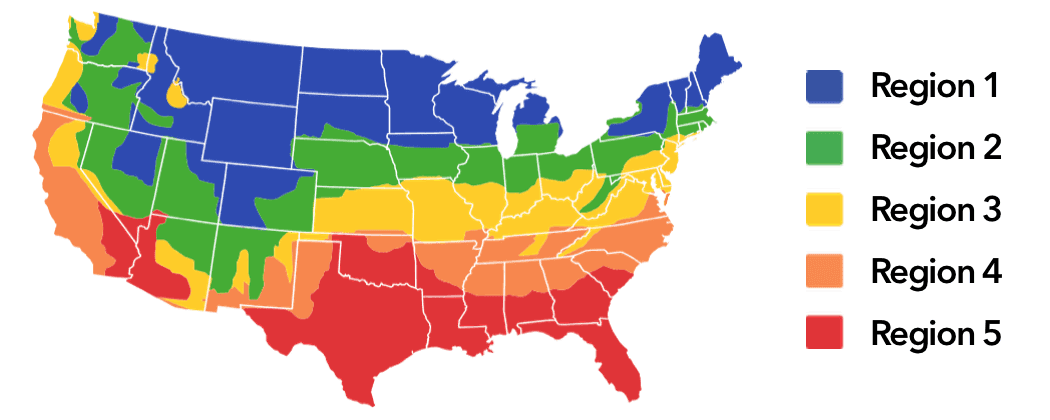
Climate zones run from 1 (cool) to 5 (hot); Washington is in Zone 2.
The closest city in this guide is Bellevue, about 7 miles to the east; it has its own price page.
Long, mild winters make Seattle a natural fit for heat pumps, which heat efficiently most of the year and cool during warm spells. Bigger is not better. An oversized system costs more to buy, cycles too often and controls humidity poorly.
The House Decides the Install: Seattle
A house on wall-furnace or baseboard heat faces a bigger project for ducted air; ductless heat pumps are often simpler. Condos and townhomes are common in Seattle; in those, unit placement and building rules shape what system fits.
For one finished attic or an addition, a single-zone mini-split usually costs less than extending the ducts.
Timing, Permits and Paperwork in Seattle
Seattle heat waves arrive fast and leave fast, and AC call volume jumps with them. A booking made weeks ahead dodges that spike. A permit and inspection document that the Seattle install meets code, which helps when the house is sold.
Other Washington Cities on the Same Model
The 16 SEER price in nearby Washington cities:
- Spokane, WA, 230 mi east: $11,290 to $13,610
- Tacoma, WA, 30 mi south: $11,400 to $13,740
- Vancouver, WA, 140 mi south: $11,270 to $13,580
- Bellevue, WA, 7 mi east: $11,340 to $13,670
Homeowners in Renton, Bremerton, Kent, Everett and Federal Way can plan with the Seattle prices.
For the statewide view, including efficiency comparisons and ten-year totals, read the Washington HVAC cost guide. To size a system for your own house, use the AC size calculator; to compare heating and cooling options, try the heat pump calculator.
These figures start from statewide data, then adjust for the size of Seattle. Collect written bids from licensed local firms before you choose.
Quick Answers
Figures below use Washington averages; energy prices as of October 2026.
Does a heat pump heat for less than natural gas in Washington?
Yes, in Washington. Running at COP 3, a heat pump gets 62,001 BTUs of heat per dollar; natural gas gets 52,434. It keeps that lead while power stays under about 19.5¢ per kWh (the Washington average is 16.5¢). The margin shrinks on the coldest nights, when the COP drops.
Is electricity in Washington expensive compared with other states?
Washington pays 16.5¢ per kWh on average: 24% under the national figure of 21.7¢ and the 10th cheapest of 51. Cooling bills rise and fall with it.
Is a cold-climate heat pump needed in Washington?
Worth considering. Washington winter lows average about 26°F, mild enough for a standard unit most nights, cold enough that a cold-climate model or a backup source earns its keep in a freeze.
What does a heat pump save over electric baseboard in Washington?
Roughly two-thirds of the bill at COP 3. With the Washington average at 16.5¢ per kWh, baseboard heat costs about $48.39 per million BTU and a heat pump about $16.13.
What is the best season to replace an AC or furnace in Washington?
The shoulder seasons, spring and fall, ahead of need. The first heat wave and the first cold snap fill every installer's calendar; replacing on your own schedule leaves room to compare quotes.
Is it smart to replace the furnace and AC together?
Often. Two old units replaced in one visit share the labor, and the indoor coil gets matched to the outdoor unit as the rating requires. A young furnace or AC can stay; quote the other separately.
Check it for your own home: Central AC cost estimator or Heat pump cost calculator.
More HVAC Cost Guides
Washington HVAC costs (statewide) · HVAC costs in every state