Carmel, IN HVAC Cost: Central Air and Heat Pump Prices (2027)
Adjust your home size & electric cost in Carmel, IN
For a 2,010 sq. ft. house in Carmel, plan on 3.5 tons of cooling (about 42,000 BTU). Installed at 14 SEER, the rating with the best long-run math here, that system runs $8,270 to $9,970. With roughly 102,000 residents, Carmel carries big-market labor and overhead, so its figures run 2% higher than the Indiana baseline.
A clean replacement is what we priced: outdoor unit, indoor coil or air handler, refrigerant lines, wiring and removal of the old equipment. Duct repairs and electrical upgrades are separate line items on most bids.
Four Ratings, Four Prices: Carmel
From the cheapest 14 SEER bid ($8,270) to the priciest 20 SEER one ($27,390), Carmel quotes for a 3.5-ton system span a wide band. Most buyers sit in the middle: 16 SEER at $10,430 to $12,580 or 18 SEER at $16,870 to $20,340.
3.5-Ton Central AC: Carmel Price vs Indiana Average
| System (3.5 ton) | Carmel | Indiana average | Materials |
|---|---|---|---|
| 14 SEER | $8,270 - $9,970 | $8,090 - $9,750 | $5,190 |
| 16 SEER | $10,430 - $12,580 | $10,210 - $12,300 | $6,480 |
| 18 SEER | $16,870 - $20,340 | $16,510 - $19,900 | $10,320 |
| 20 SEER | $22,720 - $27,390 | $22,230 - $26,790 | $13,800 |
Split a Carmel quote into parts and labor and the equipment side is about $5,190 for 14 SEER, $6,480 for 16 SEER.
Local Labor and the Carmel Price
Wages, insurance, fuel and shop rent all differ from one market to the next, and installers build those costs into every bid. Applied to 16 SEER, the adjustment lifts $10,210 to $12,300 (statewide) to $10,430 to $12,580 (Carmel).
Whether you live near the center or the city line, the estimate holds for the 4 Carmel ZIP codes in Hamilton County. Equipment warranties often need registration within a set window. Ask the installer to register the unit and to put the labor warranty in writing.
Ten Summers of Cooling Bills in Carmel
Residential power in Indiana averages $0.200 per kWh, about 8% below the national average of $0.217. That rate decides what every SEER point is worth. Rates have not stood still: Indiana power rose roughly 3.24% per year in our ten-year record, reaching about $0.28/kWh by 2036 if it keeps going.
Each line is one SEER rating; touch or hover a year to read its dollar figures. The climb is the 3.24% yearly increase IN rates showed over ten years.
Starting point: this summer at IN's current rate. From there the rate grows 3.24% per year, compounded, and each season cost is rounded up to $10.
Cooling this house with 16 SEER takes around 3,404 kWh per season, or about $690. The same summer on a 9 SEER unit costs about $1,210.
Upgrade Payback Finder: Your Old AC vs a New One
Pick the unit you have and the one you are considering. Figures are for a 3.5-ton system at Indiana electric rates ($0.200/kWh, rising 3.24% a year).
| Installed price of the new system | $8,990 |
| Electricity saved, first year | $440 |
| Saved over 10 summers (rates rising) | $5,070 |
| Payback | 16.0 years |
| Net after 10 summers | -$3,920 |
Not on savings alone: 9 to 14 SEER is $3,920 short after 10 summers in IN.
If the old unit still works, the full install price is the cost of the upgrade. If it has to be replaced anyway, compare the extra price over a 14 SEER bid with the extra savings.
Carmel: What Each Upgrade From 9 SEER Returns
| 9 SEER | 14 SEER | 16 SEER | 18 SEER | 20 SEER | |
|---|---|---|---|---|---|
| Installation Cost | - | $8,990 | $11,340 | $18,340 | $24,700 |
| Electric Usage / Yr | 6,025 kWh | 3,841 kWh | 3,404 kWh | 3,065 kWh | 2,793 kWh |
| Electric Cost / Yr | $1,210 | $770 | $690 | $620 | $560 |
| Energy Savings / Yr | - | $440 | $530 | $600 | $650 |
| Payback (Rates Rising) | - | 16.0 years | 16.6 years | 21.8 years | 25.2 years |
| 10-Year Net (Rates Rising) | - | -$3,920 | -$5,260 | -$11,470 | -$17,200 |
In Carmel, 14 SEER gives the best mix of price and savings: about 16.0 years to recover its cost against an old 9 SEER unit.
Total Cost to Own Each SEER in Carmel
Buy Price vs 10-Year Running Cost: Total Cost of Ownership in IN
Install price plus ten seasons of electricity at Indiana rates, growing 3.24% yearly, gives the real price of each system. Compare the total bars: the shortest one wins. Hover or tap for the breakdown.
Lowest 10-year total in Indiana: 14 SEER, $17,900 ($8,990 up front, $8,910 in electricity).
How the electricity bar is built: this season at today's IN rate, then nine more seasons, each raised by the 3.24% yearly increase IN has averaged. Install is the typical price shown on this page. Every figure is rounded up to the next $10 separately, which can leave the parts $10 over the total.
Check the AC Price Where You Live
 See Costs in Your Area!
Start Here - Enter your zip
Weather, Sizing and the Carmel AC
Carmel lies near 40.0° N. Our model places Indiana in climate region 2, where summer days average around 86°F and winter afternoons about 36°F statewide. Neither cooling nor heating dominates in Carmel, so ask installers to size for both loads instead of matching the old unit.
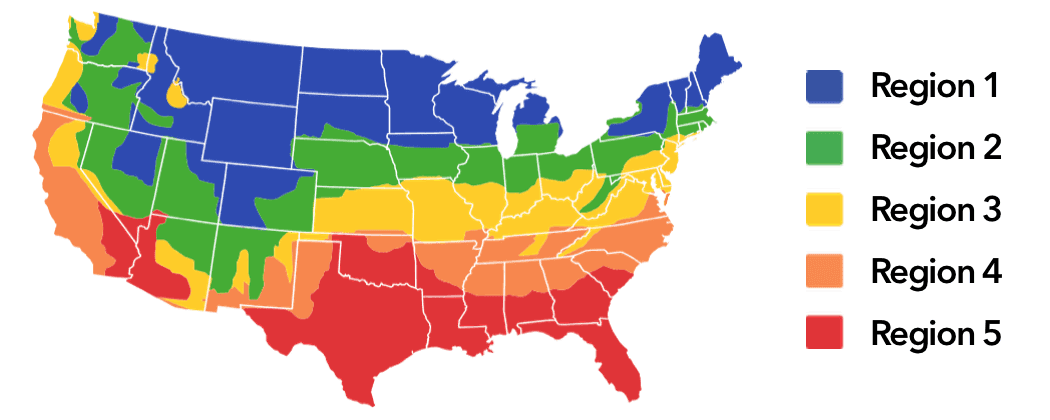
Climate zones run from 1 (cool) to 5 (hot); Indiana is in Zone 2.
Sticky indoor air in Carmel? A variable-speed blower runs long and slow, which pulls more moisture out; pair it with a thermostat that can dehumidify.
Carmel lies about 12 miles north of Indianapolis; local weather and housing can differ from the state's largest city, so size for your house, not the region.
Ask for the heating side on the same quote. In Carmel, matched indoor and outdoor equipment runs better, and one visit costs less than two. Bigger is not better. An oversized system costs more to buy, cycles too often and controls humidity poorly.
Before the Quote: Your Carmel House
Natural gas furnaces on ductwork are the common setup in Indiana, which keeps a Carmel AC swap fairly simple; older ducts may still need sealing. Installers in Carmel can usually reach the outdoor pad and the indoor equipment easily, so labor tracks the system itself.
For one finished attic or an addition, a single-zone mini-split usually costs less than extending the ducts.
Picking the Right Month in Carmel
If you hold off until the first Carmel heat wave, expect a longer wait for an install date and little leverage on price. Refrigerant work requires EPA certification, and many Indiana localities require a permit for equipment swaps, so check both before you sign.
Elsewhere in Indiana
Same 16 SEER system, other Indiana cities:
- Indianapolis, IN: $10,640 to $12,820, 12 mi south
- Fort Wayne, IN: $10,470 to $12,620, 95 mi northeast
- Evansville, IN: $10,350 to $12,480, 160 mi southwest
- South Bend, IN: $10,330 to $12,460, 120 mi north
Homeowners in Fishers, Noblesville, Lawrence, Plainfield and Greenwood can plan with the Carmel prices.
Statewide averages and the assumptions behind every estimate are in the Indiana HVAC cost guide. The AC size calculator sizes the system; the heat pump calculator compares what it costs to run.
Estimates are adjusted for Carmel; real quotes vary with your home, the equipment and the installer.
Quick Answers
Figures below use Indiana averages; energy prices as of October 2026.
Does a heat pump heat for less than natural gas in Indiana?
No, natural gas still wins in Indiana: 77,154 BTUs per dollar against 51,157 for a heat pump at COP 3. The break-even power price is about 13.3¢ per kWh, and the Indiana average is 20.0¢. A more efficient heat pump narrows the gap.
Is electricity in Indiana expensive compared with other states?
Indiana pays 20.0¢ per kWh on average: 8% under the national figure of 21.7¢ and the 22nd most expensive of 51. Cooling bills rise and fall with it.
Is a cold-climate heat pump needed in Indiana?
Yes, plan on one. Winter lows in Indiana average about 20°F statewide, where a standard heat pump loses much of its output. Cold-climate models keep heating below zero; size for the coldest nights.
What does a heat pump save over electric baseboard in Indiana?
About two-thirds. At 20.0¢ per kWh (the Indiana average), a million BTU of heat costs about $58.64 from baseboards and about $19.55 from a heat pump running at COP 3.
What is the best season to replace an AC or furnace in Indiana?
Spring or fall, while the old system still runs. Winter lows near 20°F statewide mean heating work should wrap up by early fall. The first heat wave and the first cold snap fill every installer's calendar; replacing on your own schedule leaves room to compare quotes.
Is it smart to replace the furnace and AC together?
When both are aging, generally yes: one visit, one labor charge, and a matched coil and condenser, which the efficiency rating assumes. If one is fairly new, price each job on its own.
Check it for your own home: Central AC cost estimator or Heat pump cost calculator.
More HVAC Cost Guides
Indiana HVAC costs (statewide) · HVAC costs in every state