2027 HVAC Prices in Augusta, GA: Install, Running Cost, Payback
Adjust your home size & electric cost in Augusta, GA
For a 2,260 sq. ft. house in Augusta, plan on 4 tons of cooling (about 48,000 BTU). Installed at 16 SEER, the rating with the best long-run math here, that system runs $10,680 to $12,880. As one of the largest cities in Georgia, home to roughly 201,000 people, Augusta prices about 2% above the Georgia statewide figure.
The price assumes your ducts can stay. When an installer finds crushed runs, too few returns or a dated disconnect, those repairs show up as added lines.
What Each Efficiency Level Costs in Augusta
At the base of the ladder, 14 SEER runs $8,550 to $10,310 in Augusta. Two-stage 16 SEER costs $10,680 to $12,880, 18 SEER $16,320 to $19,670, and the 20 SEER top tier $22,400 to $27,000.
Augusta Next to the Georgia Average, by SEER
| System (4 ton) | Augusta | Georgia average | Materials |
|---|---|---|---|
| 14 SEER | $8,550 - $10,310 | $8,370 - $10,090 | $5,340 |
| 16 SEER | $10,680 - $12,880 | $10,460 - $12,600 | $6,610 |
| 18 SEER | $16,320 - $19,670 | $15,980 - $19,260 | $9,970 |
| 20 SEER | $22,400 - $27,000 | $21,920 - $26,420 | $13,590 |
Most of what you pay is not the box: equipment runs about $6,610 on a 16 SEER install, and labor plus overhead carry the balance.
Why a Augusta Quote Reads Differently
Big markets pay crews more and spend more on parking, permits and travel time; small markets spend less but often have fewer bidders. Applied to 16 SEER, the adjustment lifts $10,460 to $12,600 (statewide) to $10,680 to $12,880 (Augusta).
The same estimate covers all 15 ZIP codes with a Augusta mailing address in our database, in Richmond and Columbia counties. Find out how many days the job takes, who schedules the inspection and what the labor warranty covers. Good answers usually mean a good installer.
What Augusta Pays to Keep Cool
The electric rate behind these numbers is the Georgia residential average, $0.198/kWh, about 9% below the national average of $0.217. Because Georgia rates grew about 2.54% a year over the last decade, each SEER point saves a little more every summer.
Hover or tap any year to see what each rating costs to run that season. Rates rise 2.54% a year, the GA ten-year trend.
Starting point: this summer at GA's current rate. From there the rate grows 2.54% per year, compounded, and each season cost is rounded up to $10.
A 9 SEER unit costs about $2,370 a year to run here; 16 SEER cuts that to about $1,340 on roughly 6,748 kWh.
Upgrade Payback Finder: Your Old AC vs a New One
Pick the unit you have and the one you are considering. Figures are for a 4-ton system at Georgia electric rates ($0.198/kWh, rising 2.54% a year).
| Installed price of the new system | $11,610 |
| Electricity saved, first year | $1,040 |
| Saved over 10 summers (rates rising) | $11,580 |
| Payback | 10.0 years |
| Net after 10 summers | -$30 |
Savings alone fall short: 9 to 16 SEER is still $30 behind after 10 summers in GA.
Replacing a working unit: the whole install counts as the cost. If the old one has failed, weigh each rating against a 14 SEER quote instead.
Augusta: What Each Upgrade From 9 SEER Returns
| 9 SEER | 14 SEER | 16 SEER | 18 SEER | 20 SEER | |
|---|---|---|---|---|---|
| Installation Cost | - | $9,290 | $11,610 | $17,740 | $24,340 |
| Electric Usage / Yr | 11,949 kWh | 7,625 kWh | 6,748 kWh | 6,067 kWh | 5,521 kWh |
| Electric Cost / Yr | $2,370 | $1,520 | $1,340 | $1,210 | $1,100 |
| Energy Savings / Yr | - | $860 | $1,040 | $1,170 | $1,280 |
| Payback (Rates Rising) | - | 9.7 years | 10.0 years | 13.0 years | 15.8 years |
| 10-Year Net (Rates Rising) | - | $340 | -$30 | -$4,650 | -$10,040 |
Lower bills cover a 16 SEER upgrade in about 10.0 years in Augusta, assuming rates keep rising as they have.
Buy Price vs Ten Years of Power in Augusta
Buy Price vs 10-Year Running Cost: Total Cost of Ownership in GA
Install price plus ten seasons of electricity at Georgia rates, growing 2.54% yearly, gives the real price of each system. Compare the total bars: the shortest one wins. Hover or tap for the breakdown.
Cheapest over 10 years in Georgia: 16 SEER at $26,630 all-in, made of $11,610 to install plus $15,030 to run.
Energy inflation is built in: season one is priced at today's GA rate, and each of the nine seasons after it costs 2.54% more than the one before, the historic yearly increase. The install figure is the typical installed price on this page. Parts and totals are each rounded up to $10, so the parts may sum $10 above the total. 14 SEER is left out: it is below the federal minimum for new central AC installs in Georgia.
Price a Central AC for Your ZIP Code
The Augusta Climate in AC Terms
The sizing for Augusta (about 33.5° N) uses Georgia averages: climate region 5, summer afternoons near 93°F, winter lows near 36°F. Most of a Augusta system's working hours go to cooling, which is where efficiency pays back fastest.
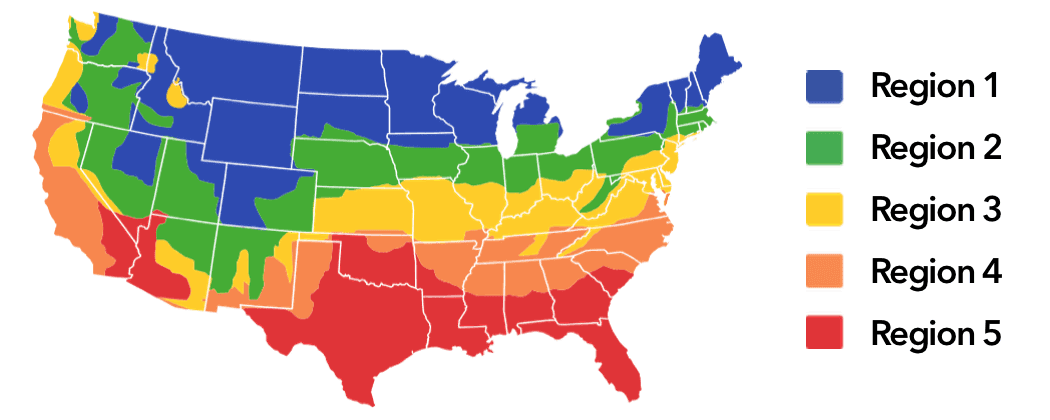
Climate zones run from 1 (cool) to 5 (hot); Georgia is in Zone 5.
Near 33.5° N, Augusta is among the northern cities in this Georgia guide. Heating seasons usually lengthen with latitude, so give heating more weight here.
Two-stage and variable-speed systems run longer at low speed, which removes more moisture during humid Augusta summers.
From Atlanta, Augusta is about 140 miles to the east, and this guide prices the two markets separately.
Milder winters make a heat pump a practical main heat source in Augusta, with backup strips or a furnace for cold snaps. Climate sets the baseline and the house sets the answer: a tight 2,260 sq. ft. home in Augusta may need less than 4 tons, a leaky or sun-heavy one more.
Ducts, Access and Layout in Augusta Homes
The AC in a Augusta home usually shares ducts with a natural gas furnace or an electric air handler; replacing both keeps them matched. Many Augusta jobs are simple replacements, so bids tend to cluster more tightly than in the largest metros.
For one finished attic or an addition, a single-zone mini-split usually costs less than extending the ducts.
Timing, Permits and Paperwork in Augusta
Augusta AC crews are busiest from late spring to the end of summer. Book between October and March for quicker dates. A licensed Georgia contractor who pulls the permit gives you a record to point to if a problem shows up later.
Elsewhere in Georgia
Compare Augusta with these Georgia markets (16 SEER, installed):
- Atlanta, GA: $10,820 to $13,040, 140 mi west
- Columbus, GA: $10,680 to $12,880, 180 mi west
- Macon, GA: $10,650 to $12,830, 100 mi southwest
- Savannah, GA: $10,640 to $12,820, 110 mi southeast
Surrounding towns such as Martinez, Evans, Grovetown, Harlem and Appling usually draw quotes in the Augusta range.
See the Georgia HVAC cost guide for how Augusta compares with the rest of the state and how the payback math works. To size a system for your own house, use the AC size calculator; to compare heating and cooling options, try the heat pump calculator.
Modeled estimates, not quotes: equipment, duct condition, access and permit fees will move the final price.
Quick Answers
Figures below use Georgia averages; energy prices as of October 2026.
Does a heat pump heat for less than natural gas in Georgia?
Yes, in Georgia. Running at COP 3, a heat pump gets 51,621 BTUs of heat per dollar; natural gas gets 43,853. It keeps that lead while power stays under about 23.3¢ per kWh (the Georgia average is 19.8¢). The margin shrinks on the coldest nights, when the COP drops.
Is electricity in Georgia expensive compared with other states?
Georgia pays 19.8¢ per kWh on average: 9% under the national figure of 21.7¢ and the 24th most expensive of 51. Cooling bills rise and fall with it.
Is a cold-climate heat pump needed in Georgia?
Usually not. Winter lows in Georgia average about 36°F, well within a standard heat pump's range; put the money into correct sizing and a careful install.
What does a heat pump save over electric baseboard in Georgia?
About two-thirds. At 19.8¢ per kWh (the Georgia average), a million BTU of heat costs about $58.12 from baseboards and about $19.37 from a heat pump running at COP 3.
What is the best season to replace an AC or furnace in Georgia?
The shoulder seasons, spring and fall, ahead of need. Summer days in Georgia average about 93°F, so have cooling work done by early spring. Crews are busiest in the first hot week and the first freeze, and a forced emergency swap leaves no time to compare bids.
Is it smart to replace the furnace and AC together?
Often. Two old units replaced in one visit share the labor, and the indoor coil gets matched to the outdoor unit as the rating requires. A young furnace or AC can stay; quote the other separately.
Check it for your own home: Central AC cost estimator or Heat pump cost calculator.
More HVAC Cost Guides
Georgia HVAC costs (statewide) · HVAC costs in every state